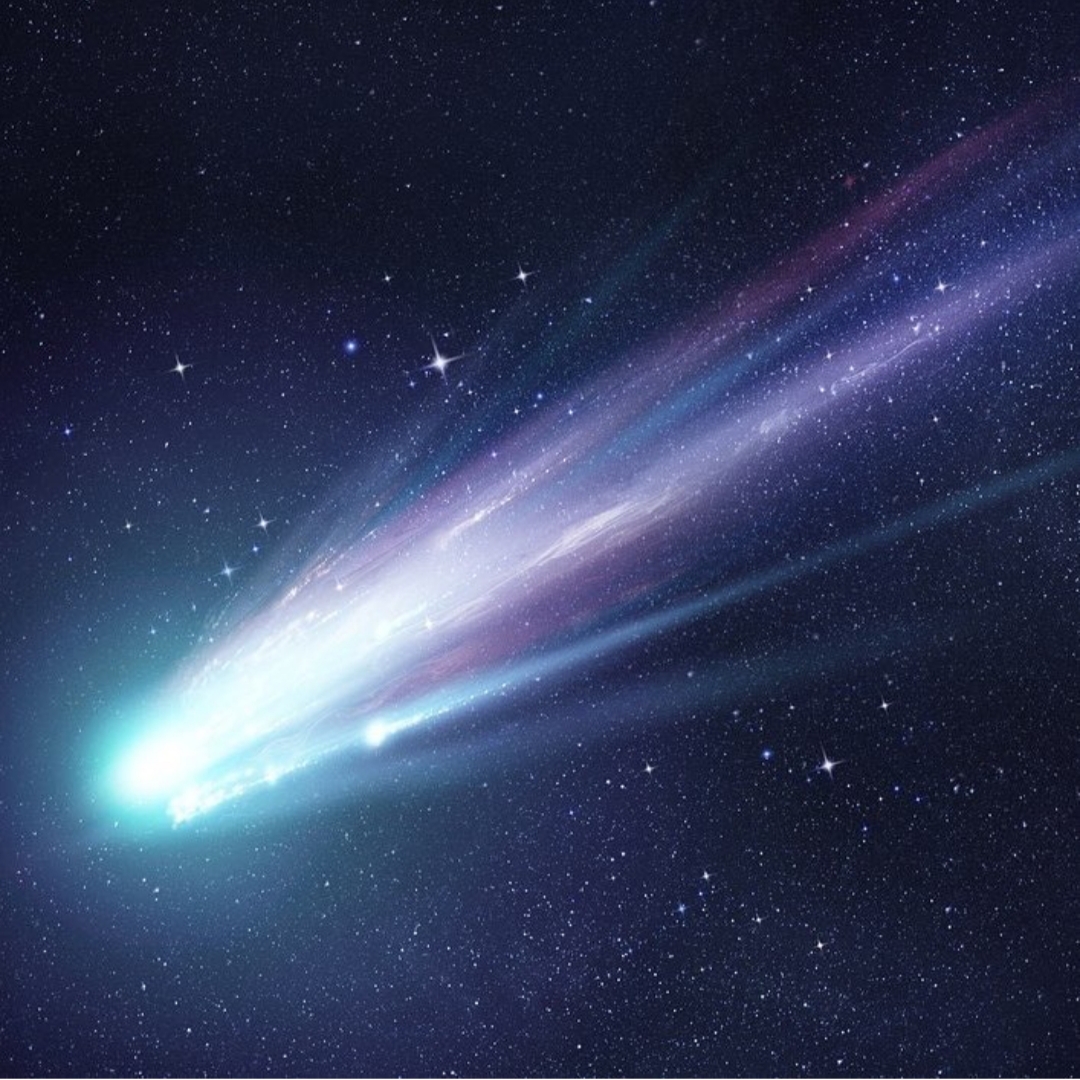
Comets have long captivated human imagination with their spectacular appearances in the night sky. These celestial bodies, often referred to as "dirty snowballs" or "icy dirtballs," are composed of a mixture of ice, dust, and small rocky particles. One of the most fascinating aspects of comets is their ability to reflect light, a phenomenon that has been studied extensively by astronomers. Understanding how comets reflect light not only enhances our knowledge of these celestial wanderers but also provides insights into the composition and behavior of the solar system.
What Are Comets?
Comets are small, icy bodies that orbit the Sun. They are often described as “dirty snowballs” because they are composed of a mixture of ice, dust, and small rocky particles. When a comet approaches the Sun, the heat causes the ice to sublimate, or turn directly into gas, creating a glowing head, or coma, and often a tail. The coma and tail are what make comets visible from Earth, and they are the result of the comet’s interaction with solar radiation and the solar wind.
Do Comets Reflect Light?
Yes, comets do reflect light. The light we see from a comet is primarily reflected sunlight. When a comet is far from the Sun, it appears dim because it reflects very little light. However, as it approaches the Sun, the increased solar radiation causes the comet’s icy components to sublimate, releasing gas and dust. This material forms a coma around the nucleus and, under the influence of solar radiation pressure and the solar wind, can form one or more tails.
The coma and tails of a comet are what make it visible from Earth. The coma reflects sunlight, making the comet appear brighter. The tails, which can be composed of dust or ionized gas, also reflect light and can be quite spectacular. The dust tail, in particular, is often visible to the naked eye and can stretch for millions of kilometers.
How Do Comets Reflect Light?
The reflection of light by comets is a complex process that involves several factors. The primary factors include the composition of the comet, its distance from the Sun, and the angle at which it reflects light. Here are some key points to consider:
- Composition: The composition of a comet's nucleus, coma, and tails affects how it reflects light. The nucleus is typically composed of ice, dust, and rocky particles, while the coma and tails are made up of gas and dust released from the nucleus.
- Distance from the Sun: As a comet approaches the Sun, the increased solar radiation causes more ice to sublimate, releasing more gas and dust. This increases the size of the coma and tails, making the comet appear brighter.
- Angle of Reflection: The angle at which a comet reflects light can also affect its brightness. When a comet is directly between the Sun and Earth, it reflects more light, making it appear brighter. This is known as opposition.
The Role of Solar Radiation
Solar radiation plays a crucial role in how comets reflect light. As a comet approaches the Sun, the increased solar radiation causes the ice in the comet’s nucleus to sublimate, releasing gas and dust. This material forms a coma around the nucleus and, under the influence of solar radiation pressure and the solar wind, can form one or more tails.
The coma and tails of a comet are what make it visible from Earth. The coma reflects sunlight, making the comet appear brighter. The tails, which can be composed of dust or ionized gas, also reflect light and can be quite spectacular. The dust tail, in particular, is often visible to the naked eye and can stretch for millions of kilometers.
Types of Comet Tails
Comets can have multiple tails, each reflecting light in different ways. The two most common types of tails are the dust tail and the ion tail.
| Type of Tail | Composition | Reflection of Light |
|---|---|---|
| Dust Tail | Dust particles | Reflects sunlight, often visible to the naked eye |
| Ion Tail | Ionized gas | Glows due to fluorescence, often blue in color |
The dust tail is composed of dust particles that reflect sunlight, making it visible from Earth. The ion tail, on the other hand, is composed of ionized gas that glows due to fluorescence, often appearing blue in color. Both tails contribute to the overall brightness of the comet and its ability to reflect light.
Observing Comets
Observing comets can be a rewarding experience for both amateur and professional astronomers. Here are some tips for observing comets:
- Choose the Right Time: The best time to observe a comet is when it is closest to the Sun and Earth. This is when the comet will be brightest and most visible.
- Use Binoculars or a Telescope: While some comets can be seen with the naked eye, using binoculars or a telescope can enhance the viewing experience and allow you to see more details.
- Find a Dark Sky Location: Light pollution can make it difficult to see comets. Finding a dark sky location away from city lights can improve visibility.
- Check the Weather: Clear skies are essential for observing comets. Check the weather forecast before heading out to ensure optimal viewing conditions.
🌟 Note: Always check the latest information on comet positions and brightness from reliable astronomical sources to plan your observations effectively.
Historical Significance of Comets
Comets have played a significant role in human history and culture. Throughout the ages, comets have been seen as omens, portents, and symbols of change. In ancient times, comets were often associated with divine intervention or supernatural events. For example, the appearance of Halley’s Comet in 1066 was interpreted as a sign of the Norman Conquest of England.
In modern times, comets continue to captivate scientists and the public alike. The study of comets has provided valuable insights into the formation and evolution of the solar system. Comets are believed to be remnants of the early solar system, and their composition can reveal information about the conditions present during the formation of the planets.
One of the most famous comets in recent history is Comet Hale-Bopp, which was visible to the naked eye for 18 months in 1996 and 1997. Its spectacular appearance and long tail made it one of the most observed comets in history. Another notable comet is Comet Shoemaker-Levy 9, which broke apart and collided with Jupiter in 1994, providing scientists with a unique opportunity to study the dynamics of planetary impacts.
Scientific Studies of Comets
Scientific studies of comets have advanced significantly with the advent of space exploration. Spacecraft missions have provided detailed observations and data on comets, enhancing our understanding of their composition and behavior. Some notable missions include:
- Giotto: Launched by the European Space Agency (ESA) in 1985, Giotto was the first spacecraft to encounter a comet, Halley's Comet, in 1986. It provided valuable data on the comet's nucleus and coma.
- Stardust: Launched by NASA in 1999, Stardust flew by Comet Wild 2 in 2004 and collected samples of dust and gas from the comet's coma. The samples were returned to Earth in 2006, providing scientists with the first direct analysis of comet material.
- Rosetta: Launched by ESA in 2004, Rosetta rendezvoused with Comet 67P/Churyumov-Gerasimenko in 2014. It deployed a lander, Philae, onto the comet's surface, providing unprecedented data on the comet's composition and behavior.
These missions have revealed that comets are composed of a mixture of ice, dust, and organic compounds. The ice is primarily water ice, but it also includes other frozen gases such as carbon dioxide, carbon monoxide, and methane. The dust particles are composed of silicates, carbon, and other minerals. The organic compounds include amino acids and other complex molecules, which are of particular interest to scientists studying the origins of life.
One of the most significant findings from these missions is the presence of water ice in comets. This has led to the hypothesis that comets may have played a role in delivering water to Earth, contributing to the formation of the oceans. The study of comets continues to be an active area of research, with new missions and observations providing ongoing insights into these fascinating celestial bodies.
Comets are not only objects of scientific study but also sources of inspiration and wonder. Their ability to reflect light and create spectacular displays in the night sky has captivated humans for centuries. Whether observed through a telescope or admired with the naked eye, comets continue to inspire awe and curiosity, reminding us of the vast and mysterious nature of the universe.
Comets are fascinating celestial bodies that reflect light in unique and spectacular ways. Their composition, behavior, and historical significance make them objects of great interest to astronomers and the public alike. Understanding how comets reflect light provides valuable insights into the solar system and the origins of life. As we continue to study these celestial wanderers, we can expect to uncover even more mysteries and wonders hidden within the cosmos.
Related Terms:
- why do comets glow