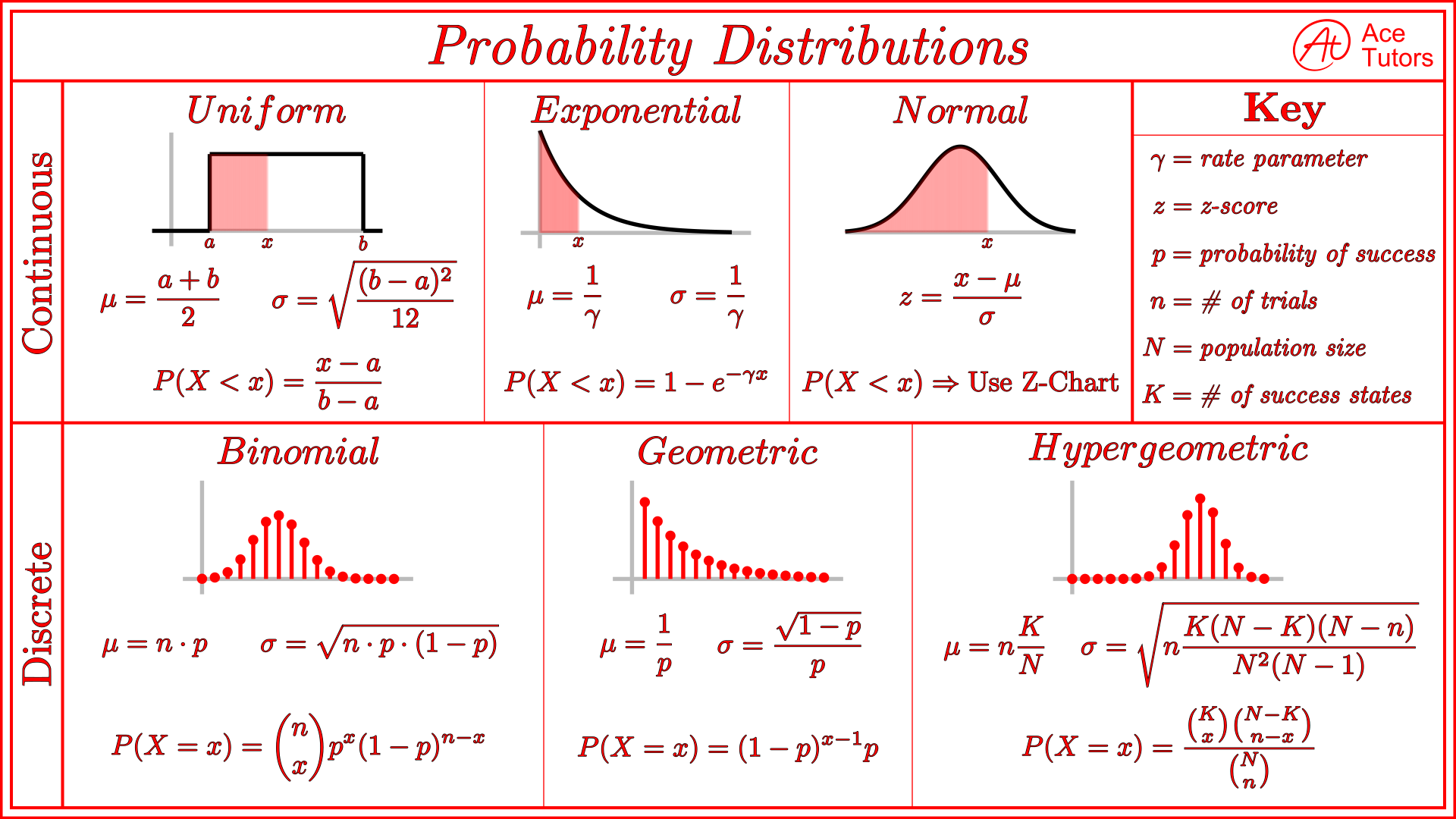
Graph theory is a fundamental branch of mathematics that deals with the study of graphs, which are mathematical structures used to model pairwise relations between objects. One of the key concepts in graph theory is the distribution of a graph, which refers to how the nodes and edges are arranged and connected. Understanding the distribution of a graph is crucial for various applications, including network analysis, social media studies, and even in fields like biology and computer science.
Understanding Graphs and Their Distribution
A graph is composed of a set of vertices (or nodes) and a set of edges (or links) that connect pairs of vertices. The distribution of a graph can be analyzed in several ways, including degree distribution, clustering coefficient, and centrality measures. Each of these metrics provides insights into different aspects of the graph's structure and behavior.
Degree Distribution
The degree of a vertex in a graph is the number of edges connected to it. The degree distribution of a graph is the probability distribution of these degrees over the entire graph. This distribution can reveal important properties about the graph, such as whether it follows a power law, exponential, or Poisson distribution.
For example, in social networks, the degree distribution often follows a power law, where a few nodes (influencers) have a very high degree, while most nodes have a low degree. This is known as the "scale-free" property. In contrast, random graphs typically follow a Poisson distribution, where the degree of most nodes is close to the average degree.
Clustering Coefficient
The clustering coefficient is a measure of the degree to which nodes in a graph tend to cluster together. It quantifies how close a graph is to being a clique, where every node is connected to every other node. The clustering coefficient can be calculated for individual nodes or for the entire graph.
High clustering coefficients indicate that the graph has many tightly-knit groups of nodes, which is common in social networks where friends of friends are likely to be friends themselves. Low clustering coefficients suggest a more random or sparse structure, where nodes are less likely to form clusters.
Centrality Measures
Centrality measures are used to identify the most important or influential nodes in a graph. There are several types of centrality measures, including degree centrality, betweenness centrality, and closeness centrality.
- Degree Centrality: Measures the number of direct connections a node has. Nodes with high degree centrality are often considered important because they have many direct links.
- Betweenness Centrality: Measures the number of shortest paths that pass through a node. Nodes with high betweenness centrality act as bridges between different parts of the graph.
- Closeness Centrality: Measures the average shortest path length from a node to all other nodes. Nodes with high closeness centrality are close to all other nodes in the graph.
These centrality measures help in identifying key nodes that play crucial roles in the distribution of a graph, such as hubs in communication networks or influential individuals in social networks.
Applications of Graph Distribution Analysis
The analysis of graph distribution has wide-ranging applications across various fields. Here are some key areas where understanding the distribution of a graph is particularly valuable:
- Social Networks: Analyzing the distribution of social networks can help identify influencers, detect communities, and understand the spread of information or diseases.
- Biological Networks: In biology, graphs are used to model protein interactions, gene regulatory networks, and metabolic pathways. Understanding the distribution of these networks can provide insights into biological functions and diseases.
- Computer Networks: The distribution of computer networks can help in optimizing routing algorithms, detecting anomalies, and improving network security.
- Transportation Networks: Analyzing the distribution of transportation networks can help in optimizing routes, reducing congestion, and improving overall efficiency.
Tools and Techniques for Graph Analysis
There are several tools and techniques available for analyzing the distribution of a graph. Some of the most commonly used tools include:
- NetworkX: A Python library for the creation, manipulation, and study of complex networks of nodes and edges.
- Gephi: An open-source network analysis and visualization software that allows users to explore and manipulate large networks.
- igraph: A collection of network analysis tools with interfaces in Python, R, and C.
These tools provide a range of functionalities for analyzing graph distributions, including calculating degree distributions, clustering coefficients, and centrality measures. They also offer visualization capabilities to help users better understand the structure and behavior of graphs.
Case Study: Analyzing a Social Network
To illustrate the concepts of graph distribution, let's consider a case study of analyzing a social network. Suppose we have a social network with 100 nodes and 300 edges. We want to analyze the degree distribution, clustering coefficient, and centrality measures of this network.
First, we can calculate the degree distribution of the network. By plotting the degree distribution, we can determine whether it follows a power law, exponential, or Poisson distribution. In this case, let's assume the degree distribution follows a power law, indicating that the network is scale-free.
Next, we can calculate the clustering coefficient of the network. If the clustering coefficient is high, it suggests that the network has many tightly-knit groups of nodes. For example, if the average clustering coefficient is 0.6, it indicates a high level of clustering in the network.
Finally, we can calculate the centrality measures of the network. By identifying nodes with high degree centrality, betweenness centrality, and closeness centrality, we can determine the most important or influential nodes in the network. For instance, nodes with high betweenness centrality may act as bridges between different communities in the network.
By analyzing these metrics, we can gain valuable insights into the structure and behavior of the social network, such as identifying key influencers, detecting communities, and understanding the spread of information.
📝 Note: The case study assumes a hypothetical social network for illustrative purposes. Real-world networks may have different characteristics and require more sophisticated analysis techniques.
Visualizing Graph Distributions
Visualizing the distribution of a graph is an essential step in understanding its structure and behavior. Graph visualization tools allow users to create visual representations of graphs, making it easier to identify patterns, clusters, and key nodes. Some popular visualization techniques include:
- Node-Link Diagrams: These diagrams represent nodes as points and edges as lines connecting the points. They are useful for visualizing the overall structure of a graph.
- Matrix Representations: These representations use matrices to show the connections between nodes. They are particularly useful for dense graphs where node-link diagrams can become cluttered.
- Force-Directed Layouts: These layouts use physical simulation algorithms to position nodes based on their connections. They are effective for visualizing the clustering and centrality of nodes.
Visualization tools like Gephi and NetworkX provide various options for creating these visual representations, allowing users to customize the appearance and layout of the graph to better suit their analysis needs.
Challenges in Graph Distribution Analysis
While analyzing the distribution of a graph provides valuable insights, it also presents several challenges. Some of the key challenges include:
- Scalability: Analyzing large graphs with millions of nodes and edges can be computationally intensive and time-consuming. Efficient algorithms and scalable tools are needed to handle such large datasets.
- Dynamic Graphs: Many real-world graphs are dynamic, meaning their structure changes over time. Analyzing dynamic graphs requires techniques that can track changes and update the distribution accordingly.
- Noise and Incomplete Data: Real-world graphs often contain noise and incomplete data, which can affect the accuracy of the analysis. Robust techniques are needed to handle these issues and provide reliable results.
Addressing these challenges requires advanced algorithms, scalable tools, and innovative techniques to ensure accurate and efficient analysis of graph distributions.
To illustrate the challenges in graph distribution analysis, consider the following table that summarizes some of the key issues and potential solutions:
| Challenge | Potential Solution |
|---|---|
| Scalability | Use distributed computing frameworks and parallel processing techniques to handle large graphs. |
| Dynamic Graphs | Develop algorithms that can track changes in the graph over time and update the distribution accordingly. |
| Noise and Incomplete Data | Implement robust techniques to handle noise and incomplete data, such as data cleaning and imputation methods. |
By addressing these challenges, researchers and practitioners can gain more accurate and reliable insights into the distribution of a graph, leading to better decision-making and problem-solving in various applications.
📝 Note: The table provides a summary of key challenges and potential solutions in graph distribution analysis. Real-world applications may require more specific and tailored approaches.
In conclusion, understanding the distribution of a graph is crucial for analyzing complex networks and gaining insights into their structure and behavior. By examining metrics such as degree distribution, clustering coefficient, and centrality measures, researchers can identify key nodes, detect communities, and understand the spread of information or diseases. Tools and techniques for graph analysis, along with visualization methods, provide valuable support for this analysis. However, challenges such as scalability, dynamic graphs, and noise require advanced algorithms and robust techniques to ensure accurate and efficient analysis. By addressing these challenges, the field of graph theory continues to evolve, offering new insights and applications across various domains.
Related Terms:
- shape of a distribution examples
- types of graph distributions
- different distribution graphs
- 1.5 shape of a distribution
- types of shapes distribution statistics
- what are shapes of distributions