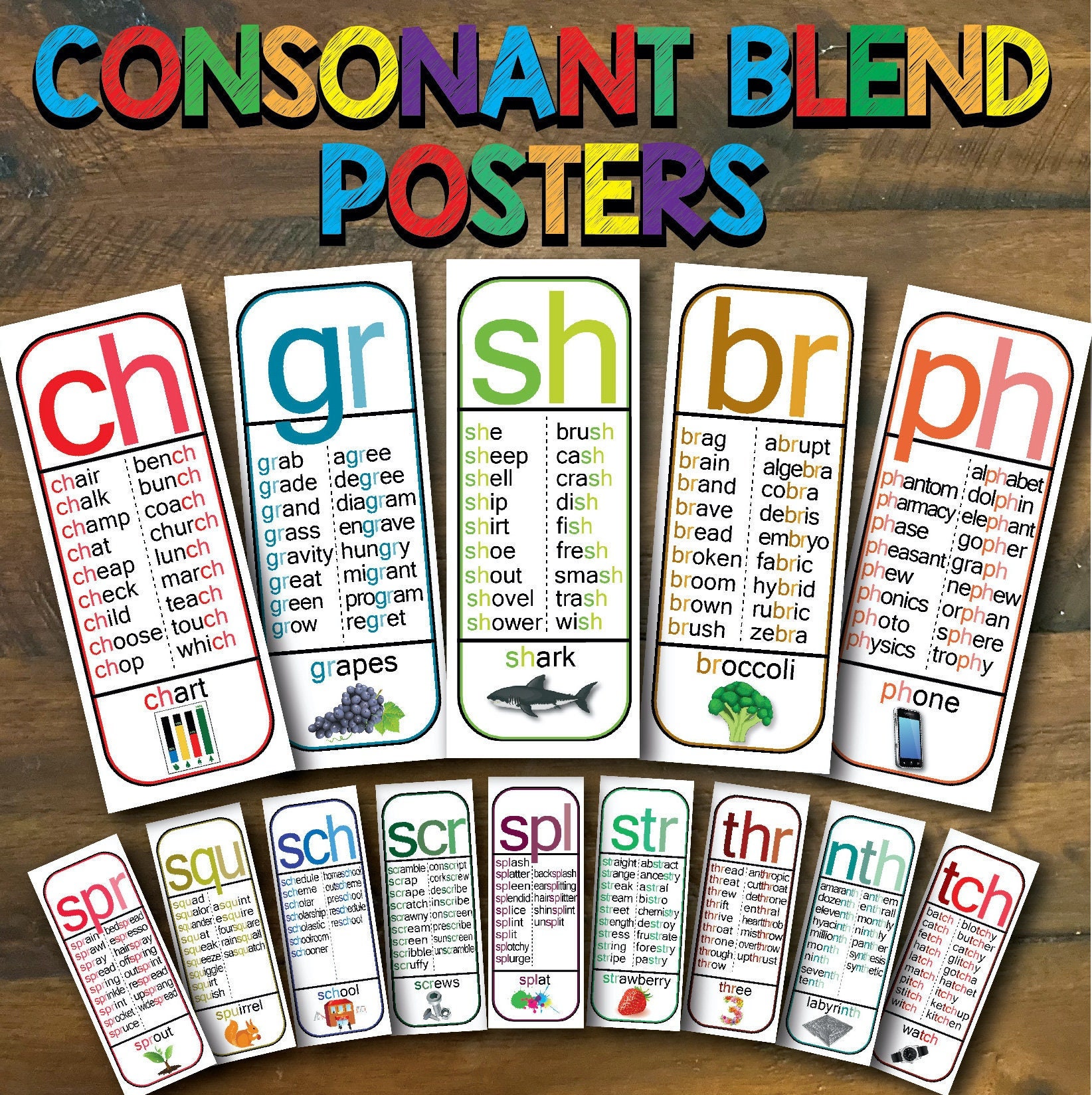
Mastering the art of reading and writing is a fundamental skill that opens doors to a world of knowledge and communication. One of the critical aspects of this journey is understanding digraphs and blends. These phonetic combinations are essential for decoding words accurately and fluently. This post will delve into the intricacies of digraphs and blends, providing a comprehensive guide for educators, parents, and learners alike.
Understanding Digraphs
Digraphs are pairs of letters that represent a single sound. They are crucial in English phonics as they help in reading and spelling words correctly. Digraphs can be categorized into vowel digraphs and consonant digraphs.
Vowel Digraphs
Vowel digraphs are combinations of two vowels that produce a single sound. Some common vowel digraphs include:
- ai as in "rain"
- ea as in "beach"
- ee as in "see"
- ie as in "pie"
- oa as in "boat"
- oo as in "moon"
- ou as in "cloud"
- oy as in "boy"
These digraphs can sometimes be tricky because the same combination of letters can produce different sounds in different words. For example, the digraph ea can sound like /ee/ in "beach" but like /e/ in "bread".
Consonant Digraphs
Consonant digraphs are pairs of consonants that make a single sound. Some common consonant digraphs include:
- ch as in "chat"
- sh as in "ship"
- th as in "thin"
- wh as in "whale"
- ph as in "photo"
Consonant digraphs are generally more consistent in their pronunciation compared to vowel digraphs. However, there are exceptions, such as the digraph gh, which can sound like /f/ in "laugh" or /g/ in "ghost".
Understanding Blends
Blends, also known as consonant blends or consonant clusters, are groups of two or three consonants that each retain their individual sounds. Unlike digraphs, the sounds in blends are not merged into a single sound but are pronounced distinctly. Blends are essential for building phonemic awareness and improving reading fluency.
Common Blends
Blends can occur at the beginning, middle, or end of words. Some common blends include:
- bl as in "blend"
- cl as in "clap"
- fl as in "flip"
- gl as in "glow"
- pl as in "play"
- sl as in "slip"
- br as in "brave"
- cr as in "crab"
- dr as in "drum"
- fr as in "frog"
- gr as in "grapes"
- pr as in "pray"
- tr as in "train"
Blends can also occur at the end of words, such as in "last" (st) or "fast" (st). These ending blends are often more challenging for young readers to decode.
Teaching Digraphs and Blends
Teaching digraphs and blends effectively requires a structured approach that combines visual, auditory, and kinesthetic learning methods. Here are some strategies to help educators and parents teach these phonetic combinations:
Visual Aids
Use flashcards, posters, and charts to display digraphs and blends. Visual aids help learners associate the letter combinations with their corresponding sounds. For example, a poster with the digraph sh and a picture of a ship can reinforce the sound-symbol relationship.
Phonemic Awareness Activities
Engage learners in activities that focus on phonemic awareness, such as:
- Sound sorting: Have learners sort pictures or words based on their initial or final sounds.
- Sound blending: Practice blending individual sounds to form words. For example, blend /c/ /a/ /t/ to form "cat".
- Sound segmentation: Break down words into their individual sounds. For example, segment "dog" into /d/ /o/ /g/.
These activities help learners develop the skills needed to decode words containing digraphs and blends.
Interactive Games
Games make learning fun and engaging. Some interactive games to teach digraphs and blends include:
- Bingo: Create bingo cards with words containing digraphs and blends. Call out the words, and learners cover the corresponding squares.
- Memory Match: Create pairs of cards with pictures and their corresponding words. Learners flip the cards to find matches.
- Word Building: Provide learners with letter tiles and have them build words containing specific digraphs or blends.
These games not only reinforce learning but also make the process enjoyable.
Reading Practice
Encourage learners to read books and passages that contain a variety of digraphs and blends. Reading aloud helps learners practice decoding skills and improves fluency. Provide feedback and support as needed to help learners overcome challenges.
📝 Note: When teaching digraphs and blends, it's essential to be patient and provide plenty of practice opportunities. Learners may need repeated exposure to these phonetic combinations before mastering them.
Common Challenges and Solutions
Learning digraphs and blends can be challenging for some learners. Here are some common challenges and solutions to help overcome them:
Confusion Between Similar Sounds
Some digraphs and blends have similar sounds, which can cause confusion. For example, the digraphs ea and ee both produce a long /e/ sound, but their spellings are different. To address this challenge:
- Provide clear examples and non-examples of each sound.
- Use minimal pairs (words that differ by only one sound) to highlight the differences. For example, "beach" and "beet".
- Practice discriminating between similar sounds through listening and sorting activities.
Decoding Multi-Syllable Words
Decoding multi-syllable words containing digraphs and blends can be challenging. To help learners decode these words:
- Teach syllable division rules and patterns.
- Break down words into syllables and practice blending them together.
- Provide plenty of practice with multi-syllable words containing digraphs and blends.
Spelling Challenges
Spelling words with digraphs and blends can be difficult. To improve spelling skills:
- Teach common spelling patterns and rules.
- Provide practice with spelling lists that focus on specific digraphs and blends.
- Encourage learners to use phonetic strategies to spell unfamiliar words.
By addressing these challenges with targeted strategies, learners can improve their decoding and spelling skills.
Resources for Teaching Digraphs and Blends
There are numerous resources available to support the teaching of digraphs and blends. Here are some categories of resources that can be helpful:
Printable Worksheets
Printable worksheets provide structured practice for learners. Look for worksheets that focus on specific digraphs and blends, offering a variety of activities such as:
- Matching pictures to words
- Completing sentences with missing words
- Writing words containing specific digraphs or blends
Online Games and Apps
Interactive online games and apps can make learning digraphs and blends more engaging. Some popular options include:
- Starfall: An educational website with interactive games and activities for phonics.
- Teach Your Monster to Read: A fun and engaging app that teaches phonics through games.
- Phonics Bloom: A collection of interactive phonics games for learners of all ages.
Books and Stories
Books and stories that focus on specific digraphs and blends can be a valuable resource. Look for books that:
- Contain repetitive text and rhyming patterns
- Feature illustrations that support the text
- Provide opportunities for learners to practice decoding and spelling
By incorporating a variety of resources, educators and parents can create a well-rounded learning experience for teaching digraphs and blends.
Assessing Progress
Assessing learners' progress in understanding digraphs and blends is crucial for identifying areas that need further support. Here are some assessment strategies:
Informal Assessments
Informal assessments can be conducted during daily instruction and provide immediate feedback. Examples include:
- Observing learners as they read aloud and decode words containing digraphs and blends.
- Listening to learners as they spell words containing specific digraphs or blends.
- Asking learners to sort pictures or words based on their initial or final sounds.
Formal Assessments
Formal assessments provide a more comprehensive evaluation of learners' skills. Examples include:
- Standardized phonics tests that assess decoding and spelling skills.
- Reading fluency assessments that measure reading speed and accuracy.
- Spelling inventories that evaluate learners' ability to spell words containing specific digraphs and blends.
By using a combination of informal and formal assessments, educators and parents can gain a holistic understanding of learners' progress and provide targeted support as needed.
📝 Note: Regular assessment helps identify learners who may need additional support or intervention. Early identification and support can prevent learning difficulties from becoming more significant challenges.
Conclusion
Mastering digraphs and blends is a critical step in the journey of learning to read and write. By understanding the intricacies of these phonetic combinations and employing effective teaching strategies, educators and parents can help learners develop strong decoding and spelling skills. Through visual aids, phonemic awareness activities, interactive games, and reading practice, learners can gain confidence and fluency in their reading abilities. Addressing common challenges and utilizing a variety of resources further enhances the learning experience. Regular assessment ensures that learners receive the support they need to succeed. With dedication and the right tools, learners can overcome the complexities of digraphs and blends and unlock the world of reading and writing.
Related Terms:
- digraphs chart
- digraphs and blends pdf
- difference in blends and digraphs
- free printable digraphs and blends
- words with blends and digraphs
- consonant blends vs digraph