Understanding the intricacies of English grammar can significantly enhance your writing and communication skills. One fundamental aspect of grammar is the use of coordinating and subordinating conjunctions. These conjunctions play a crucial role in connecting words, phrases, and clauses, thereby creating coherent and meaningful sentences. This post delves into the definitions, functions, and examples of coordinating and subordinating conjunctions, providing a comprehensive guide to mastering these essential grammatical tools.
Understanding Coordinating Conjunctions
Coordinating conjunctions are words that join two or more words, phrases, or independent clauses of equal importance. They help in creating compound sentences by linking elements that could stand alone as separate sentences. The most common coordinating conjunctions are:
- For
- And
- Nor
- But
- Or
- Yet
- So
These conjunctions are often remembered using the acronym FANBOYS. Each of these conjunctions serves a specific purpose in connecting ideas:
- For: Indicates the reason or purpose. Example: "I stayed home for I was not feeling well."
- And: Adds information. Example: "She went to the store and bought some groceries."
- Nor: Used in negative sentences to add another negative idea. Example: "He does not like coffee, nor does he like tea."
- But: Shows contrast. Example: "I wanted to go, but it was raining."
- Or: Presents alternatives. Example: "Do you want tea or coffee?"
- Yet: Indicates a contrast or unexpected result. Example: "It was raining, yet we went to the park."
- So: Shows a result or consequence. Example: "It was raining, so we stayed indoors."
📝 Note: Coordinating conjunctions can connect words, phrases, or independent clauses, but they cannot connect a dependent clause to an independent clause.
Understanding Subordinating Conjunctions
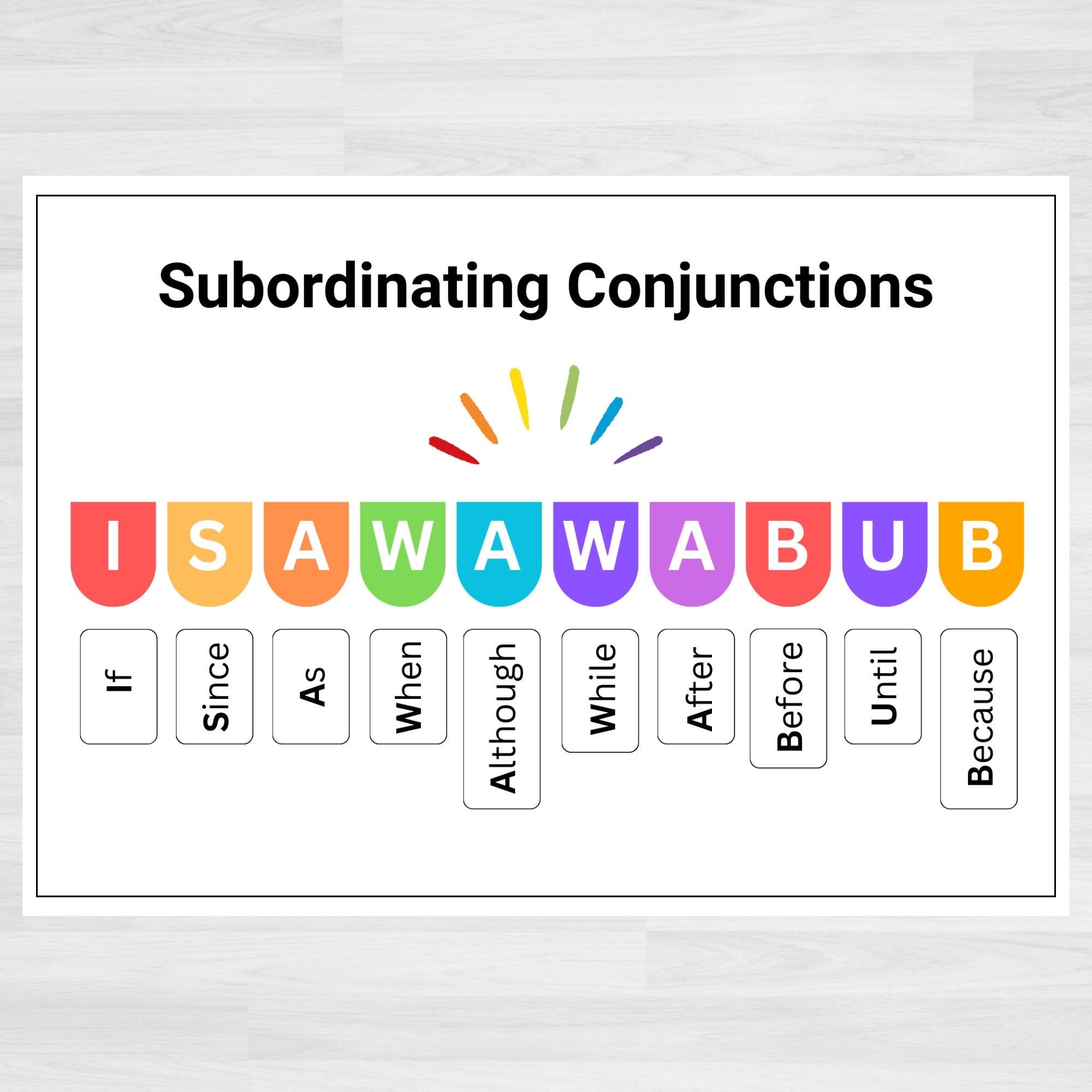
Subordinating conjunctions, on the other hand, connect a dependent clause to an independent clause. They introduce subordinate clauses, which cannot stand alone as complete sentences. Subordinating conjunctions provide additional information about the time, cause, condition, contrast, or purpose of the main clause. Some common subordinating conjunctions include:
- After
- Although
- As
- Because
- Before
- Even though
- If
- Since
- Though
- Until
- Unless
- While
Each of these conjunctions serves a specific function in connecting ideas:
- After: Indicates time. Example: "After she finished her work, she went home."
- Although: Shows contrast. Example: "Although it was raining, we went to the park."
- As: Indicates time or manner. Example: "As she walked, she hummed a tune."
- Because: Indicates cause. Example: "She stayed home because she was not feeling well."
- Before: Indicates time. Example: "Before she left, she called her mother."
- Even though: Shows contrast. Example: "Even though it was raining, we went to the park."
- If: Indicates condition. Example: "If it rains, we will stay indoors."
- Since: Indicates time or cause. Example: "Since she arrived, she has been busy."
- Though: Shows contrast. Example: "Though it was raining, we went to the park."
- Until: Indicates time. Example: "Until she finishes her work, she cannot leave."
- Unless: Indicates condition. Example: "Unless it stops raining, we will stay indoors."
- While: Indicates time or contrast. Example: "While she was cooking, she listened to music."
📝 Note: Subordinating conjunctions can introduce a variety of dependent clauses, including adverbial, adjectival, and nominal clauses. They provide essential information that supports the main clause.
Comparing Coordinating and Subordinating Conjunctions
While both coordinating and subordinating conjunctions are essential for creating complex sentences, they serve different purposes and have distinct characteristics. Here is a comparison of the two types of conjunctions:
| Characteristic | Coordinating Conjunctions | Subordinating Conjunctions |
|---|---|---|
| Function | Join words, phrases, or independent clauses of equal importance | Connect a dependent clause to an independent clause |
| Examples | For, And, Nor, But, Or, Yet, So | After, Although, As, Because, Before, Even though, If, Since, Though, Until, Unless, While |
| Clause Type | Independent clauses | Dependent clauses |
| Sentence Structure | Compound sentences | Complex sentences |
Understanding the differences between coordinating and subordinating conjunctions is crucial for constructing clear and effective sentences. Coordinating conjunctions help in creating compound sentences by linking elements of equal importance, while subordinating conjunctions introduce dependent clauses that provide additional information about the main clause.
Practical Examples of Coordinating and Subordinating Conjunctions
To illustrate the use of coordinating and subordinating conjunctions, let's look at some practical examples:
Coordinating Conjunctions:
- I wanted to go to the park, but it was raining.
- She loves to read books, and she enjoys watching movies.
- He does not like coffee, nor does he like tea.
- We can go to the beach, or we can stay home.
- It was a beautiful day, so we decided to go for a walk.
Subordinating Conjunctions:
- Although it was raining, we went to the park.
- She stayed home because she was not feeling well.
- We will go to the beach if the weather is nice.
- He finished his work before he left the office.
- She will call you as soon as she arrives.
📝 Note: Practice using coordinating and subordinating conjunctions in your writing to improve sentence variety and coherence. Experiment with different conjunctions to see how they affect the meaning and flow of your sentences.
Common Mistakes to Avoid
When using coordinating and subordinating conjunctions, it's essential to avoid common mistakes that can affect the clarity and correctness of your sentences. Here are some tips to help you avoid these mistakes:
- Avoid Run-On Sentences: Ensure that coordinating conjunctions are used to connect independent clauses properly. Avoid creating run-on sentences by using proper punctuation and conjunctions. Example: "I went to the store, and I bought some groceries." (Correct) vs. "I went to the store and I bought some groceries." (Incorrect)
- Use Correct Punctuation: Subordinating conjunctions often require a comma to separate the dependent clause from the independent clause. Example: "Although it was raining, we went to the park." (Correct) vs. "Although it was raining we went to the park." (Incorrect)
- Avoid Sentence Fragments: Ensure that subordinating conjunctions are used to introduce complete dependent clauses. Avoid creating sentence fragments by ensuring that the dependent clause has a subject and a verb. Example: "Because she was tired." (Incorrect) vs. "Because she was tired, she went to bed early." (Correct)
📝 Note: Proofread your writing to check for proper use of coordinating and subordinating conjunctions. Pay attention to punctuation and sentence structure to ensure clarity and correctness.
Enhancing Your Writing with Coordinating and Subordinating Conjunctions
Mastering the use of coordinating and subordinating conjunctions can significantly enhance your writing skills. By understanding how to use these conjunctions effectively, you can create more complex and coherent sentences. Here are some tips to help you enhance your writing:
- Vary Sentence Structure: Use a mix of coordinating and subordinating conjunctions to create varied sentence structures. This will make your writing more engaging and interesting to read.
- Provide Additional Information: Use subordinating conjunctions to provide additional information about the main clause. This will help in creating more detailed and informative sentences.
- Show Relationships Between Ideas: Use coordinating conjunctions to show the relationships between ideas. This will help in creating clear and logical connections between different parts of your writing.
- Practice Regularly: Practice using coordinating and subordinating conjunctions in your writing. The more you practice, the more comfortable you will become with using these conjunctions effectively.
📝 Note: Experiment with different conjunctions and sentence structures to find what works best for your writing style. Don't be afraid to try new things and see how they affect the flow and clarity of your writing.
Mastering the use of coordinating and subordinating conjunctions is essential for creating clear, coherent, and engaging sentences. By understanding the functions and examples of these conjunctions, you can enhance your writing skills and communicate more effectively. Whether you are writing a formal essay, a creative story, or a business report, the proper use of conjunctions will help you convey your ideas with precision and clarity. So, practice regularly and experiment with different conjunctions to improve your writing and communication skills.
Related Terms:
- coordinating and subordinating conjunctions wordwall
- correlative conjunctions examples
- coordinating and subordinating conjunctions pdf
- coordinating and subordinating conjunctions ks2
- coordinating and subordinating conjunctions exercises
- coordinating and subordinating conjunctions ppt