Lenses are fundamental components in optics, used in a wide range of applications from cameras and telescopes to eyeglasses and microscopes. Understanding the differences between Convex Vs Concave Lens is crucial for anyone interested in optics, photography, or even basic science. This post will delve into the characteristics, uses, and differences between convex and concave lenses, providing a comprehensive guide to help you understand these essential optical tools.
Understanding Convex Lenses
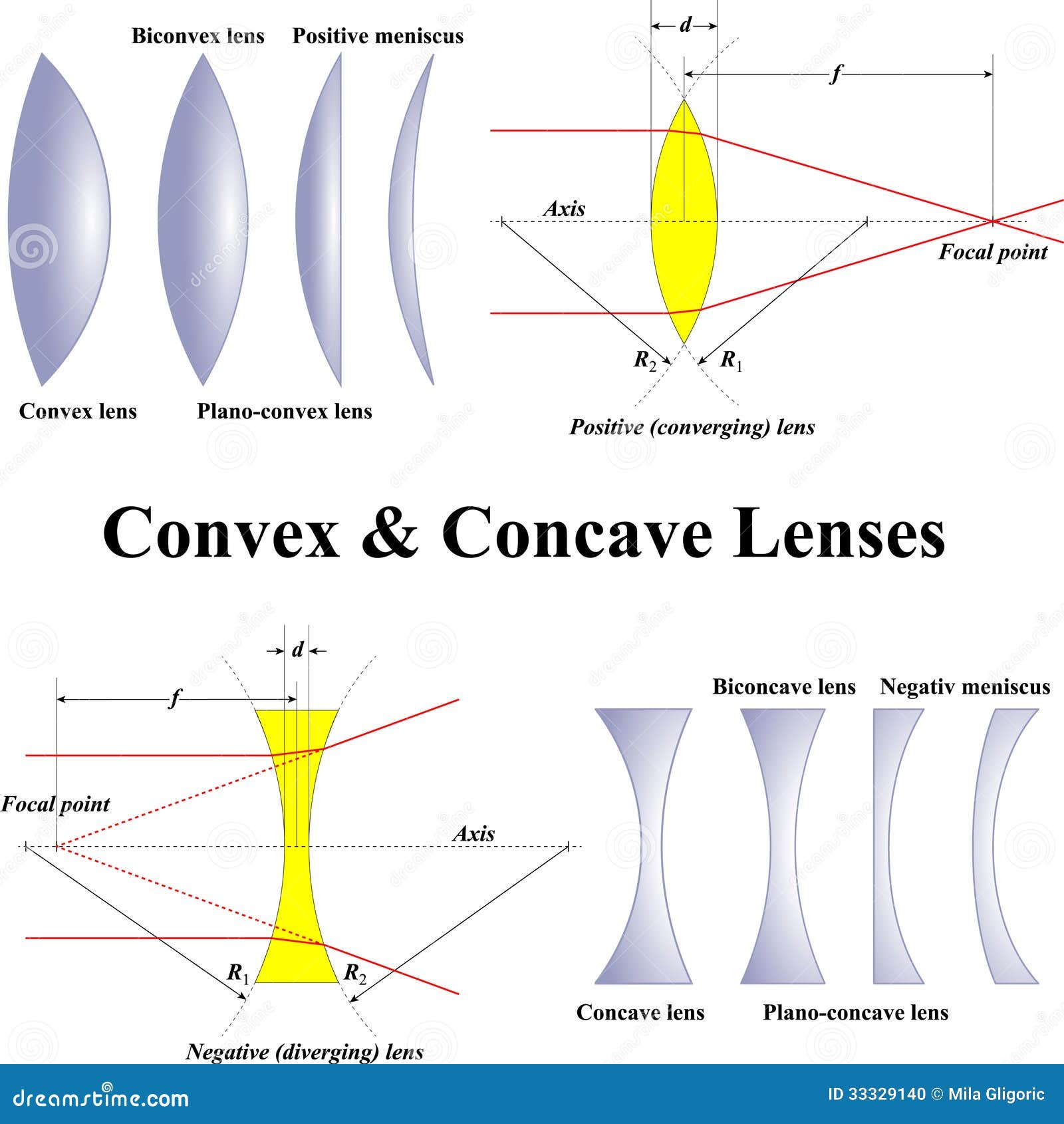
A convex lens, also known as a converging lens, is thicker at the center and thinner at the edges. This shape causes parallel rays of light to converge at a single point, known as the focal point. Convex lenses are commonly used in magnifying glasses, cameras, and telescopes.
Characteristics of Convex Lenses
- Focal Point: Convex lenses have a real focal point where parallel rays of light converge.
- Image Formation: They can form both real and virtual images, depending on the object's position relative to the lens.
- Magnification: Convex lenses can magnify objects, making them appear larger than they are.
- Applications: Used in cameras, microscopes, telescopes, and eyeglasses for farsightedness.
Types of Convex Lenses
Convex lenses can be further classified based on their curvature and focal length:
- Biconvex Lens: Both surfaces are convex.
- Plano-Convex Lens: One surface is convex, and the other is flat.
- Concavo-Convex Lens: One surface is convex, and the other is concave.
Understanding Concave Lenses
A concave lens, also known as a diverging lens, is thinner at the center and thicker at the edges. This shape causes parallel rays of light to diverge, spreading out as they pass through the lens. Concave lenses are often used in corrective lenses for nearsightedness and in cameras to correct aberrations.
Characteristics of Concave Lenses
- Focal Point: Concave lenses have a virtual focal point where parallel rays of light appear to diverge from.
- Image Formation: They always form virtual, upright, and diminished images.
- Magnification: Concave lenses reduce the size of objects, making them appear smaller.
- Applications: Used in corrective lenses for nearsightedness, cameras, and telescopes to correct aberrations.
Types of Concave Lenses
Concave lenses can also be classified based on their curvature:
- Biconcave Lens: Both surfaces are concave.
- Plano-Concave Lens: One surface is concave, and the other is flat.
- Convexo-Concave Lens: One surface is concave, and the other is convex.
Convex Vs Concave Lens: Key Differences
Understanding the key differences between convex and concave lenses is essential for their proper use in various applications. Here is a comparison of the two types of lenses:
| Feature | Convex Lens | Concave Lens |
|---|---|---|
| Shape | Thicker at the center, thinner at the edges | Thinner at the center, thicker at the edges |
| Focal Point | Real focal point | Virtual focal point |
| Image Formation | Real and virtual images | Virtual images only |
| Magnification | Magnifies objects | Reduces the size of objects |
| Applications | Cameras, microscopes, telescopes, magnifying glasses | Corrective lenses for nearsightedness, cameras, telescopes |
🔍 Note: The choice between a convex and concave lens depends on the specific application and the desired optical effect.
Applications of Convex and Concave Lenses
Both convex and concave lenses have a wide range of applications in various fields. Here are some of the most common uses:
Convex Lens Applications
- Cameras: Convex lenses are used in camera lenses to focus light onto the image sensor, creating sharp and clear images.
- Microscopes: They are used in the objective lenses of microscopes to magnify small objects.
- Telescopes: Convex lenses are used in refracting telescopes to gather and focus light from distant objects.
- Eyeglasses: They are used in corrective lenses for farsightedness (hyperopia) to help focus light onto the retina.
- Magnifying Glasses: Convex lenses are used to magnify small objects, making them easier to see.
Concave Lens Applications
- Corrective Lenses: Concave lenses are used in eyeglasses to correct nearsightedness (myopia) by diverging light rays before they enter the eye.
- Cameras: They are used in combination with convex lenses to correct aberrations and improve image quality.
- Telescopes: Concave lenses are used in some telescope designs to correct chromatic aberrations and improve image clarity.
- Peep Holes: Concave lenses are used in peepholes to provide a wider field of view.
Combining Convex and Concave Lenses
In many optical systems, convex and concave lenses are combined to achieve specific optical effects. For example, in a camera lens, a combination of convex and concave lenses is used to correct aberrations and improve image quality. This combination allows for better control over the focal length, aperture, and overall performance of the lens.
Similarly, in eyeglasses, a combination of convex and concave lenses can be used to correct complex vision problems, such as astigmatism. By carefully selecting the curvature and focal length of each lens, optometrists can create custom lenses that provide clear and comfortable vision for the wearer.
🔍 Note: The combination of convex and concave lenses can also be used to create zoom lenses, which allow for variable focal lengths and magnification.
Optical Aberrations and Lens Design
One of the challenges in lens design is minimizing optical aberrations, which are distortions in the image caused by the lens. Both convex and concave lenses can suffer from various types of aberrations, including:
- Spherical Aberration: Occurs when light rays passing through the edges of the lens focus at a different point than those passing through the center.
- Chromatic Aberration: Occurs when different wavelengths of light are refracted at different angles, causing color fringes around the image.
- Coma: Occurs when light rays from off-axis points are not focused at the same point, causing a comet-like distortion.
- Astigmatism: Occurs when the lens has different focal lengths in different planes, causing distortions in the image.
To minimize these aberrations, lens designers often use a combination of convex and concave lenses with different curvatures and materials. By carefully selecting the shape and arrangement of the lenses, designers can correct for aberrations and improve the overall performance of the optical system.
In addition to combining lenses, designers can also use coatings and special materials to reduce reflections and improve light transmission. For example, anti-reflective coatings can be applied to the surfaces of the lenses to reduce glare and improve contrast. Similarly, special materials, such as low-dispersion glass, can be used to minimize chromatic aberrations.
🔍 Note: The design of optical systems is a complex process that requires a deep understanding of optics, materials science, and engineering.
In conclusion, understanding the differences between Convex Vs Concave Lens is essential for anyone interested in optics, photography, or basic science. Convex lenses are used to converge light rays and form real images, while concave lenses diverge light rays and form virtual images. Both types of lenses have a wide range of applications, from cameras and telescopes to eyeglasses and microscopes. By combining convex and concave lenses, designers can create optical systems with improved performance and reduced aberrations. Whether you are a student, a hobbyist, or a professional, understanding the properties and uses of convex and concave lenses will enhance your knowledge and appreciation of optics.
Related Terms:
- concave and convex lens definition
- convex vs concave lens diagram
- convex and concave lens examples
- convex glasses
- convex and concave lens diagram
- convex lens and concave difference