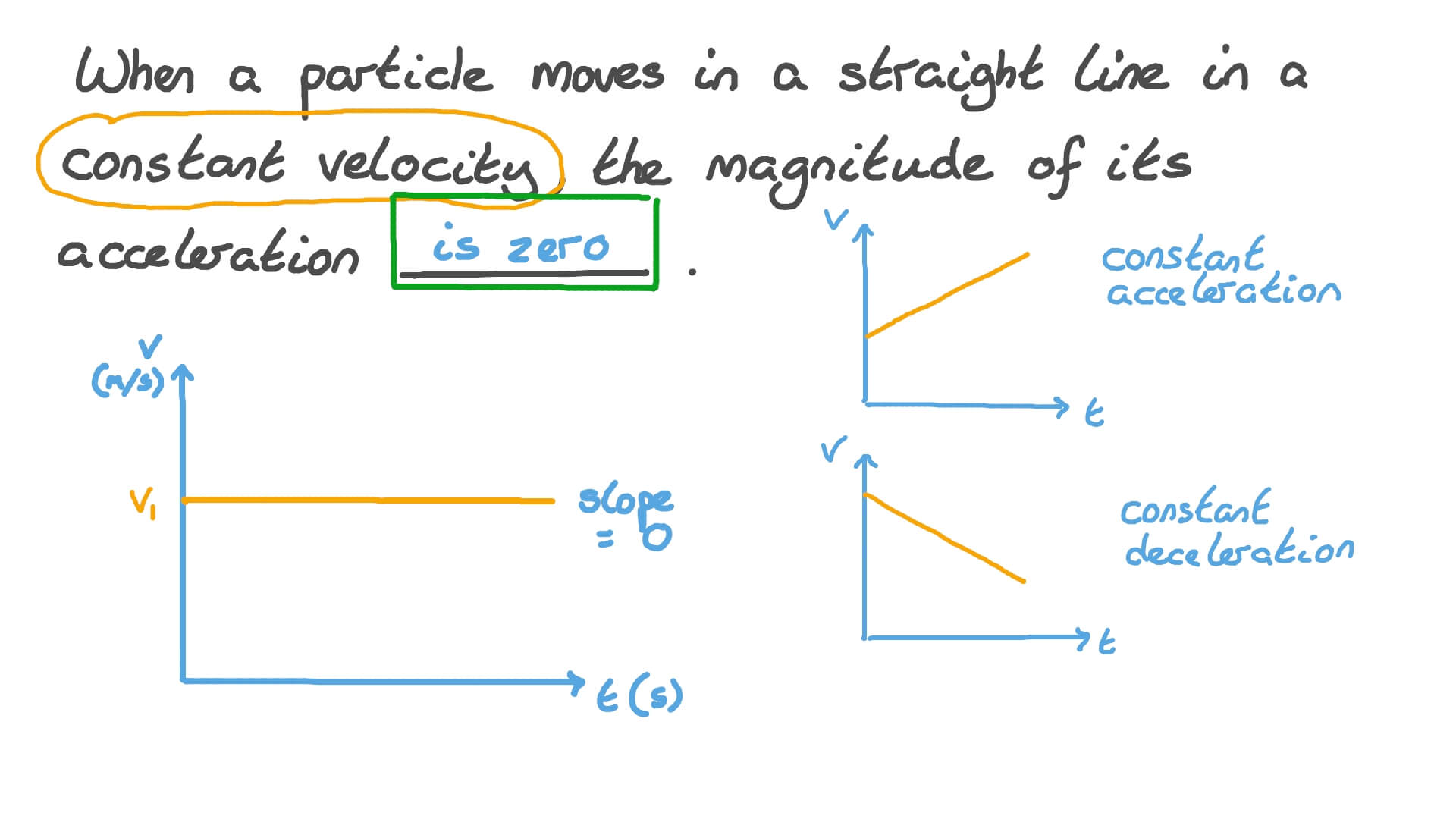
Understanding the concept of a Constant Velocity Graph is fundamental in physics and engineering, as it helps in analyzing the motion of objects. A Constant Velocity Graph is a graphical representation where the velocity of an object remains unchanged over time. This type of graph is crucial for various applications, from simple kinematic problems to complex engineering designs. In this post, we will delve into the intricacies of Constant Velocity Graphs, their significance, and how to interpret them effectively.
Understanding Velocity and Constant Velocity
Velocity is a vector quantity that describes both the speed and direction of an object's motion. Unlike speed, which is a scalar quantity, velocity takes into account the direction of movement. When an object moves with a constant velocity, it means that both its speed and direction remain unchanged. This is a special case in kinematics where the acceleration is zero.
In a Constant Velocity Graph, the velocity-time graph is a horizontal line. This indicates that the object is moving at a steady pace without any acceleration or deceleration. The graph provides a clear visual representation of the object's motion, making it easier to analyze and predict its behavior over time.
Interpreting a Constant Velocity Graph
A Constant Velocity Graph is typically plotted with time on the x-axis and velocity on the y-axis. The key features of such a graph include:
- Horizontal Line: The graph is a straight horizontal line, indicating that the velocity remains constant.
- Slope: The slope of the line is zero, which means there is no acceleration.
- Position: The y-intercept of the line represents the initial velocity of the object.
To interpret a Constant Velocity Graph, consider the following steps:
- Identify the Velocity: Look at the y-intercept to determine the initial velocity of the object.
- Analyze the Slope: Confirm that the slope is zero, indicating no change in velocity.
- Determine the Time Interval: The x-axis represents the time interval over which the object maintains constant velocity.
For example, if a Constant Velocity Graph shows a horizontal line at y = 5 m/s, it means the object is moving at a constant velocity of 5 meters per second throughout the observed time interval.
Applications of Constant Velocity Graphs
Constant Velocity Graphs have numerous applications in various fields. Some of the key areas where these graphs are used include:
- Physics: In kinematics, Constant Velocity Graphs help in solving problems related to motion under constant velocity.
- Engineering: In mechanical and civil engineering, these graphs are used to design systems that require constant speed, such as conveyor belts and assembly lines.
- Transportation: In the transportation sector, Constant Velocity Graphs are used to analyze the motion of vehicles, ensuring they maintain a constant speed for safety and efficiency.
- Robotics: In robotics, these graphs are essential for programming robots to move at a constant velocity, ensuring precise and controlled movements.
Creating a Constant Velocity Graph
Creating a Constant Velocity Graph involves plotting the velocity against time. Here are the steps to create one:
- Gather Data: Collect data on the velocity of the object over a specific time interval.
- Plot the Data: Use graphing software or a simple graph paper to plot the velocity on the y-axis and time on the x-axis.
- Draw the Line: Since the velocity is constant, draw a horizontal line that represents the constant velocity.
For instance, if an object moves at a constant velocity of 10 m/s for 5 seconds, the graph will show a horizontal line at y = 10 m/s from t = 0 to t = 5 seconds.
📝 Note: Ensure that the units for velocity and time are consistent when plotting the graph.
Example of a Constant Velocity Graph
Let's consider an example to illustrate a Constant Velocity Graph. Suppose a car is traveling at a constant velocity of 20 m/s for 10 seconds. The graph would look like this:
| Time (s) | Velocity (m/s) |
|---|---|
| 0 | 20 |
| 2 | 20 |
| 4 | 20 |
| 6 | 20 |
| 8 | 20 |
| 10 | 20 |
In this example, the Constant Velocity Graph would be a horizontal line at y = 20 m/s from t = 0 to t = 10 seconds, indicating that the car maintains a constant velocity throughout the observed time interval.
Comparing Constant Velocity Graphs with Other Graphs
To better understand Constant Velocity Graphs, it's helpful to compare them with other types of graphs used in kinematics:
- Constant Acceleration Graphs: These graphs show a linear increase or decrease in velocity over time, indicating acceleration or deceleration.
- Variable Velocity Graphs: These graphs show changes in velocity over time, often represented by a curved line, indicating varying acceleration.
For example, a Constant Acceleration Graph would show a diagonal line with a positive or negative slope, depending on whether the object is accelerating or decelerating. In contrast, a Constant Velocity Graph remains horizontal, indicating no change in velocity.
Here is a visual representation of the differences:

In the image above, the top graph represents a Constant Velocity Graph, while the bottom graph represents a Constant Acceleration Graph. The differences in the slopes and shapes of the lines highlight the distinct characteristics of each type of graph.
Understanding these differences is crucial for accurately interpreting the motion of objects and solving kinematic problems.
📝 Note: Always ensure that the units and scales on the axes are consistent when comparing different types of graphs.
In summary, Constant Velocity Graphs are essential tools in physics and engineering for analyzing the motion of objects with constant velocity. By understanding how to interpret and create these graphs, you can gain valuable insights into the behavior of moving objects and apply this knowledge to various practical applications. Whether you are a student studying kinematics or a professional working in engineering, mastering Constant Velocity Graphs will enhance your ability to solve complex problems and design efficient systems.
Related Terms:
- negative velocity graph
- constant positive velocity graph
- increasing velocity graph
- constant velocity physics
- zero acceleration graph
- velocity time graph constant acceleration