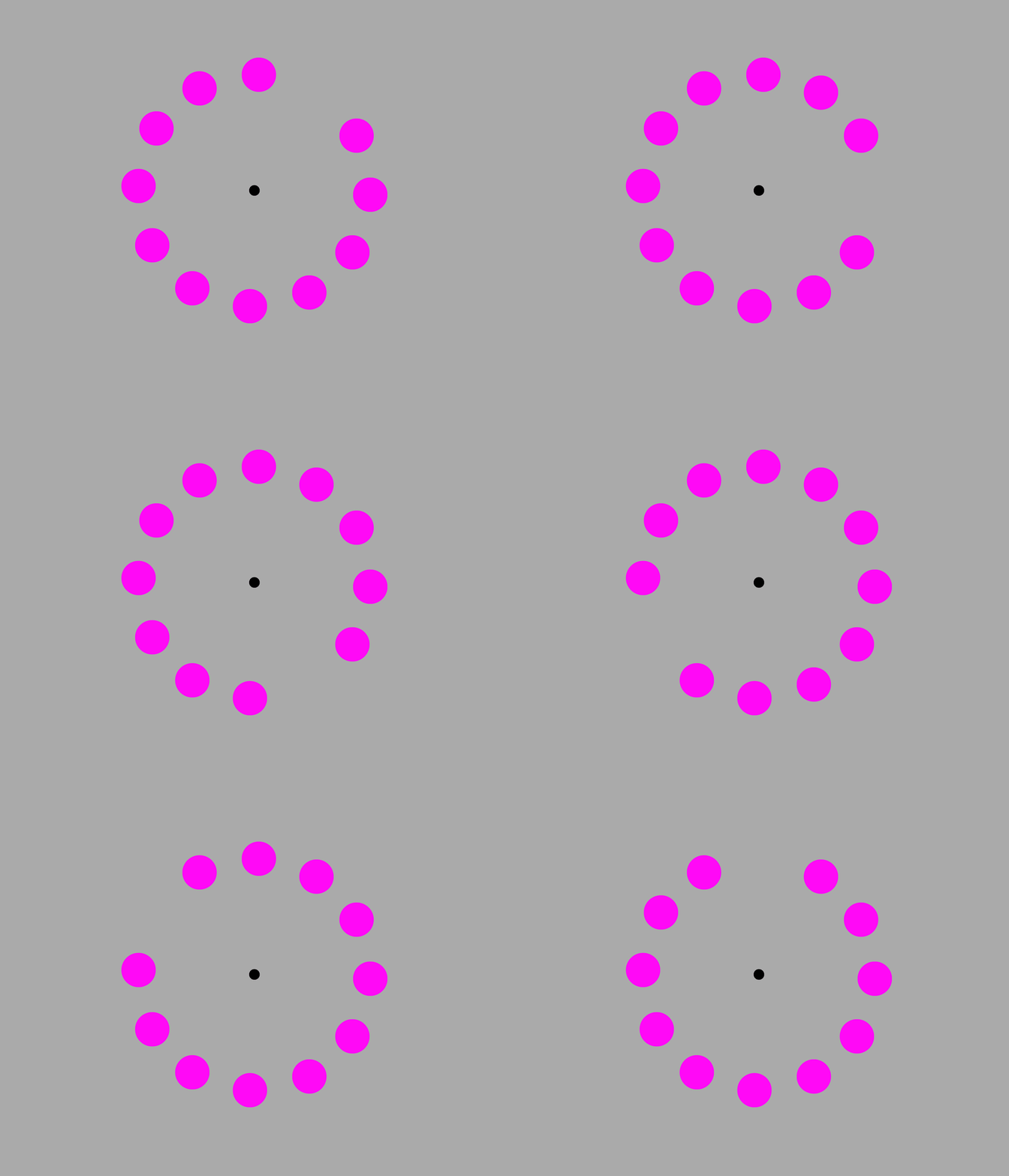
Color optical illusions are fascinating phenomena that trick our brains into perceiving colors differently than they actually are. These illusions exploit the way our visual system processes color information, leading to surprising and often beautiful visual effects. Understanding color optical illusions can provide insights into how our brains interpret visual data and can even inspire creative applications in art, design, and technology.
What Are Color Optical Illusions?
Color optical illusions are visual tricks that manipulate our perception of color. They often involve the use of contrasting colors, patterns, and shapes to create the illusion of different colors or shades. These illusions can be simple, such as the checker shadow illusion, or complex, involving intricate patterns and gradients.
How Do Color Optical Illusions Work?
Our visual system processes color information through a combination of photoreceptors in the retina and neural processing in the brain. Color optical illusions exploit the limitations and biases of this system to create perceptual distortions. Here are some key mechanisms behind color optical illusions:
- Contrast Effects: The way colors are perceived can change based on their surrounding colors. For example, a gray square on a black background may appear lighter than the same gray square on a white background.
- Simultaneous Contrast: This occurs when the perceived brightness or color of an object is influenced by the colors surrounding it. For instance, a red square on a blue background may appear more vibrant than the same red square on a red background.
- Afterimages: Staring at a bright color for a prolonged period can create an afterimage of the complementary color when you look away. This is due to the fatigue of the photoreceptors in the retina.
- Color Constancy: Our brains adjust for changes in lighting conditions to maintain consistent color perception. Illusions can exploit this by creating conditions where the brain misinterprets the lighting, leading to incorrect color perception.
Examples of Color Optical Illusions
There are numerous examples of color optical illusions that demonstrate the fascinating ways our brains can be tricked. Here are a few notable ones:
The Checker Shadow Illusion
The checker shadow illusion is a classic example of how our brains interpret shadows and lighting. In this illusion, a shadow cast on a checkerboard pattern makes certain squares appear to be different shades of gray, even though they are actually the same color.

The White's Illusion
White's illusion involves a series of gray bars on a colored background. The gray bars appear to be different shades of gray, but they are actually all the same color. This illusion demonstrates the effect of simultaneous contrast on color perception.

The Hermann Grid Illusion
The Hermann Grid illusion consists of a grid of black squares on a white background. When you look directly at the intersections of the grid, you may see gray blobs at the intersections. However, when you look directly at the intersections, the gray blobs disappear. This illusion is related to the way our visual system processes edges and contrast.

Applications of Color Optical Illusions
Understanding color optical illusions has practical applications in various fields. Here are a few examples:
- Art and Design: Artists and designers can use color optical illusions to create visually striking and engaging works. For example, the use of contrasting colors can make certain elements stand out or create a sense of depth and dimension.
- Marketing and Advertising: Color optical illusions can be used to grab attention and convey messages more effectively. For instance, using complementary colors can make advertisements more eye-catching.
- User Interface Design: In digital interfaces, color optical illusions can be used to guide user attention and improve usability. For example, using color contrast can highlight important buttons or navigation elements.
- Medical and Psychological Research: Studying color optical illusions can provide insights into how the brain processes visual information, which can be useful in diagnosing and treating visual disorders.
Creating Your Own Color Optical Illusions
If you're interested in creating your own color optical illusions, here are some steps to get you started:
- Choose a Concept: Decide on the type of illusion you want to create. This could be based on contrast, afterimages, or color constancy.
- Select Colors: Choose a color scheme that will enhance the illusion. Complementary colors often work well for creating strong visual effects.
- Design the Pattern: Create a pattern or layout that will exploit the chosen concept. This could involve using grids, gradients, or specific shapes.
- Test and Refine: Experiment with different variations of your design to see which one creates the strongest illusion. Make adjustments as needed.
💡 Note: When creating color optical illusions, it's important to consider the viewing conditions. Factors such as lighting and viewing distance can affect how the illusion is perceived.
The Science Behind Color Optical Illusions
To fully appreciate color optical illusions, it's helpful to understand the science behind them. Here are some key concepts:
- Photoreceptors: The retina contains three types of photoreceptors: rods and cones. Cones are responsible for color vision and come in three varieties: short (S), medium (M), and long (L) wavelength-sensitive cones. These cones work together to perceive a wide range of colors.
- Neural Processing: The brain processes information from the photoreceptors to create a coherent visual experience. This involves complex neural circuits that can be influenced by various factors, including contrast, brightness, and color.
- Perceptual Adaptation: Our visual system adapts to changes in the environment to maintain consistent perception. For example, our eyes adjust to different lighting conditions to keep colors looking the same.
Color Optical Illusions in Everyday Life
Color optical illusions are not just confined to art and design; they can be found in everyday life as well. Here are a few examples:
- Camouflage: Animals use color and pattern to blend into their surroundings, making them less visible to predators or prey. This is a form of color optical illusion that exploits our visual system's limitations.
- Digital Displays: Modern screens use color optical illusions to enhance visual quality. For example, the use of sub-pixels and color filters can create the illusion of higher resolution and more vibrant colors.
- Optical Art: Artists like Bridget Riley and Victor Vasarely have created works that use color optical illusions to create dynamic and engaging visual experiences.
Color Optical Illusions and Technology
Advances in technology have opened up new possibilities for exploring color optical illusions. Here are some ways technology is being used to create and study these illusions:
- Virtual Reality: VR environments can simulate different lighting and color conditions, allowing researchers to study how the brain processes visual information in controlled settings.
- Augmented Reality: AR applications can overlay digital elements onto the real world, creating new types of color optical illusions that blend physical and digital elements.
- Computer Graphics: Advanced rendering techniques can create highly realistic and immersive visual experiences, including the use of color optical illusions to enhance depth and realism.
Here is a table summarizing some of the key concepts and examples of color optical illusions:
| Concept | Example | Application |
|---|---|---|
| Contrast Effects | Checker Shadow Illusion | Art and Design |
| Simultaneous Contrast | White's Illusion | Marketing and Advertising |
| Afterimages | Complementary Color Afterimages | User Interface Design |
| Color Constancy | Chromatic Adaptation | Medical and Psychological Research |
Color optical illusions continue to fascinate and intrigue both scientists and artists alike. By understanding the mechanisms behind these illusions, we can gain deeper insights into the workings of the human visual system and find new ways to apply this knowledge in various fields. Whether you’re an artist looking to create stunning visual effects or a researcher studying the brain, color optical illusions offer a rich and rewarding area of exploration.
Related Terms:
- best optical illusion pictures
- optical illusions
- 3d optical illusion pictures
- 10 best optical illusions
- best optical illusions ever
- 12 mind bending perceptual illusions