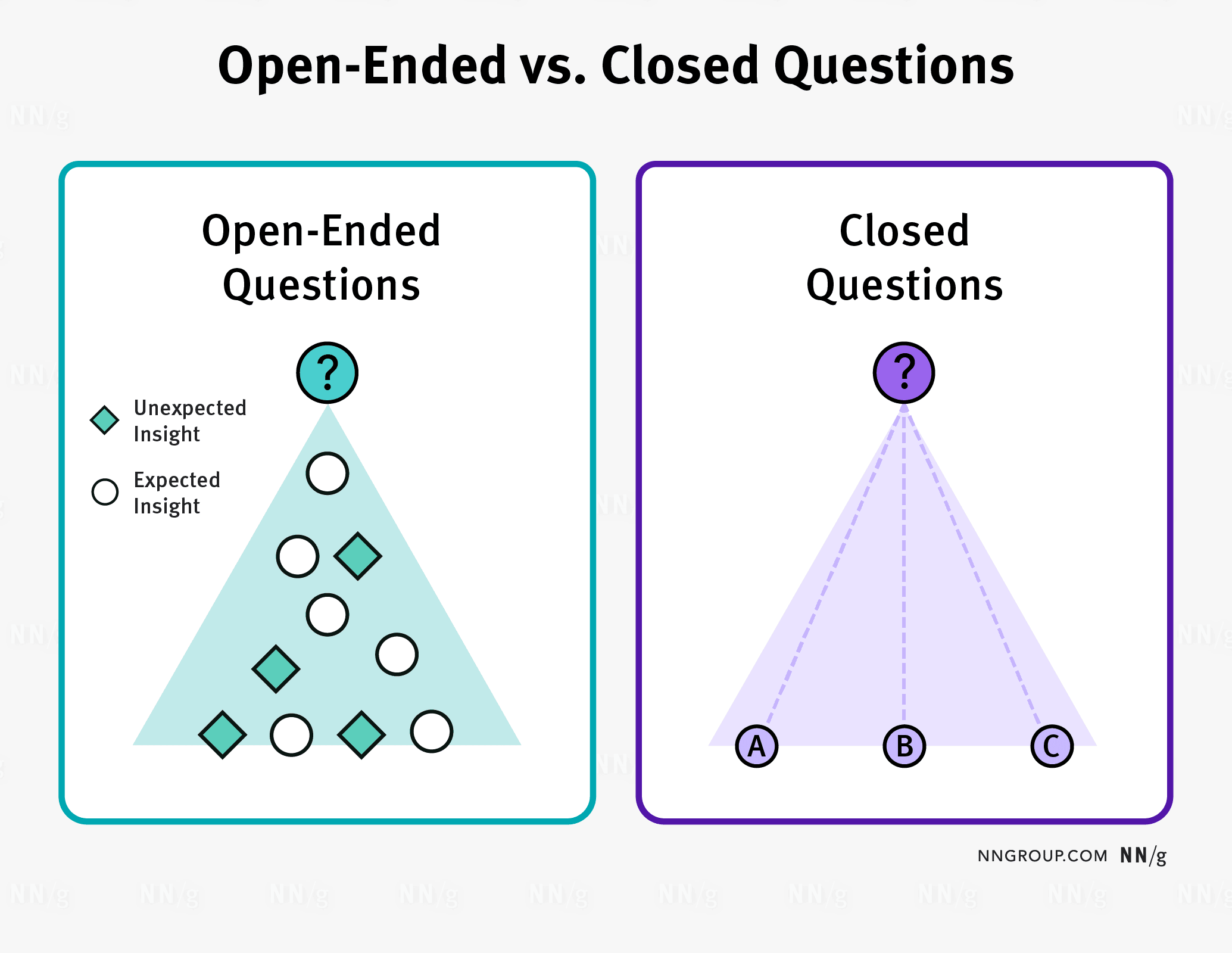
In the realm of data collection and research, the type of questions asked can significantly impact the quality and usefulness of the information gathered. One of the fundamental categories of questions is closed-ended questions. These questions are designed to elicit specific, predefined responses, making them invaluable for quantitative research and surveys. Understanding closed-ended questions examples and their applications can help researchers and professionals design more effective questionnaires and gather more precise data.
Understanding Closed-Ended Questions
Closed-ended questions are those that offer a limited set of response options. These options can be in the form of yes/no answers, multiple-choice questions, rating scales, or other predefined categories. The primary advantage of closed-ended questions is their ability to provide quantifiable data, which can be easily analyzed using statistical methods.
There are several types of closed-ended questions, each serving a different purpose:
- Yes/No Questions: These questions require a simple yes or no response. They are useful for gathering binary data.
- Multiple-Choice Questions: These questions offer a list of possible answers, from which the respondent selects one. They are versatile and can be used to gather a wide range of information.
- Rating Scale Questions: These questions ask respondents to rate something on a scale, such as a Likert scale. They are useful for measuring attitudes, opinions, and satisfaction levels.
- Ranking Questions: These questions ask respondents to rank items in order of preference or importance. They are useful for understanding priorities and preferences.
Examples of Closed-Ended Questions
To better understand how closed-ended questions work, let's look at some closed-ended questions examples across different contexts:
Customer Satisfaction Surveys
Customer satisfaction surveys often use closed-ended questions to gather quantitative data on customer experiences. Here are a few examples:
- On a scale of 1 to 5, how would you rate the quality of our product? (1 being very poor, 5 being excellent)
- Did you find our customer service helpful? (Yes/No)
- How likely are you to recommend our product to a friend? (Very likely, Somewhat likely, Neutral, Somewhat unlikely, Very unlikely)
Market Research
Market research surveys use closed-ended questions to understand consumer behavior and preferences. Here are some examples:
- Which of the following brands do you prefer? (Brand A, Brand B, Brand C, Other)
- How often do you purchase our product? (Daily, Weekly, Monthly, Rarely, Never)
- What is your primary reason for choosing our product? (Price, Quality, Brand reputation, Other)
Employee Satisfaction Surveys
Employee satisfaction surveys use closed-ended questions to gauge employee morale and job satisfaction. Here are some examples:
- How satisfied are you with your current role? (Very satisfied, Somewhat satisfied, Neutral, Somewhat dissatisfied, Very dissatisfied)
- Do you feel valued by your supervisor? (Yes/No)
- How would you rate the work-life balance at our company? (Excellent, Good, Fair, Poor, Very poor)
Healthcare Surveys
Healthcare surveys use closed-ended questions to collect data on patient experiences and health outcomes. Here are some examples:
- Have you visited a healthcare provider in the past year? (Yes/No)
- How would you rate the cleanliness of the healthcare facility? (Excellent, Good, Fair, Poor, Very poor)
- Did you experience any side effects from the medication? (Yes/No)
Advantages of Closed-Ended Questions
Closed-ended questions offer several advantages that make them a popular choice for researchers and professionals:
- Ease of Analysis: The predefined response options make data analysis straightforward and efficient.
- Consistency: Closed-ended questions ensure that all respondents are asked the same questions in the same way, reducing variability in responses.
- Time Efficiency: Respondents can quickly complete surveys with closed-ended questions, increasing response rates.
- Quantifiable Data: The data collected can be easily quantified and analyzed using statistical methods.
Disadvantages of Closed-Ended Questions
While closed-ended questions have many benefits, they also have some limitations:
- Limited Flexibility: Respondents are restricted to the predefined options, which may not capture the full range of their thoughts or experiences.
- Potential Bias: The wording of the questions and the response options can introduce bias, influencing respondents' answers.
- Lack of Depth: Closed-ended questions may not provide the depth of information needed for qualitative analysis.
Best Practices for Designing Closed-Ended Questions
To maximize the effectiveness of closed-ended questions, follow these best practices:
- Keep It Simple: Use clear and concise language to ensure that respondents understand the questions.
- Avoid Leading Questions: Ensure that the questions are neutral and do not influence the respondents' answers.
- Provide Exhaustive Options: Include all possible response options to cover the full range of potential answers.
- Use Mutually Exclusive Options: Ensure that the response options do not overlap, making it clear which option to choose.
- Test Your Questions: Pilot test your survey with a small group to identify any issues or ambiguities.
💡 Note: When designing closed-ended questions, it's important to consider the context and the audience. Tailor the questions to ensure they are relevant and understandable to the respondents.
Combining Closed-Ended and Open-Ended Questions
While closed-ended questions are valuable for quantitative data, they can be complemented by open-ended questions to gather more detailed and qualitative information. Open-ended questions allow respondents to provide their own answers, offering deeper insights into their thoughts and experiences.
Here is an example of how closed-ended and open-ended questions can be combined in a survey:
| Question Type | Question |
|---|---|
| Closed-Ended | How satisfied are you with our customer service? (Very satisfied, Somewhat satisfied, Neutral, Somewhat dissatisfied, Very dissatisfied) |
| Open-Ended | Please explain why you chose that rating. |
By combining both types of questions, researchers can gain a comprehensive understanding of the respondents' experiences and opinions.
💡 Note: When using open-ended questions, be prepared for the additional time and effort required to analyze the qualitative data.
Conclusion
Closed-ended questions are a powerful tool for gathering quantitative data in surveys and research. By understanding closed-ended questions examples and their applications, researchers and professionals can design more effective questionnaires and collect more precise data. While closed-ended questions have their limitations, they offer numerous advantages, including ease of analysis, consistency, and time efficiency. By following best practices and combining closed-ended questions with open-ended questions, researchers can gain a comprehensive understanding of their respondents’ experiences and opinions.
Related Terms:
- close ended questionnaire example
- simple close ended prompts examples
- close end questions examples
- five examples of closed questions
- closed ended questions examples interviews
- closed end questions for conversation