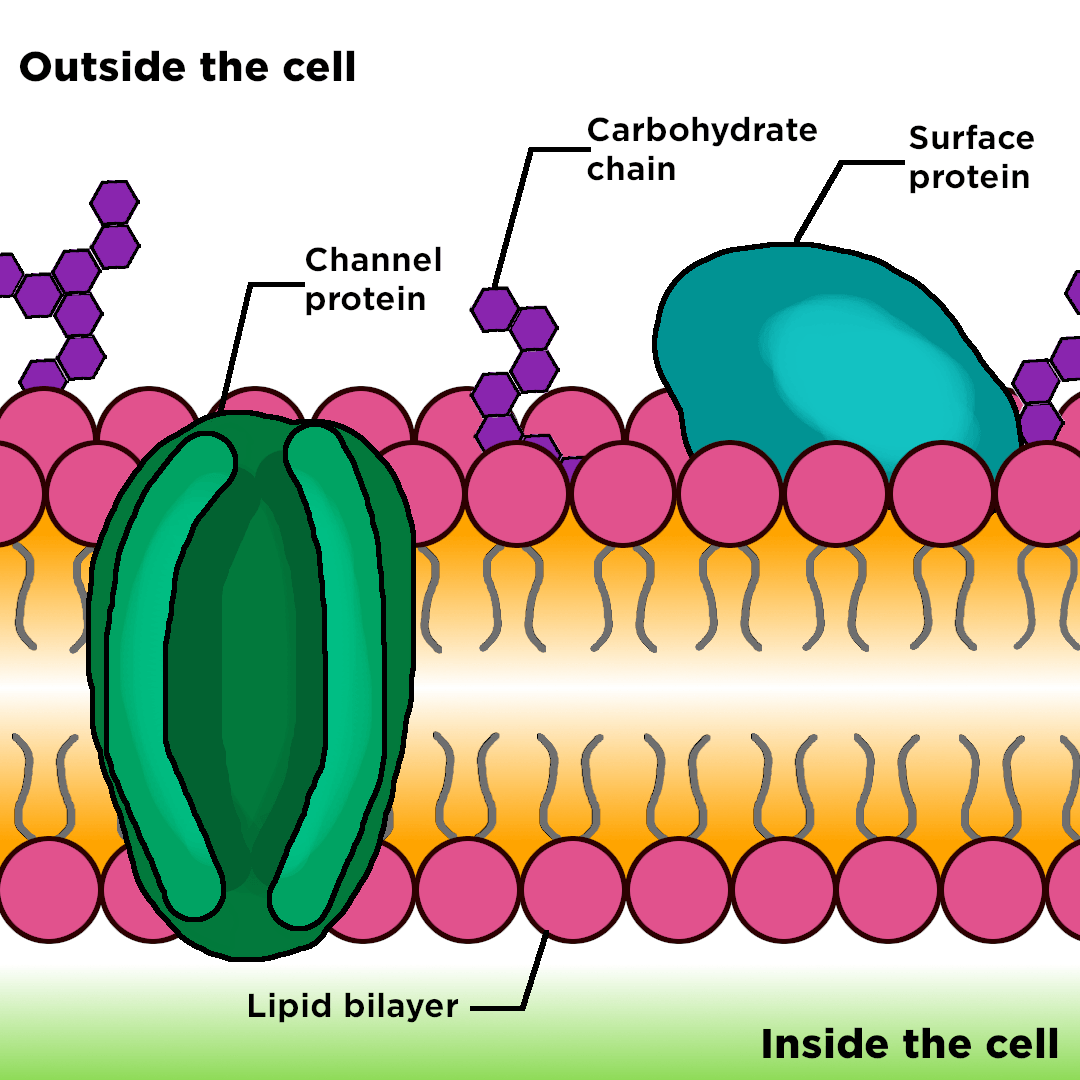
Understanding the intricate structure and function of the cell membrane is fundamental to grasping the complexities of cellular biology. The cell membrane, also known as the plasma membrane, is a dynamic barrier that surrounds the cell, regulating the movement of substances in and out of the cell. Creating a detailed cell membrane sketch can greatly enhance comprehension of its structure and function. This post will guide you through the process of drawing a cell membrane sketch, explaining the key components, and providing insights into their roles.
Understanding the Cell Membrane
The cell membrane is a selective barrier that allows the cell to interact with its environment while maintaining internal homeostasis. It is composed of a phospholipid bilayer with embedded proteins, carbohydrates, and other molecules. The phospholipid bilayer is the foundation of the membrane, providing a hydrophobic core that prevents the free passage of water-soluble molecules.
Key Components of the Cell Membrane
The cell membrane is made up of several key components, each playing a crucial role in its function. These components include:
- Phospholipids: The primary building blocks of the membrane, phospholipids have a hydrophilic head and two hydrophobic tails. These molecules arrange themselves in a bilayer, with the hydrophilic heads facing the aqueous environment and the hydrophobic tails facing inward.
- Proteins: Embedded within the phospholipid bilayer, proteins serve various functions, including transport, signaling, and structural support. They can be integral (spanning the membrane) or peripheral (attached to the surface).
- Carbohydrates: Attached to the outer surface of the membrane, carbohydrates form glycoproteins and glycolipids. These molecules play roles in cell recognition, adhesion, and communication.
- Cholesterol: Interspersed among the phospholipids, cholesterol helps maintain the fluidity and stability of the membrane. It prevents the phospholipids from packing too tightly, ensuring the membrane remains flexible.
Creating a Cell Membrane Sketch
Drawing a cell membrane sketch involves capturing the essential features of the membrane's structure. Here’s a step-by-step guide to help you create an accurate and informative sketch:
Materials Needed
- Paper or sketchbook
- Pencils (HB and 2B)
- Eraser
- Colored pencils or markers (optional)
Step-by-Step Guide
1. Draw the Phospholipid Bilayer: Start by drawing two parallel lines to represent the phospholipid bilayer. The space between these lines will depict the hydrophobic core.
2. Add Phospholipid Molecules: Within the bilayer, draw several phospholipid molecules. Each molecule should have a hydrophilic head (a circle or oval) and two hydrophobic tails (wavy lines). Ensure the heads are facing outward and the tails are facing inward.
3. Include Proteins: Draw various proteins embedded within the bilayer. Integral proteins should span the entire membrane, while peripheral proteins should be attached to the surface. Label these proteins as transporters, receptors, or enzymes.
4. Add Carbohydrates: On the outer surface of the membrane, draw carbohydrate chains attached to proteins or lipids. These can be represented as branched structures.
5. Insert Cholesterol: Scatter cholesterol molecules among the phospholipids. These can be depicted as small, irregular shapes.
6. Label the Components: Clearly label each component of the membrane, including phospholipids, proteins, carbohydrates, and cholesterol. Use arrows or lines to point to each labeled part.
7. Color and Detail: If using colored pencils or markers, add color to differentiate between the components. For example, use blue for the hydrophilic heads, green for the hydrophobic tails, red for proteins, and yellow for carbohydrates.
📝 Note: Ensure your sketch is to scale and accurately represents the relative sizes and positions of the components. This will help in understanding the spatial arrangement within the membrane.
Functional Aspects of the Cell Membrane
The cell membrane performs several critical functions that are essential for cellular survival and communication. These functions include:
- Selective Permeability: The membrane allows certain molecules to pass through while restricting others. This selectivity is crucial for maintaining the cell's internal environment.
- Cell Recognition: Carbohydrates on the membrane surface act as markers that help cells recognize each other, facilitating processes like immune response and cell signaling.
- Signal Transduction: Membrane proteins act as receptors that bind to specific molecules, triggering intracellular responses. This process is vital for cell communication and regulation.
- Structural Support: The membrane provides a framework that supports the cell's shape and integrity. It also anchors the cytoskeleton, which helps maintain the cell's structure.
Common Misconceptions About the Cell Membrane
There are several misconceptions about the cell membrane that can hinder a clear understanding of its structure and function. Some of these include:
- Static Structure: The cell membrane is often mistakenly thought of as a static structure. In reality, it is dynamic and fluid, allowing for the movement of molecules within the bilayer.
- Uniform Composition: The membrane is not uniformly composed of phospholipids and proteins. Different regions of the membrane have varying compositions, which can affect their functions.
- Passive Barrier: While the membrane does act as a barrier, it is not passive. It actively regulates the movement of substances through various transport mechanisms.
📝 Note: Understanding these misconceptions can help clarify the true nature of the cell membrane and its role in cellular processes.
Advanced Techniques for Studying the Cell Membrane
Studying the cell membrane involves various advanced techniques that provide detailed insights into its structure and function. Some of these techniques include:
- Electron Microscopy: This technique uses high-energy electrons to produce detailed images of the membrane's structure. It can reveal the arrangement of phospholipids and proteins at a nanoscale level.
- X-ray Crystallography: This method involves crystallizing membrane proteins and using X-rays to determine their three-dimensional structure. It provides precise information about the molecular interactions within the membrane.
- Fluorescence Microscopy: By labeling membrane components with fluorescent dyes, this technique allows researchers to track the movement and interactions of molecules within the membrane.
- Patch-Clamp Technique: This method measures the electrical currents across the membrane, providing insights into the function of ion channels and transporters.
Applications of Cell Membrane Research
Research on the cell membrane has numerous applications in various fields, including medicine, biotechnology, and pharmaceuticals. Some key applications include:
- Drug Development: Understanding the membrane's structure and function can aid in the development of drugs that target specific membrane proteins or receptors.
- Gene Therapy: Membrane research can help in designing vectors that efficiently deliver genetic material into cells, enhancing the effectiveness of gene therapy.
- Immunology: Studying the membrane's role in cell recognition and signaling can lead to advancements in immunology, such as developing vaccines and treatments for autoimmune diseases.
- Biotechnology: Membrane research can contribute to the development of biotechnological applications, such as creating artificial membranes for biosensors and biofuels.
📝 Note: The applications of cell membrane research are vast and continue to expand as our understanding of the membrane deepens.
Comparative Analysis of Cell Membranes in Different Organisms
The structure and composition of the cell membrane can vary significantly between different organisms. Here is a comparative analysis of cell membranes in prokaryotes, eukaryotes, and plant cells:
| Organism | Phospholipid Composition | Protein Content | Carbohydrate Content | Unique Features |
|---|---|---|---|---|
| Prokaryotes | Simple phospholipids | High protein content | Low carbohydrate content | Lack of membrane-bound organelles |
| Eukaryotes | Complex phospholipids | Moderate protein content | Moderate carbohydrate content | Presence of membrane-bound organelles |
| Plant Cells | Complex phospholipids | Moderate protein content | High carbohydrate content | Presence of a cell wall and chloroplasts |
Understanding these differences can provide insights into the evolutionary adaptations and functional specializations of cell membranes in various organisms.
📝 Note: The comparative analysis highlights the diversity and complexity of cell membranes across different life forms.
In conclusion, the cell membrane is a complex and dynamic structure that plays a crucial role in cellular function. Creating a detailed cell membrane sketch can greatly enhance understanding of its components and their roles. By studying the membrane’s structure, function, and applications, we can gain valuable insights into cellular biology and its implications for various fields. The knowledge gained from membrane research continues to drive advancements in medicine, biotechnology, and beyond, highlighting the importance of this fundamental cellular component.
Related Terms:
- cell membrane easy to draw
- cell membrane drawing
- simple drawing of cell membrane
- easy drawing of cell membrane
- easy diagram of cell membrane
- detailed cell membrane diagram