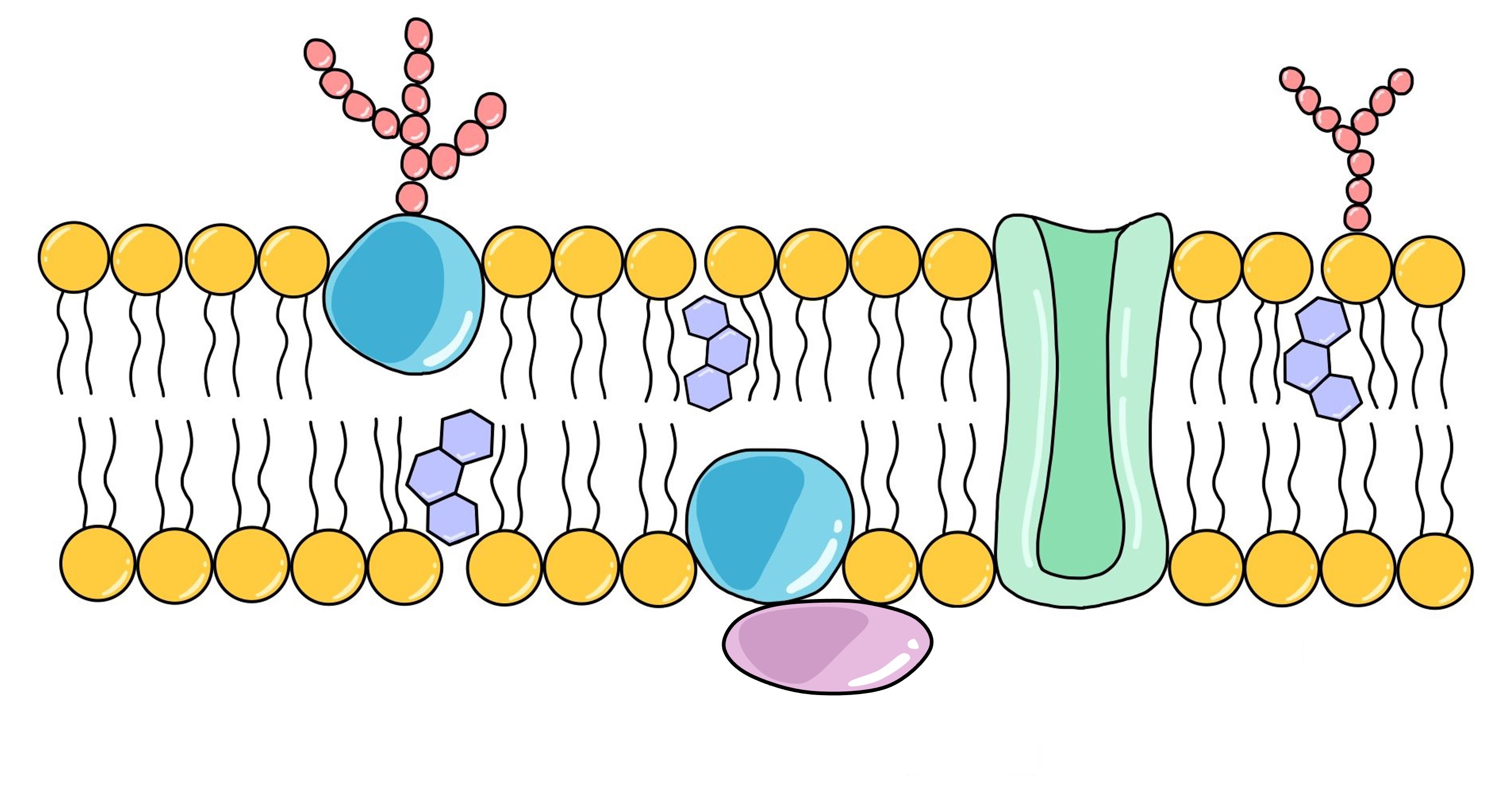
Creating a detailed and accurate cell membrane drawing is a fundamental skill for students and professionals in the fields of biology, biochemistry, and related sciences. The cell membrane, also known as the plasma membrane, is a critical component of all cells, serving as a selective barrier that regulates the movement of substances in and out of the cell. Understanding its structure and function is essential for comprehending cellular processes and overall biological mechanisms.
Understanding the Cell Membrane
The cell membrane is a complex structure composed primarily of lipids and proteins. It is often described as a fluid mosaic model, which highlights its dynamic nature. The membrane is composed of a phospholipid bilayer, with proteins embedded within it. This structure allows the membrane to be both flexible and selective, enabling it to perform its various functions effectively.
Components of the Cell Membrane
The cell membrane is made up of several key components, each playing a crucial role in its function:
- Phospholipids: These are the primary building blocks of the membrane, forming a bilayer with hydrophobic tails facing inward and hydrophilic heads facing outward.
- Proteins: Embedded within the phospholipid bilayer, proteins serve various functions, including transport, signaling, and structural support.
- Carbohydrates: Attached to the outer surface of the membrane, carbohydrates form glycoproteins and glycolipids, which play roles in cell recognition and communication.
- Cholesterol: Interspersed among the phospholipids, cholesterol helps maintain the membrane's fluidity and stability.
Functions of the Cell Membrane
The cell membrane performs several vital functions that are essential for cellular survival and function:
- Protection: The membrane acts as a barrier, protecting the cell from its external environment.
- Selective Permeability: It regulates the movement of substances in and out of the cell, allowing only specific molecules to pass through.
- Cell Recognition: Carbohydrates on the membrane surface help cells recognize and interact with each other.
- Signal Transduction: The membrane contains receptors that detect and respond to external signals, initiating cellular responses.
- Transport: Proteins in the membrane facilitate the movement of molecules across the membrane through processes like diffusion, osmosis, and active transport.
Creating a Cell Membrane Drawing
Drawing a cell membrane accurately involves understanding its structure and components. Here is a step-by-step guide to creating a detailed cell membrane drawing:
Materials Needed
- Paper or drawing board
- Pencils (HB and 2B)
- Eraser
- Colored pencils or markers
- Ruler
Step-by-Step Guide
1. Outline the Membrane: Start by drawing a thin, wavy line to represent the cell membrane. This line should be slightly curved to indicate the fluid nature of the membrane.
2. Draw the Phospholipid Bilayer: Inside the membrane outline, draw two parallel lines to represent the phospholipid bilayer. The space between these lines should be wider than the lines themselves.
3. Add Phospholipid Molecules: Within the bilayer, draw small circles or ovals to represent the phospholipid molecules. Ensure that the hydrophilic heads are facing outward and the hydrophobic tails are facing inward.
4. Include Proteins: Draw various shapes (circles, ovals, and irregular shapes) within and on the surface of the bilayer to represent proteins. Label these as integral proteins, peripheral proteins, and transmembrane proteins.
5. Add Carbohydrates: On the outer surface of the membrane, draw small, branched structures to represent carbohydrates. These can be attached to proteins (glycoproteins) or lipids (glycolipids).
6. Include Cholesterol: Draw small, irregular shapes interspersed among the phospholipids to represent cholesterol molecules.
7. Label the Components: Clearly label each component of the membrane, including phospholipids, proteins, carbohydrates, and cholesterol.
8. Color the Drawing: Use colored pencils or markers to add color to your drawing. Typically, the phospholipid bilayer can be shaded in light blue, proteins in green, carbohydrates in pink, and cholesterol in yellow.
📝 Note: Ensure that your drawing is proportionate and that the components are accurately represented in terms of size and placement.
Here is a simple table to help you remember the key components and their functions:
| Component | Function |
|---|---|
| Phospholipids | Form the bilayer structure |
| Proteins | Transport, signaling, structural support |
| Carbohydrates | Cell recognition and communication |
| Cholesterol | Maintains membrane fluidity and stability |
Common Mistakes to Avoid
When creating a cell membrane drawing, it's important to avoid common mistakes that can affect the accuracy of your illustration:
- Incorrect Proportions: Ensure that the phospholipid bilayer is proportionate and that the components are accurately sized.
- Omitting Key Components: Make sure to include all essential components, such as phospholipids, proteins, carbohydrates, and cholesterol.
- Inaccurate Labeling: Clearly label each component to avoid confusion.
- Overcrowding: Avoid overcrowding the drawing with too many details, which can make it difficult to understand.
📝 Note: Double-check your drawing for accuracy and clarity before finalizing it.
Creating a detailed and accurate cell membrane drawing is a valuable skill that enhances understanding of cellular biology. By following the steps outlined above and avoiding common mistakes, you can produce a clear and informative illustration that effectively communicates the structure and function of the cell membrane.
In summary, the cell membrane is a complex and dynamic structure composed of phospholipids, proteins, carbohydrates, and cholesterol. Its primary functions include protection, selective permeability, cell recognition, signal transduction, and transport. By understanding these components and functions, you can create a detailed and accurate cell membrane drawing that serves as a useful educational tool. Whether you are a student, educator, or professional, mastering the art of cell membrane drawing will deepen your appreciation for the intricate workings of cellular biology.
Related Terms:
- cell membrane location
- cell membrane drawing with labels
- cell membrane definition
- cell membrane function
- cell membrane structure
- cell membrane drawing simple