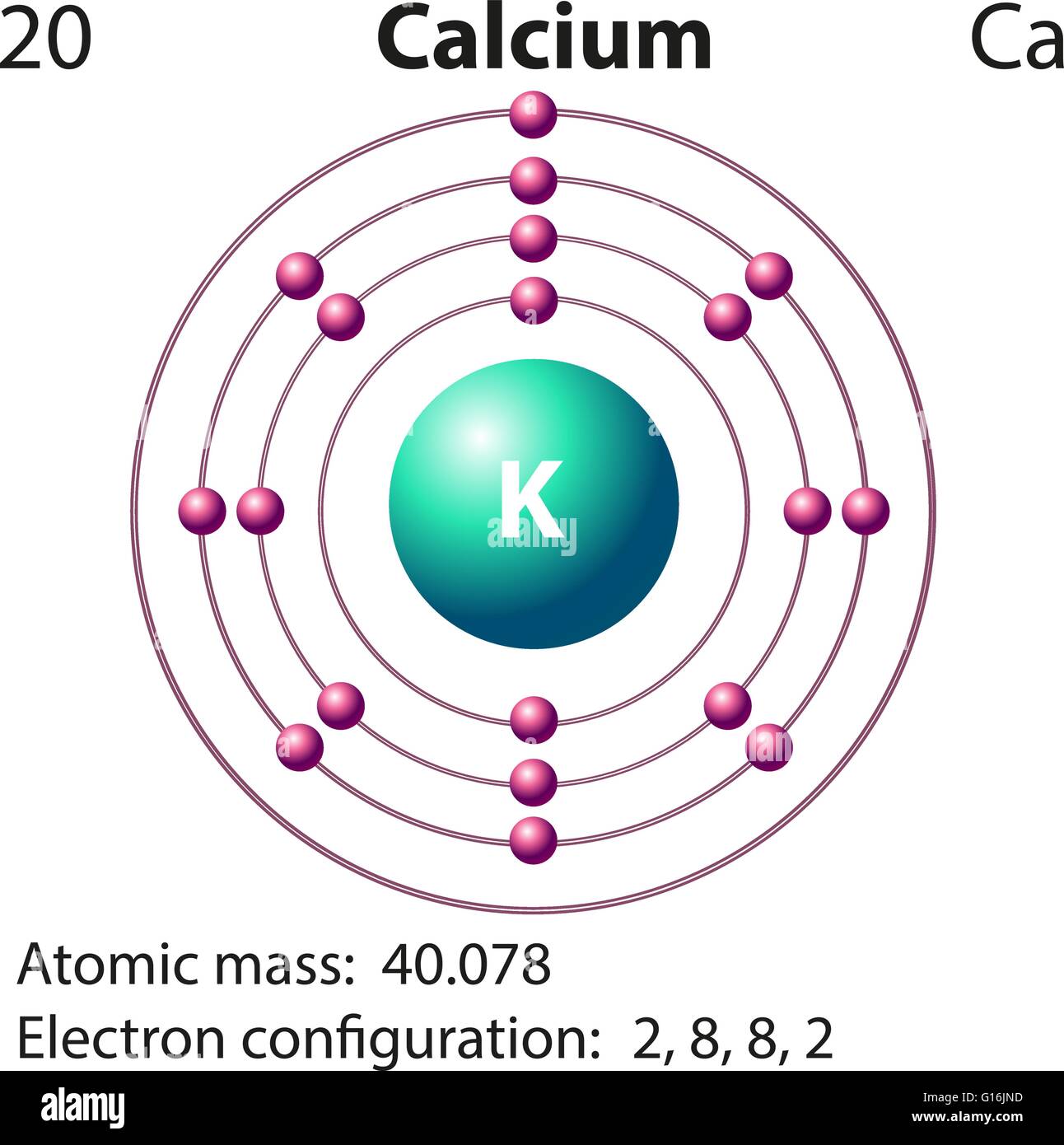
Understanding the Ca Electron Configuration is fundamental to grasping the chemical behavior and properties of calcium. Calcium, with the atomic number 20, is a crucial element in various biological and industrial processes. Its electron configuration provides insights into its reactivity, bonding capabilities, and role in chemical reactions. This blog post delves into the details of the Ca Electron Configuration, its significance, and how it influences the element's properties.
What is Electron Configuration?
Electron configuration refers to the arrangement of electrons in the orbitals of an atom. This arrangement is governed by the principles of quantum mechanics and determines the chemical properties of an element. The configuration is typically written using a notation that specifies the energy levels (n) and the type of orbital (s, p, d, f) along with the number of electrons in each orbital.
Understanding the Ca Electron Configuration
The Ca Electron Configuration for calcium (Ca) can be determined by following the Aufbau principle, which states that electrons fill the lowest energy orbitals first. Calcium has 20 electrons, and its electron configuration is:
1s2 2s2 2p6 3s2 3p6 4s2
Let’s break down this configuration:
- 1s2: The first energy level contains one s-orbital with 2 electrons.
- 2s2: The second energy level contains one s-orbital with 2 electrons.
- 2p6: The second energy level contains three p-orbitals with a total of 6 electrons.
- 3s2: The third energy level contains one s-orbital with 2 electrons.
- 3p6: The third energy level contains three p-orbitals with a total of 6 electrons.
- 4s2: The fourth energy level contains one s-orbital with 2 electrons.
This configuration shows that calcium has a full outer shell of 8 electrons (3s2 3p6) and 2 electrons in the 4s orbital. The 4s orbital is the outermost orbital, making calcium a member of the alkaline earth metals group.
Significance of the Ca Electron Configuration
The Ca Electron Configuration is crucial for understanding calcium’s chemical behavior. Here are some key points:
- Valence Electrons: Calcium has 2 valence electrons in its outermost 4s orbital. These electrons are involved in chemical bonding and reactions.
- Reactivity: The presence of 2 valence electrons makes calcium highly reactive. It readily loses these electrons to form a stable +2 oxidation state, making it a strong reducing agent.
- Bonding: Calcium forms ionic bonds with non-metals by donating its 2 valence electrons. This results in the formation of calcium compounds such as calcium oxide (CaO) and calcium chloride (CaCl2).
- Biological Role: Calcium is essential for various biological processes, including muscle contraction, nerve function, and bone formation. Its electron configuration allows it to bind to proteins and other molecules, facilitating these processes.
Ca Electron Configuration and Periodic Table
The Ca Electron Configuration places calcium in the second group (Group 2) of the periodic table, known as the alkaline earth metals. This group includes elements with similar electron configurations, specifically having 2 electrons in their outermost s-orbital. The periodic table arrangement helps predict the chemical properties and behavior of these elements.
Here is a table showing the electron configurations of some alkaline earth metals:
| Element | Atomic Number | Electron Configuration |
|---|---|---|
| Beryllium (Be) | 4 | 1s2 2s2 |
| Magnesium (Mg) | 12 | 1s2 2s2 2p6 3s2 |
| Calcium (Ca) | 20 | 1s2 2s2 2p6 3s2 3p6 4s2 |
| Strontium (Sr) | 38 | 1s2 2s2 2p6 3s2 3p6 3d10 4s2 4p6 5s2 |
| Barium (Ba) | 56 | 1s2 2s2 2p6 3s2 3p6 3d10 4s2 4p6 4d10 5s2 5p6 6s2 |
Ca Electron Configuration and Chemical Reactions
The Ca Electron Configuration influences how calcium reacts with other elements. Calcium’s tendency to lose its 2 valence electrons makes it a strong reducing agent. Some common reactions involving calcium include:
- Reaction with Oxygen: Calcium reacts with oxygen to form calcium oxide (CaO). The reaction is exothermic and produces a bright white light.
- Reaction with Water: Calcium reacts with water to form calcium hydroxide (Ca(OH)2) and hydrogen gas (H2). This reaction is less vigorous compared to the reaction of alkali metals with water.
- Reaction with Halogens: Calcium reacts with halogens such as chlorine (Cl2) and bromine (Br2) to form calcium halides like calcium chloride (CaCl2) and calcium bromide (CaBr2).
Ca Electron Configuration and Biological Importance
Calcium plays a vital role in biological systems, and its Ca Electron Configuration is crucial for these functions. Some key biological roles of calcium include:
- Muscle Contraction: Calcium ions (Ca2+) are essential for muscle contraction. They bind to proteins in muscle fibers, triggering the contraction process.
- Nerve Function: Calcium ions are involved in the transmission of nerve impulses. They help regulate the release of neurotransmitters, which are chemicals that transmit signals between nerve cells.
- Bone Formation: Calcium is a major component of bones and teeth. It provides structural support and strength. The Ca Electron Configuration allows calcium to bind to phosphate ions, forming hydroxyapatite, the primary mineral in bones.
🔍 Note: The biological roles of calcium are diverse and complex, involving various molecular interactions facilitated by its electron configuration.
Ca Electron Configuration and Industrial Applications
Calcium’s Ca Electron Configuration makes it valuable in various industrial applications. Some of these applications include:
- Steel Production: Calcium is used as a deoxidizer and desulfurizer in steel production. It helps remove impurities from molten steel, improving its quality.
- Cement Production: Calcium oxide (CaO) is a key component in cement production. It reacts with water to form calcium hydroxide, which hardens to form concrete.
- Pharmaceuticals: Calcium compounds are used in various pharmaceuticals, including antacids and calcium supplements. These compounds help maintain calcium levels in the body, supporting bone health and other biological functions.
🔍 Note: The industrial applications of calcium are vast and continue to evolve as new technologies and materials are developed.
Calcium’s Ca Electron Configuration is a fundamental aspect of its chemical and physical properties. Understanding this configuration provides insights into calcium’s reactivity, bonding capabilities, and role in various biological and industrial processes. From its position in the periodic table to its involvement in chemical reactions and biological functions, the Ca Electron Configuration is a cornerstone of calcium’s behavior and applications. By grasping the details of this configuration, we can better appreciate the significance of calcium in our world.
Related Terms:
- sr electron configuration
- calcium electron configuration
- na electron configuration
- ar electron configuration
- v electron configuration
- ca electron configuration full