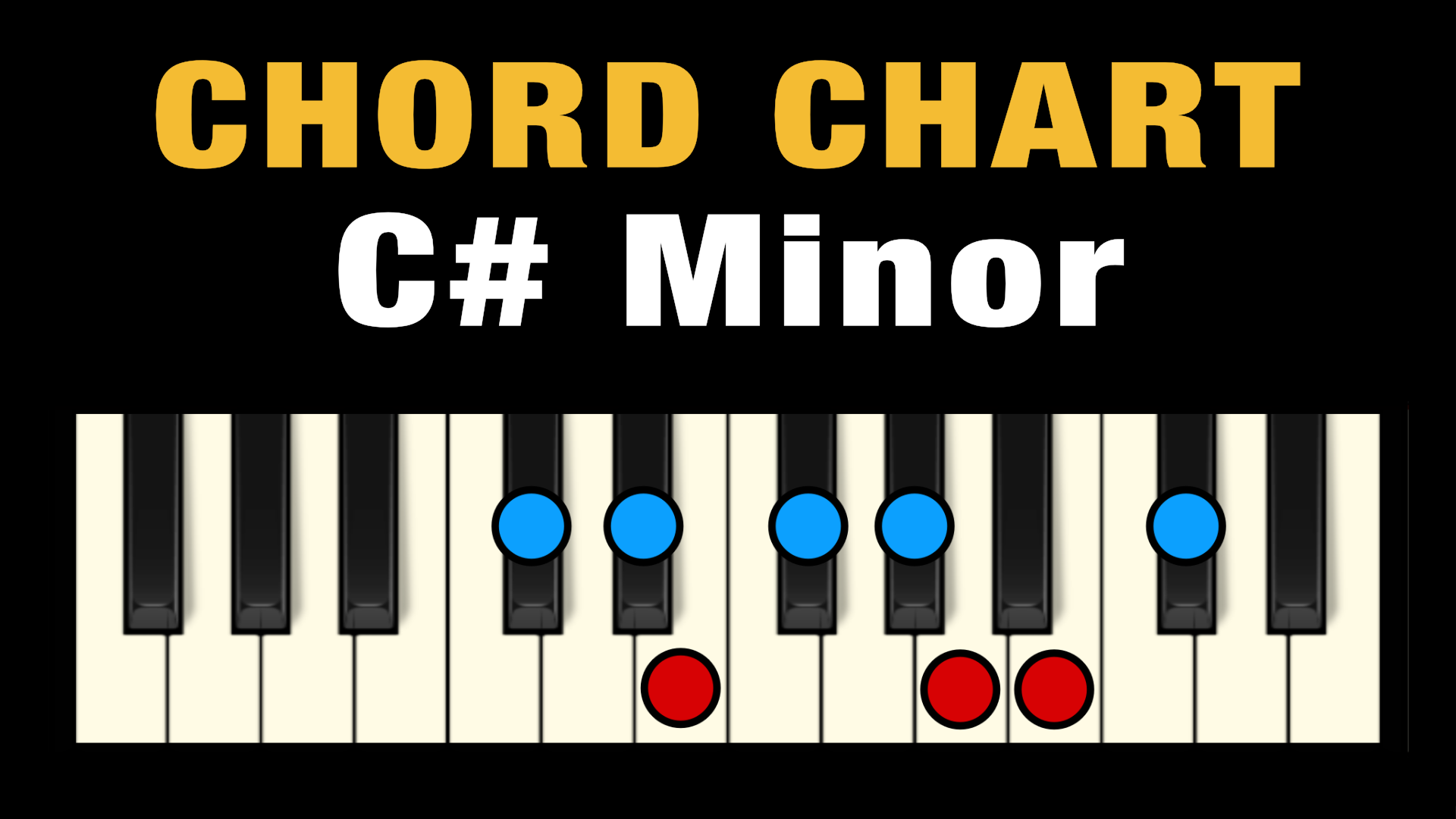
Music has the power to evoke emotions, create atmospheres, and tell stories. One of the fundamental building blocks of this emotional language is the C Minor Triad. This chord is a staple in various genres, from classical to rock, and understanding its structure and usage can greatly enhance your musical skills. Whether you're a beginner or an experienced musician, delving into the world of the C Minor Triad can open up new creative possibilities.
Understanding the C Minor Triad
The C Minor Triad is a three-note chord consisting of the root note C, the minor third E♭, and the perfect fifth G. The intervals between these notes are what give the chord its distinctive minor sound. To break it down:
- Root Note (C): The foundation of the chord.
- Minor Third (E♭): Three semitones above the root note, creating a melancholic sound.
- Perfect Fifth (G): Seven semitones above the root note, providing stability.
This combination of notes creates a chord that is often associated with sadness, introspection, and drama. However, it can also be used to create tension and resolution in a musical piece.
Constructing the C Minor Triad
Constructing the C Minor Triad is straightforward once you understand the intervals involved. Here’s a step-by-step guide:
- Start with the Root Note: Begin with the note C.
- Add the Minor Third: Count three semitones up from C to reach E♭.
- Add the Perfect Fifth: Count seven semitones up from C to reach G.
So, the notes of the C Minor Triad are C, E♭, and G. You can play this chord on a piano, guitar, or any other instrument that allows you to produce these three notes simultaneously.
💡 Note: Remember that the intervals are crucial. A minor third is three semitones, not three whole steps. This distinction is what gives the chord its minor quality.
Playing the C Minor Triad on Different Instruments
The versatility of the C Minor Triad makes it suitable for various instruments. Here are some examples of how to play it on different instruments:
Piano
On the piano, you can play the C Minor Triad by placing your fingers on the keys C, E♭, and G. You can use different fingerings depending on the context, but a common fingering is:
- Thumb on C
- Middle finger on E♭
- Pinky finger on G
This fingering allows for smooth transitions to other chords and scales.
Guitar
On the guitar, the C Minor Triad can be played in several positions. One common way is to use the open position:
- Index finger on the 1st fret of the B string (C)
- Middle finger on the 2nd fret of the D string (E♭)
- Ring finger on the 3rd fret of the A string (G)
This position allows you to play the chord with a clear and resonant sound.
Violin
On the violin, you can play the C Minor Triad by positioning your fingers as follows:
- First finger on the C note
- Second finger on the E♭ note
- Third finger on the G note
This positioning allows for a smooth bowing technique and a rich tone.
Using the C Minor Triad in Music
The C Minor Triad is a versatile chord that can be used in various musical contexts. Here are some common ways to incorporate it into your compositions:
Chord Progressions
One of the most common uses of the C Minor Triad is in chord progressions. It can be paired with other chords to create a sense of harmony and movement. Some popular progressions involving the C Minor Triad include:
- Cm - Fm - Cm
- Cm - G - Cm
- Cm - Am - Fm - Cm
These progressions can be used in a variety of genres, from classical to pop.
Melodic Writing
The C Minor Triad can also be used to create melodies. The notes C, E♭, and G can be used as the foundation for a melody, with additional notes added for variety. For example, you could create a melody that moves between the notes of the C Minor Triad and other notes in the C Minor scale.
Harmonic Writing
In harmonic writing, the C Minor Triad can be used to create a sense of tension and resolution. For example, you could use the C Minor Triad as a pre-dominant chord, leading to a dominant chord like G, which then resolves to a tonic chord like C Major. This creates a sense of harmonic movement and resolution.
The C Minor Triad in Different Genres
The C Minor Triad is used extensively across various musical genres. Here are some examples of how it is utilized in different styles:
Classical Music
In classical music, the C Minor Triad is often used to create a sense of drama and tension. Composers like Beethoven and Mozart frequently used minor keys to evoke strong emotions. For example, Beethoven's "Moonlight Sonata" features the C Minor Triad prominently, creating a melancholic and introspective atmosphere.
Rock Music
In rock music, the C Minor Triad is a staple in many iconic songs. Bands like The Beatles and Nirvana have used this chord to create powerful and emotive riffs. For example, Nirvana's "Heart-Shaped Box" features a prominent C Minor Triad, contributing to the song's dark and intense mood.
Jazz Music
In jazz, the C Minor Triad is often used as a foundation for improvisation. Jazz musicians frequently use minor chords to create complex and harmonically rich compositions. For example, Miles Davis' "So What" features a C Minor Triad in its chord progression, providing a solid harmonic base for improvisation.
Practical Exercises for Mastering the C Minor Triad
To truly master the C Minor Triad, it's essential to practice various exercises that reinforce your understanding and technique. Here are some practical exercises to help you get started:
Chord Arpeggios
Playing arpeggios is a great way to familiarize yourself with the notes of the C Minor Triad. An arpeggio involves playing the notes of the chord one at a time in a sequence. For example, you can play C, E♭, and G in a smooth, flowing manner. This exercise helps improve your finger dexterity and ear training.
Chord Transitions
Practicing chord transitions involves moving smoothly from the C Minor Triad to other chords. For example, you can practice transitioning from Cm to Fm, or from Cm to G. This exercise helps improve your chord changes and overall playing fluidity.
Improvisation
Improvisation is a key skill for any musician. Practicing improvisation over a C Minor Triad progression can help you develop your ear and creativity. Start by playing a simple Cm - Fm - Cm progression and improvise a melody over it. Experiment with different scales and notes to create a unique sound.
Advanced Techniques with the C Minor Triad
Once you have a solid understanding of the basics, you can explore advanced techniques to enhance your use of the C Minor Triad. Here are some advanced concepts to consider:
Inversions
Inversions involve rearranging the notes of the C Minor Triad to create different voicings. The three inversions of the C Minor Triad are:
| Inversion | Notes |
|---|---|
| Root Position | C, E♭, G |
| First Inversion | E♭, G, C |
| Second Inversion | G, C, E♭ |
Each inversion has a unique sound and can be used to create different harmonic textures.
Chord Extensions
Chord extensions involve adding additional notes to the C Minor Triad to create richer harmonies. Common extensions include the seventh, ninth, eleventh, and thirteenth. For example, a C Minor Seventh chord (Cm7) includes the notes C, E♭, G, and B♭. This chord adds a sense of tension and resolution to your music.
Chord Substitutions
Chord substitutions involve replacing one chord with another to create interesting harmonic movements. For example, you can substitute a C Minor Triad with a C Minor Seventh chord or a C Minor Sixth chord. This technique can add depth and complexity to your compositions.
💡 Note: Experimenting with different inversions, extensions, and substitutions can greatly enhance your musical vocabulary and creativity.
The Emotional Impact of the C Minor Triad
The C Minor Triad has a unique emotional impact that makes it a powerful tool for composers and musicians. Its melancholic and introspective sound can evoke a range of emotions, from sadness to longing. Understanding how to use this chord effectively can help you create music that resonates with your audience on a deeper level.
In conclusion, the C Minor Triad is a fundamental building block of music that offers endless creative possibilities. Whether you’re a beginner or an experienced musician, exploring the structure, usage, and emotional impact of this chord can greatly enhance your musical skills and compositions. From classical to rock, the C Minor Triad is a versatile tool that can be used in various genres to create powerful and emotive music. By practicing various exercises and exploring advanced techniques, you can master this chord and unlock new levels of creativity in your musical journey.
Related Terms:
- b minor triad guitar chart
- minor triads chart
- major and minor triads
- guitar minor triads chart
- minor triad guitar diagram
- all major and minor triads