Acute respiratory distress syndrome (ARDS) is a severe condition characterized by rapid onset of widespread inflammation in the lungs. It leads to impaired gas exchange and can be life-threatening. The Berlin Criteria ARDS is a widely accepted set of guidelines used to diagnose and classify ARDS, ensuring consistent and accurate identification of the syndrome. This post delves into the intricacies of the Berlin Criteria ARDS, its significance, and how it has revolutionized the management of ARDS.
Understanding ARDS
ARDS is a clinical syndrome that results from various direct and indirect lung injuries. Direct injuries include pneumonia and aspiration, while indirect injuries encompass sepsis and trauma. The hallmark of ARDS is the rapid onset of respiratory failure, often within 24-48 hours of the initial insult. The condition is marked by diffuse alveolar damage, increased pulmonary vascular permeability, and the accumulation of protein-rich edema fluid in the alveoli.
The Evolution of ARDS Criteria
The diagnosis of ARDS has evolved over the years, with the first set of criteria established in 1994 by the American-European Consensus Conference (AECC). However, these criteria were criticized for their lack of specificity and sensitivity. The Berlin Definition, introduced in 2012, aimed to address these shortcomings by providing a more precise and clinically relevant classification system.
The Berlin Criteria ARDS
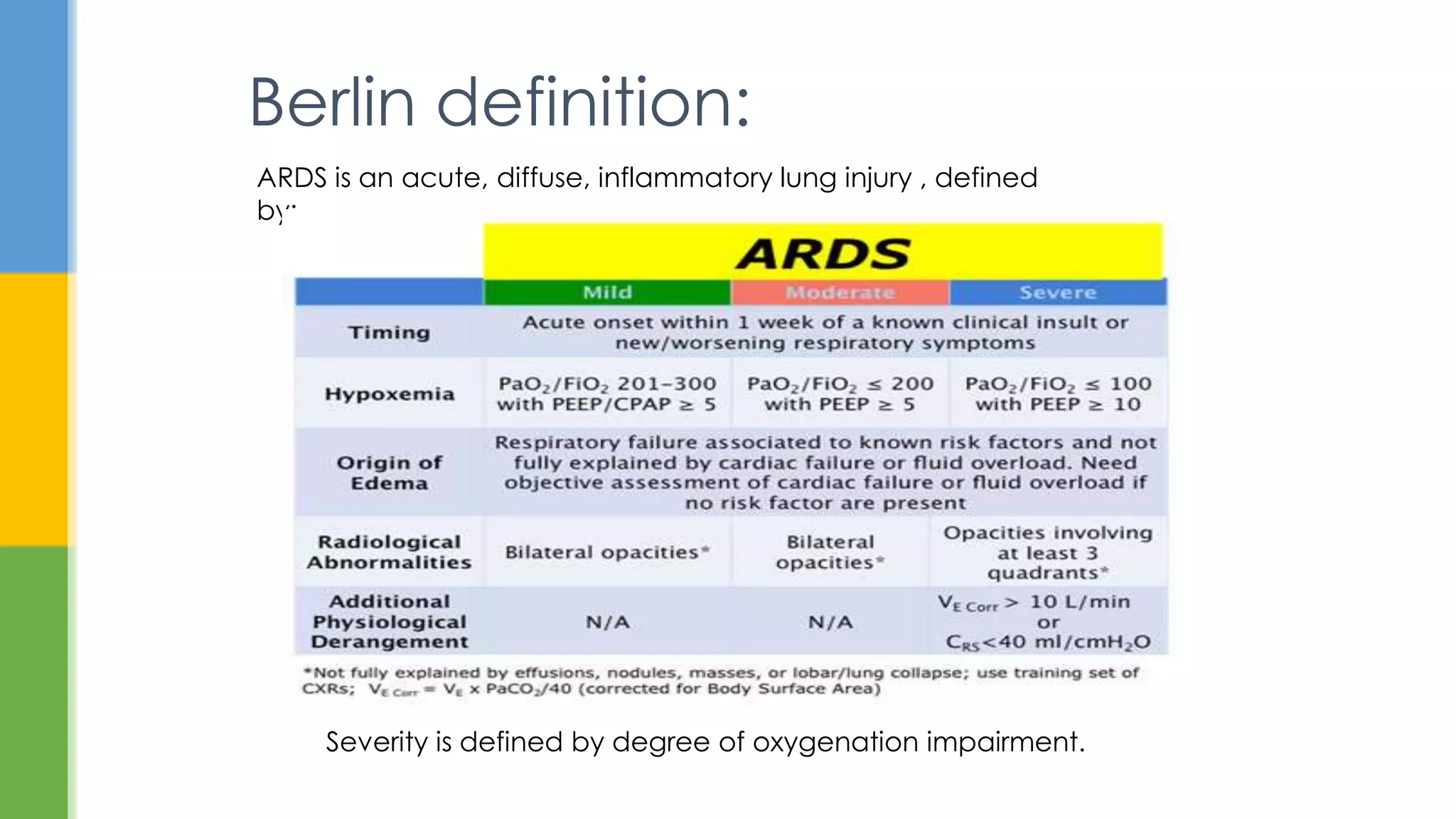
The Berlin Criteria ARDS is based on four key components: timing, chest imaging, origin of edema, and oxygenation. These criteria help clinicians diagnose ARDS and classify its severity, guiding appropriate management strategies.
Timing
The onset of ARDS must occur within one week of a known clinical insult or new or worsening respiratory symptoms. This timing criterion ensures that the diagnosis is made promptly, allowing for early intervention and better outcomes.
Chest Imaging
Chest imaging, typically a chest X-ray or computed tomography (CT) scan, must show bilateral opacities not fully explained by effusions, lobar/lung collapse, or nodules. These opacities indicate the presence of pulmonary edema and inflammation, which are characteristic of ARDS.
Origin of Edema
The edema must not be solely due to cardiac failure or fluid overload. This criterion is crucial for differentiating ARDS from other causes of respiratory distress, such as heart failure. If there is no risk factor for ARDS, an objective assessment (e.g., echocardiography) should be performed to exclude hydrostatic edema as the cause of respiratory failure.
Oxygenation
The severity of ARDS is determined by the level of hypoxemia, as measured by the ratio of arterial oxygen partial pressure (PaO2) to fractional inspired oxygen (FiO2). The Berlin Criteria ARDS classifies the syndrome into three categories based on this ratio:
| Severity | PaO2/FiO2 Ratio | Positive End-Expiratory Pressure (PEEP) or Continuous Positive Airway Pressure (CPAP) |
|---|---|---|
| Mild | 200 mmHg < PaO2/FiO2 ≤ 300 mmHg | ≥ 5 cmH2O |
| Moderate | 100 mmHg < PaO2/FiO2 ≤ 200 mmHg | ≥ 5 cmH2O |
| Severe | PaO2/FiO2 ≤ 100 mmHg | ≥ 5 cmH2O |
The Berlin Criteria ARDS provides a more accurate and clinically relevant classification system, enabling clinicians to tailor treatment strategies based on the severity of the syndrome.
The Significance of the Berlin Criteria ARDS
The Berlin Criteria ARDS has several significant implications for the management of ARDS:
- Improved Diagnosis and Classification: The Berlin Criteria ARDS offers a more precise and clinically relevant classification system, reducing the variability in ARDS diagnosis and enabling better comparison of research findings.
- Early Intervention: By emphasizing the timing of ARDS onset, the Berlin Criteria ARDS promotes early recognition and intervention, which can improve patient outcomes.
- Tailored Treatment Strategies: The classification of ARDS severity based on oxygenation levels allows clinicians to tailor treatment strategies, such as ventilator settings and fluid management, to the individual patient's needs.
- Enhanced Research and Clinical Trials: The Berlin Criteria ARDS provides a standardized framework for research and clinical trials, enabling more accurate and comparable results.
The Berlin Criteria ARDS has been widely adopted and validated in various clinical settings, demonstrating its reliability and applicability in diagnosing and managing ARDS.
📝 Note: The Berlin Criteria ARDS is not a diagnostic tool but a classification system. Clinicians should use their clinical judgment and other diagnostic tools to confirm the diagnosis of ARDS.
Management of ARDS
The management of ARDS focuses on supportive care and addressing the underlying cause. Key management strategies include:
- Ventilatory Support: Mechanical ventilation is the cornerstone of ARDS management. Lung-protective ventilation strategies, such as low tidal volumes and limited plateau pressures, are essential to minimize ventilator-induced lung injury.
- Fluid Management: Conservative fluid management is crucial to prevent fluid overload and improve oxygenation. Diuretics and fluid restriction may be necessary to achieve this goal.
- Prone Positioning: Prone positioning can improve oxygenation and reduce mortality in patients with severe ARDS. This technique involves placing the patient in a prone position for extended periods to improve ventilation-perfusion matching.
- Pharmacological Interventions: Various pharmacological agents, such as corticosteroids and neuromuscular blockers, may be used to manage ARDS. However, their efficacy remains controversial, and their use should be individualized based on the patient's condition and response to treatment.
The Berlin Criteria ARDS helps clinicians tailor these management strategies based on the severity of the syndrome, optimizing patient outcomes.
📝 Note: The management of ARDS should be individualized based on the patient's condition and response to treatment. Clinicians should consult current guidelines and expert recommendations to optimize patient care.
Challenges and Future Directions
Despite the advancements in ARDS diagnosis and management, several challenges remain. These include:
- Early Recognition: Early recognition of ARDS is crucial for timely intervention. However, the diagnosis can be challenging, especially in patients with comorbidities or atypical presentations.
- Heterogeneity of ARDS: ARDS is a heterogeneous syndrome with varying underlying causes and clinical presentations. This heterogeneity can make it difficult to develop standardized treatment protocols.
- Limited Therapeutic Options: Despite extensive research, there are limited therapeutic options for ARDS. Most treatments focus on supportive care, and new therapies are needed to improve patient outcomes.
Future research should focus on addressing these challenges and developing new diagnostic and therapeutic strategies for ARDS. The Berlin Criteria ARDS provides a valuable framework for these efforts, enabling more accurate and comparable research findings.
In conclusion, the Berlin Criteria ARDS has significantly improved the diagnosis and management of ARDS. By providing a more precise and clinically relevant classification system, the Berlin Criteria ARDS enables early recognition, tailored treatment strategies, and enhanced research. As our understanding of ARDS continues to evolve, the Berlin Criteria ARDS will remain a cornerstone of ARDS management, guiding clinicians and researchers in their efforts to improve patient outcomes. The ongoing challenges in ARDS diagnosis and management highlight the need for continued research and innovation, with the ultimate goal of developing new therapies and improving patient care.
Related Terms:
- ards diagnostic criteria berlin
- berlin criteria for ards 2025
- ards berlin guidelines
- berlin definition of ards 2024
- updated berlin criteria ards
- berlin classification ards