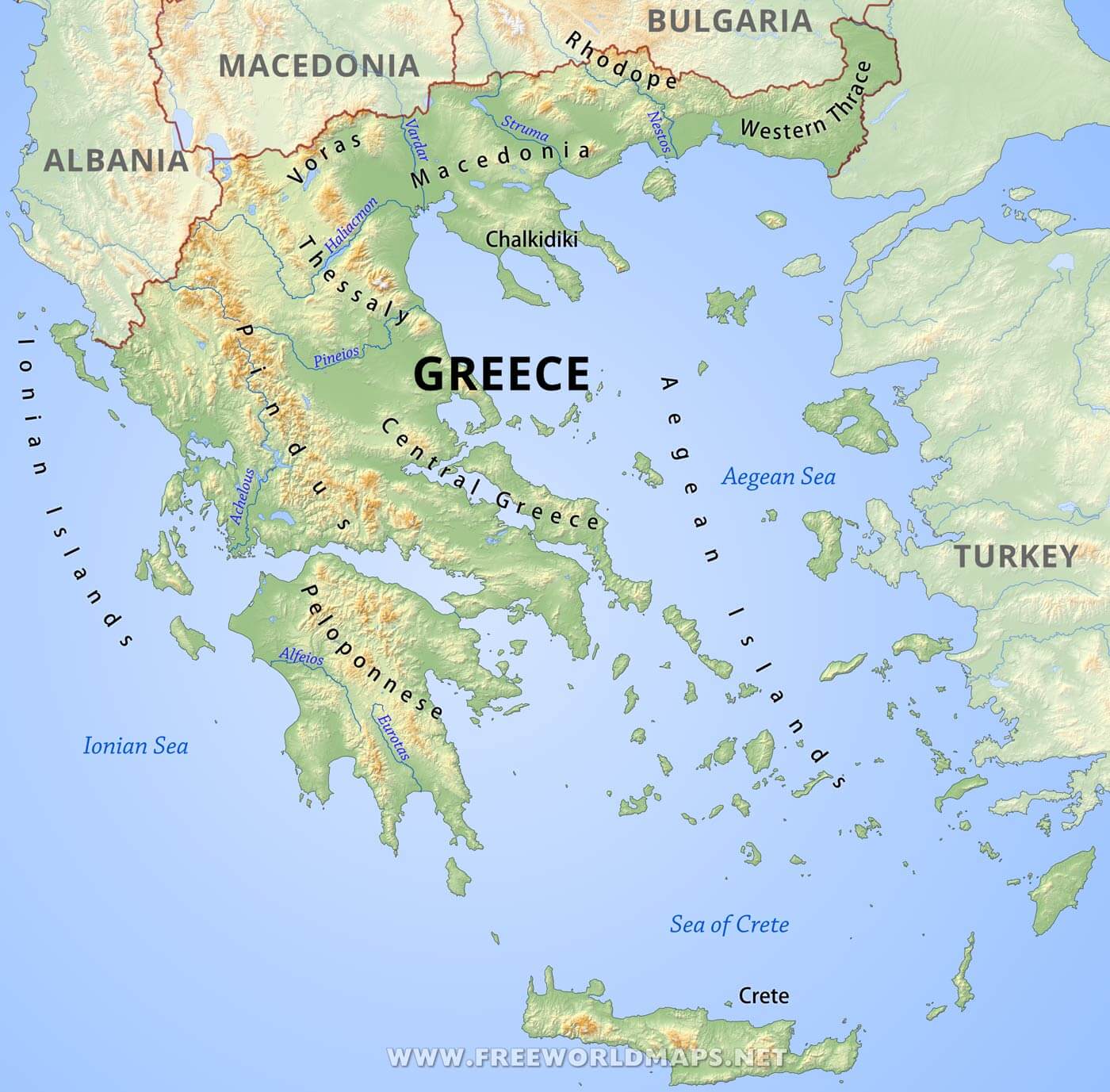
Ancient Greece, a land of myth and legend, is renowned for its rich cultural heritage and significant contributions to Western civilization. Among its many wonders, the Ancient Greece Mountains hold a special place, shaping the geography, culture, and mythology of the region. These mountains not only provided natural barriers and resources but also inspired the stories and beliefs of the ancient Greeks.
The Geographical Significance of Ancient Greece Mountains
The geography of Ancient Greece is dominated by its mountainous terrain. The country is home to several prominent mountain ranges, including the Pindus Mountains, the Olympus Range, and the Taygetus Mountains. These ranges have played a crucial role in shaping the landscape and influencing the development of Greek civilization.
The Pindus Mountains, stretching across the central part of the country, form the backbone of mainland Greece. They are known for their rugged terrain and diverse ecosystems, which have supported a variety of flora and fauna. The Olympus Range, home to the legendary Mount Olympus, is perhaps the most famous of the Ancient Greece Mountains. According to Greek mythology, Mount Olympus was the dwelling place of the gods, making it a sacred and revered site.
The Taygetus Mountains, located in the Peloponnese region, are another significant range. They have been a source of inspiration for many Greek myths and legends, including the story of the Spartans and their legendary battles. The mountains have also provided strategic advantages, serving as natural fortifications and defensive positions.
The Role of Mountains in Ancient Greek Mythology
The Ancient Greece Mountains are deeply intertwined with the mythology of the region. Many of the gods and heroes of Greek mythology are associated with specific mountains, adding to their mystical and sacred significance. For example, Mount Olympus, as mentioned earlier, was believed to be the home of the Twelve Olympians, the principal gods of the Greek pantheon.
Mount Parnassus, located in central Greece, is another mountain with significant mythological importance. It was considered the home of the Muses, the goddesses of the arts and sciences. The Oracle of Delphi, one of the most famous oracles in ancient times, was located on the slopes of Mount Parnassus. The oracle was believed to be a source of divine wisdom and prophecy, attracting pilgrims and seekers of knowledge from all over the ancient world.
Mount Helicon, also in central Greece, was another sacred mountain associated with the Muses. It was believed to be a source of poetic inspiration, and many ancient poets and writers would visit the mountain to seek divine inspiration for their works.
The Impact of Mountains on Ancient Greek Society
The Ancient Greece Mountains have had a profound impact on the development of Greek society. The rugged terrain and isolated valleys created by the mountains led to the formation of independent city-states, each with its own unique culture and governance. These city-states, or poleis, became the foundation of Greek civilization and played a crucial role in the development of democracy, philosophy, and the arts.
The mountains also provided valuable resources, such as timber, metals, and minerals, which were essential for the economic development of the region. The forests of the mountains supplied wood for construction, fuel, and shipbuilding, while the minerals and metals were used in various industries, including metallurgy and pottery.
The mountains also served as natural barriers, protecting the city-states from invasions and providing strategic advantages in warfare. The rugged terrain made it difficult for enemy armies to navigate, giving the Greeks a significant advantage in defending their territories.
Mountains and Ancient Greek Warfare
The Ancient Greece Mountains played a crucial role in the military strategies of the ancient Greeks. The rugged terrain and steep slopes made it difficult for enemy armies to advance, providing natural fortifications and defensive positions. The Greeks often used the mountains to their advantage, setting up ambushes and traps to catch their enemies off guard.
One of the most famous examples of mountain warfare in Ancient Greece is the Battle of Thermopylae. In 480 BCE, a small force of Spartan warriors, led by King Leonidas, held off a much larger Persian army at the narrow pass of Thermopylae. The mountains surrounding the pass provided a natural barrier, allowing the Spartans to defend their position effectively. Although they were ultimately defeated, their bravery and sacrifice inspired future generations of Greeks and became a symbol of resistance against tyranny.
Another notable example is the Battle of Plataea, which took place in 479 BCE. The Greeks, led by the Spartans, defeated the Persian army in a decisive battle that marked the end of the Persian Wars. The mountains surrounding the battlefield provided strategic advantages, allowing the Greeks to outmaneuver their enemies and secure a victory.
Mountains and Ancient Greek Religion
The Ancient Greece Mountains were not only important for their geographical and military significance but also for their religious and spiritual importance. Many of the mountains were considered sacred sites, associated with various gods and goddesses. The Greeks believed that the mountains were the dwelling places of the gods, and they often performed rituals and sacrifices to honor them.
Mount Olympus, as mentioned earlier, was the home of the Twelve Olympians. The Greeks believed that the gods lived on the summit of the mountain, and they often performed rituals and sacrifices to seek their favor. The mountain was also a source of inspiration for many Greek myths and legends, including the story of the Titans and the Olympians.
Mount Parnassus, home to the Muses, was another sacred mountain. The Greeks believed that the Muses lived on the slopes of the mountain, and they often visited the site to seek inspiration for their artistic and literary works. The Oracle of Delphi, located on the slopes of Mount Parnassus, was a source of divine wisdom and prophecy, attracting pilgrims and seekers of knowledge from all over the ancient world.
Mount Helicon, also associated with the Muses, was another sacred mountain. The Greeks believed that the Muses lived on the slopes of the mountain, and they often visited the site to seek inspiration for their artistic and literary works. The mountain was also a source of poetic inspiration, and many ancient poets and writers would visit the mountain to seek divine inspiration for their works.
Mountains and Ancient Greek Architecture
The Ancient Greece Mountains also influenced the architecture of the region. The Greeks often built their temples and sanctuaries on the slopes of the mountains, taking advantage of the natural beauty and spiritual significance of the sites. The temples were often designed to blend seamlessly with the surrounding landscape, creating a harmonious and awe-inspiring environment.
One of the most famous examples of mountain architecture in Ancient Greece is the Temple of Apollo at Delphi. The temple was built on the slopes of Mount Parnassus, overlooking the sacred site of the Oracle of Delphi. The temple was designed to honor Apollo, the god of prophecy and healing, and it became a center of religious and cultural activity in the ancient world.
Another notable example is the Temple of Zeus at Olympia. The temple was built on the slopes of Mount Kronion, overlooking the sacred site of the Olympic Games. The temple was designed to honor Zeus, the king of the gods, and it became a center of religious and cultural activity in the ancient world.
Mountains and Ancient Greek Art
The Ancient Greece Mountains have also been a source of inspiration for Greek art. The rugged terrain and natural beauty of the mountains have been depicted in various forms of art, including sculpture, painting, and pottery. The Greeks often used the mountains as a backdrop for their artistic works, creating a sense of grandeur and majesty.
One of the most famous examples of mountain-inspired art in Ancient Greece is the sculpture of the Niobid Painter. The sculpture depicts the mythological story of the Niobe, a queen who was punished by the gods for her arrogance. The sculpture is set against the backdrop of the mountains, creating a sense of drama and tragedy.
Another notable example is the painting of the Battle of Issus. The painting, created by the ancient Greek artist Philoxenus of Eretria, depicts the battle between Alexander the Great and the Persian king Darius III. The painting is set against the backdrop of the mountains, creating a sense of grandeur and majesty.
Mountains and Ancient Greek Literature
The Ancient Greece Mountains have also been a source of inspiration for Greek literature. The rugged terrain and natural beauty of the mountains have been depicted in various forms of literature, including poetry, drama, and prose. The Greeks often used the mountains as a backdrop for their literary works, creating a sense of grandeur and majesty.
One of the most famous examples of mountain-inspired literature in Ancient Greece is the epic poem "The Iliad" by Homer. The poem depicts the Trojan War and the heroic deeds of the Greek heroes. The mountains are often mentioned in the poem, creating a sense of grandeur and majesty.
Another notable example is the play "Prometheus Bound" by Aeschylus. The play depicts the mythological story of Prometheus, a Titan who was punished by the gods for stealing fire and giving it to humanity. The play is set against the backdrop of the mountains, creating a sense of drama and tragedy.
Mountains and Ancient Greek Philosophy
The Ancient Greece Mountains have also been a source of inspiration for Greek philosophy. The rugged terrain and natural beauty of the mountains have been used as metaphors and symbols in various philosophical works. The Greeks often used the mountains as a backdrop for their philosophical discussions, creating a sense of grandeur and majesty.
One of the most famous examples of mountain-inspired philosophy in Ancient Greece is the work of Plato. Plato often used the mountains as a metaphor for the journey of the soul towards enlightenment. In his work "The Republic," Plato describes the ascent of the soul from the cave of ignorance to the light of knowledge, using the mountains as a symbol of the journey.
Another notable example is the work of Aristotle. Aristotle often used the mountains as a metaphor for the natural world and the order of the universe. In his work "Metaphysics," Aristotle describes the natural world as a hierarchy of beings, with the gods at the top and the inanimate objects at the bottom. The mountains are used as a symbol of the natural order and the harmony of the universe.
Mountains and Ancient Greek Festivals
The Ancient Greece Mountains were also the setting for various festivals and celebrations. The Greeks often held festivals on the slopes of the mountains, honoring the gods and seeking their favor. These festivals were important social and religious events, bringing together people from different city-states and regions.
One of the most famous festivals associated with the mountains is the Pythian Games, held at Delphi. The games were held every four years in honor of Apollo, the god of prophecy and healing. The games included various athletic and musical competitions, and they attracted participants and spectators from all over the ancient world.
Another notable festival is the Anthesteria, held in Athens. The festival was held in honor of Dionysus, the god of wine and theater. The festival included various theatrical performances, processions, and feasts, and it was celebrated with great enthusiasm and joy.
Here is a table summarizing some of the key festivals associated with the Ancient Greece Mountains:
| Festival | Location | Honored God | Activities |
|---|---|---|---|
| Pythian Games | Delphi | Apollo | Athletic and musical competitions |
| Anthesteria | Athens | Dionysus | Theatrical performances, processions, feasts |
| Olympic Games | Olympia | Zeus | Athletic competitions, religious ceremonies |
📝 Note: The festivals held on the slopes of the Ancient Greece Mountains were not only religious events but also important social gatherings that fostered a sense of community and unity among the Greeks.
Mountains and Ancient Greek Trade
The Ancient Greece Mountains also played a significant role in the trade and commerce of the region. The mountains provided valuable resources, such as timber, metals, and minerals, which were essential for various industries. The Greeks often traded these resources with other city-states and regions, establishing important trade routes and networks.
One of the most important trade routes in Ancient Greece was the route through the Pindus Mountains. This route connected the city-states of northern Greece with the southern regions, allowing for the exchange of goods and ideas. The route was also used by merchants and traders, who transported goods such as olive oil, wine, and pottery.
Another notable trade route was the route through the Taygetus Mountains. This route connected the city-states of the Peloponnese with the northern regions, allowing for the exchange of goods and ideas. The route was also used by merchants and traders, who transported goods such as timber, metals, and minerals.
The mountains also provided strategic advantages in trade, as they often served as natural barriers and fortifications. The Greeks often used the mountains to protect their trade routes and ensure the safe passage of goods and people.
The Ancient Greece Mountains have left an indelible mark on the history and culture of the region. From their geographical significance to their role in mythology, warfare, religion, architecture, art, literature, philosophy, festivals, and trade, these mountains have shaped the development of Greek civilization in countless ways. Their rugged terrain and natural beauty continue to inspire and captivate people from all over the world, serving as a testament to the enduring legacy of Ancient Greece.
In conclusion, the Ancient Greece Mountains are more than just geographical features; they are an integral part of the region’s identity and heritage. Their influence can be seen in every aspect of Greek life, from the myths and legends that have been passed down through generations to the architectural marvels that still stand today. The mountains have not only shaped the physical landscape but also the cultural and spiritual landscape of Ancient Greece, making them an essential part of the region’s rich history and legacy.
Related Terms:
- list of mountains in greece
- ancient greece landscape
- geographical features of ancient greece
- mountain ranges ancient greece map
- famous mountain in greece
- major mountain ranges in greece