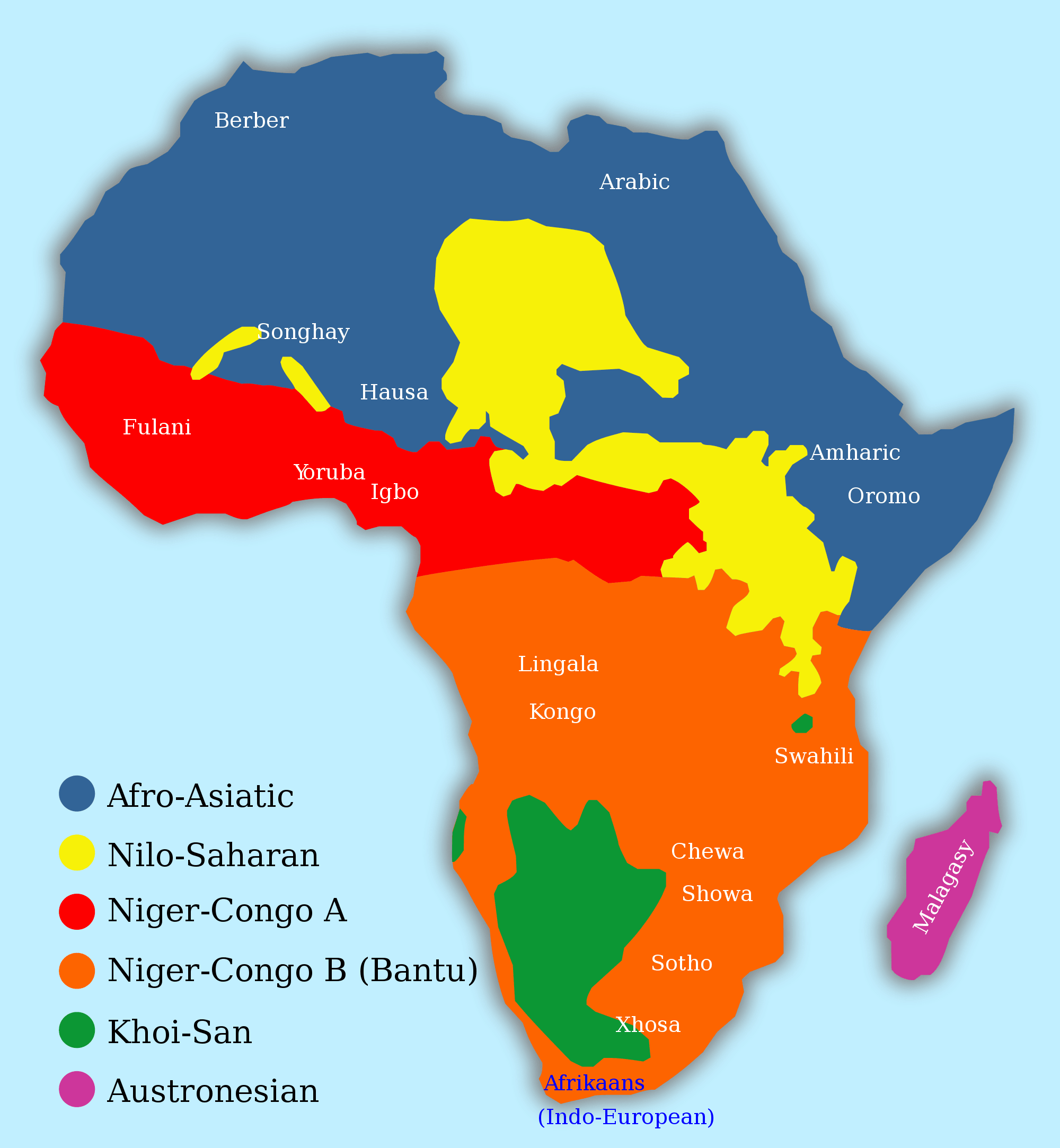
Exploring the linguistic diversity of Africa is a fascinating journey that reveals the continent's rich cultural heritage. The Africa Language Map is a vital tool for understanding the distribution and significance of the numerous languages spoken across the continent. This map not only highlights the geographical spread of languages but also provides insights into the historical, social, and political factors that have shaped Africa's linguistic landscape.
The Importance of the Africa Language Map
The Africa Language Map serves multiple purposes, making it an invaluable resource for linguists, anthropologists, educators, and policymakers. It helps in identifying the primary languages spoken in different regions, understanding language families, and recognizing the impact of colonialism and globalization on linguistic diversity. By visualizing the distribution of languages, the map aids in preserving endangered languages and promoting multilingual education.
Major Language Families in Africa
Africa is home to a vast array of language families, each with its unique characteristics and historical background. The major language families include:
- Niger-Congo: This is the largest language family in Africa, encompassing languages like Swahili, Yoruba, and Zulu. It is further divided into several branches, including Bantu, which is one of the most widely spoken subgroups.
- Afroasiatic: This family includes languages such as Arabic, Hausa, and Amharic. It is spread across North Africa, the Horn of Africa, and parts of the Sahel.
- Nilo-Saharan: Languages in this family are spoken in the Nile Valley and parts of the Sahel. Examples include Dinka and Luo.
- Khoisan: This family is known for its click consonants and includes languages like !Kung and Nama. It is primarily spoken by hunter-gatherer communities in Southern Africa.
Geographical Distribution of Languages
The Africa Language Map provides a clear visual representation of how languages are distributed across the continent. For instance, the Bantu languages, which are part of the Niger-Congo family, are predominantly spoken in sub-Saharan Africa. Swahili, a Bantu language, is widely spoken in East Africa and serves as a lingua franca in the region. Similarly, Arabic is prevalent in North Africa, reflecting the historical influence of Arab traders and conquerors.
In West Africa, languages like Yoruba, Igbo, and Hausa are prominent. These languages have significant cultural and political influence, shaping the identities of the regions where they are spoken. The Sahel region, which stretches from the Atlantic Ocean to the Red Sea, is home to a mix of languages from the Afroasiatic and Nilo-Saharan families, reflecting the region's diverse ethnic composition.
Southern Africa is characterized by the presence of languages from the Niger-Congo and Khoisan families. The Bantu languages, such as Zulu and Xhosa, are widely spoken, while the Khoisan languages are spoken by smaller, often marginalized communities.
Historical and Cultural Significance
The Africa Language Map also sheds light on the historical and cultural significance of African languages. Many languages have evolved over centuries, influenced by trade, migration, and colonialism. For example, Swahili emerged as a trade language along the East African coast, incorporating elements from Arabic, Persian, and various Bantu languages. This linguistic fusion reflects the region's rich history of cultural exchange and trade.
Colonialism has had a profound impact on the linguistic landscape of Africa. Languages like English, French, and Portuguese were imposed by colonial powers and continue to be used as official languages in many African countries. However, indigenous languages remain vital to the cultural identity of African communities and are increasingly being recognized in education and governance.
Challenges and Preservation Efforts
Despite the richness of Africa's linguistic diversity, many languages are at risk of extinction due to factors such as globalization, urbanization, and the dominance of major languages. The Africa Language Map plays a crucial role in identifying endangered languages and raising awareness about the need for preservation. Efforts to document and revitalize these languages are essential for maintaining Africa's cultural heritage.
Preservation efforts include:
- Documenting endangered languages through fieldwork and digital archives.
- Promoting multilingual education to ensure that children learn their mother tongues alongside official languages.
- Supporting community-based initiatives that encourage the use of indigenous languages in daily life and cultural practices.
- Advocating for policies that recognize and protect linguistic diversity.
One notable example is the work of organizations like the Endangered Languages Project, which aims to document and preserve endangered languages worldwide. By providing resources and support, these organizations help communities maintain their linguistic heritage.
Impact on Education and Governance
The Africa Language Map has significant implications for education and governance. In many African countries, education is conducted in languages that are not the mother tongues of the students. This can lead to educational disparities and hinder learning outcomes. Recognizing the importance of mother tongue education, many countries are now implementing policies that promote the use of indigenous languages in schools.
In governance, the recognition of multiple languages can enhance inclusivity and participation. For instance, South Africa has 11 official languages, reflecting the country's linguistic diversity and promoting multilingualism in public administration and media. This approach ensures that all citizens have access to information and services in their preferred language, fostering a more inclusive society.
Future Directions
As Africa continues to evolve, the Africa Language Map will remain a vital tool for understanding and preserving the continent's linguistic diversity. Future efforts should focus on:
- Continuing to document and preserve endangered languages.
- Promoting multilingual education and policies that support linguistic diversity.
- Encouraging research and collaboration among linguists, anthropologists, and educators.
- Leveraging technology to create digital resources and platforms for language documentation and learning.
By taking these steps, Africa can ensure that its rich linguistic heritage is preserved for future generations, contributing to the continent's cultural and intellectual wealth.
📚 Note: The Africa Language Map is a dynamic resource that evolves with new research and data. Regular updates are essential to reflect the changing linguistic landscape of the continent.
In conclusion, the Africa Language Map is more than just a geographical representation of languages; it is a testament to Africa’s rich cultural heritage and linguistic diversity. By understanding the distribution and significance of African languages, we can appreciate the continent’s historical and cultural complexity. Preserving and promoting linguistic diversity is crucial for maintaining Africa’s cultural identity and ensuring that future generations can benefit from the continent’s rich linguistic heritage.
Related Terms:
- list of african dialects
- languages spoken in africa map
- african countries and their languages
- most spoken languages in africa
- languages spoken in african countries
- list of all african languages