Arterial blood gas (ABG) analysis is a critical diagnostic tool used in medical settings to evaluate a patient's oxygenation, ventilation, and acid-base status. Understanding the ABGs normal range is essential for healthcare professionals to interpret test results accurately and make informed decisions about patient care. This post delves into the significance of ABG analysis, the normal ranges for various parameters, and how to interpret these results effectively.
Understanding Arterial Blood Gas (ABG) Analysis
ABG analysis involves measuring the levels of oxygen, carbon dioxide, and pH in arterial blood. This information is crucial for assessing respiratory and metabolic functions, diagnosing conditions such as respiratory failure, and monitoring the effectiveness of treatments. The primary parameters measured in an ABG test include:
- pH
- Partial pressure of oxygen (PaO2)
- Partial pressure of carbon dioxide (PaCO2)
- Bicarbonate (HCO3-)
- Base excess/deficit
- Oxygen saturation (SaO2)
The ABGs Normal Range
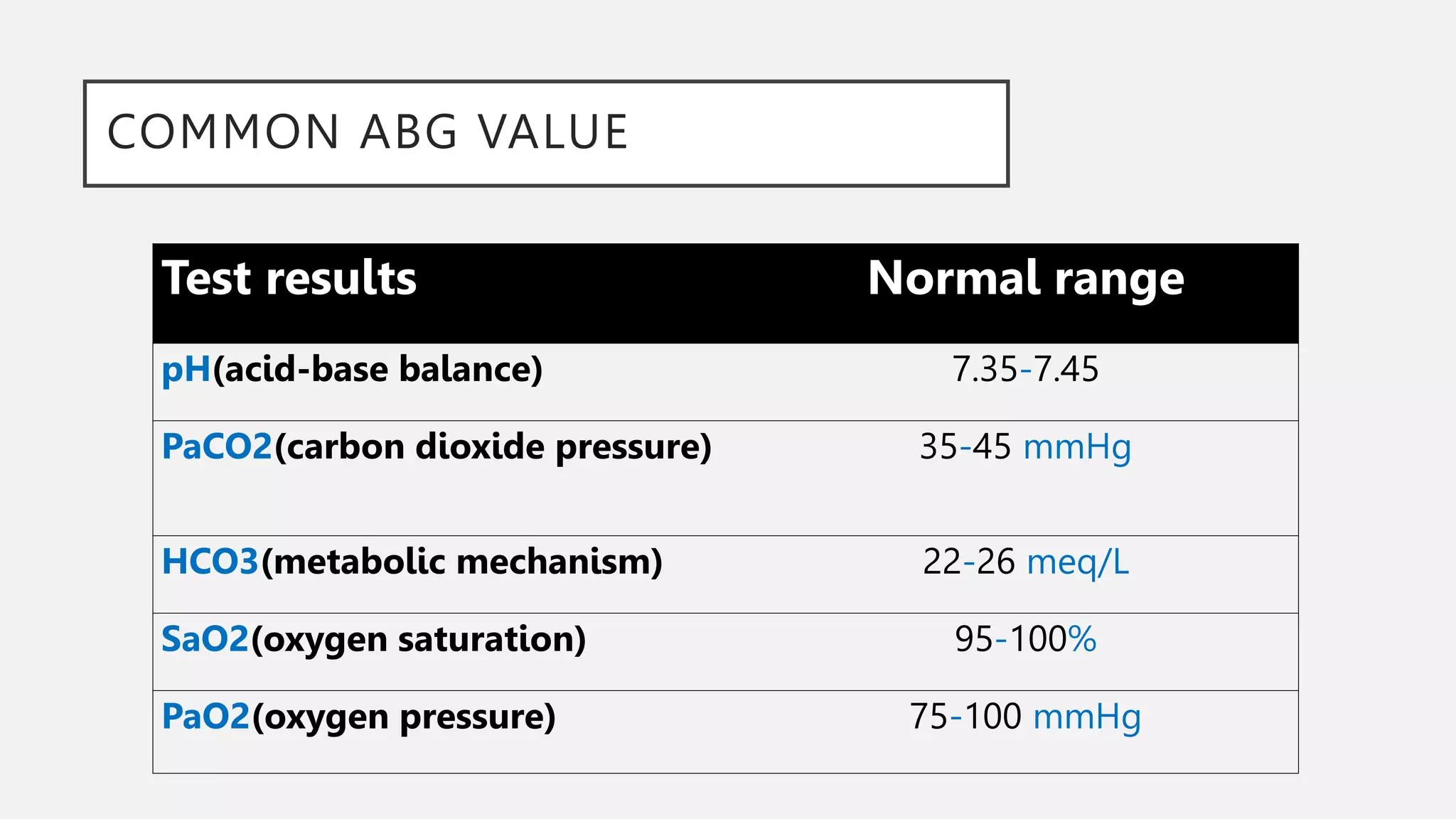
The ABGs normal range for each parameter provides a benchmark for evaluating a patient's physiological status. Here are the typical normal ranges for ABG parameters:
| Parameter | Normal Range |
|---|---|
| pH | 7.35 - 7.45 |
| PaO2 (mmHg) | 80 - 100 |
| PaCO2 (mmHg) | 35 - 45 |
| HCO3- (mEq/L) | 22 - 26 |
| Base Excess/Deficit (mEq/L) | -2 to +2 |
| SaO2 (%) | 95 - 100 |
These ranges can vary slightly depending on the laboratory and the specific conditions under which the test is performed. It is essential to refer to the specific reference ranges provided by the laboratory conducting the test.
Interpreting ABG Results
Interpreting ABG results involves understanding the relationships between the different parameters and how they reflect the body's acid-base balance and respiratory function. Here are some key points to consider:
- pH: The pH level indicates the acidity or alkalinity of the blood. A pH within the ABGs normal range of 7.35 to 7.45 is considered normal. A pH below 7.35 indicates acidosis, while a pH above 7.45 indicates alkalosis.
- PaO2: The partial pressure of oxygen (PaO2) measures the amount of oxygen dissolved in the blood. A PaO2 within the ABGs normal range of 80 to 100 mmHg indicates adequate oxygenation. A PaO2 below 80 mmHg suggests hypoxemia, while a PaO2 above 100 mmHg may indicate hyperoxia.
- PaCO2: The partial pressure of carbon dioxide (PaCO2) reflects the body's ventilation status. A PaCO2 within the ABGs normal range of 35 to 45 mmHg is normal. A PaCO2 above 45 mmHg indicates hypercapnia, while a PaCO2 below 35 mmHg suggests hypocapnia.
- HCO3-: Bicarbonate (HCO3-) is a buffer that helps maintain the body's pH. A HCO3- level within the ABGs normal range of 22 to 26 mEq/L is normal. Abnormal levels can indicate metabolic acidosis or alkalosis.
- Base Excess/Deficit: Base excess or deficit measures the amount of base needed to return the pH to normal. A base excess/deficit within the ABGs normal range of -2 to +2 mEq/L is normal. A positive value indicates a base excess, while a negative value indicates a base deficit.
- SaO2: Oxygen saturation (SaO2) measures the percentage of hemoglobin that is saturated with oxygen. A SaO2 within the ABGs normal range of 95 to 100% is normal. A SaO2 below 95% suggests hypoxemia.
When interpreting ABG results, it is essential to consider the clinical context and other laboratory findings. For example, a low pH with a high PaCO2 and normal HCO3- may indicate respiratory acidosis, while a low pH with a normal PaCO2 and low HCO3- may suggest metabolic acidosis.
📝 Note: Always correlate ABG results with the patient's clinical symptoms and other diagnostic tests to ensure accurate interpretation.
Common Acid-Base Disorders
Understanding the ABGs normal range is crucial for identifying and managing common acid-base disorders. These disorders can be categorized into respiratory and metabolic types:
- Respiratory Acidosis: Occurs when there is an increase in PaCO2 due to inadequate ventilation. This can be caused by conditions such as chronic obstructive pulmonary disease (COPD), asthma, or respiratory depression.
- Respiratory Alkalosis: Occurs when there is a decrease in PaCO2 due to hyperventilation. This can be caused by conditions such as anxiety, high altitude, or pulmonary embolism.
- Metabolic Acidosis: Occurs when there is a decrease in HCO3- due to an increase in acid production or a loss of bicarbonate. This can be caused by conditions such as diabetic ketoacidosis, lactic acidosis, or renal failure.
- Metabolic Alkalosis: Occurs when there is an increase in HCO3- due to a loss of acid or an increase in bicarbonate. This can be caused by conditions such as vomiting, diuretic use, or hypokalemia.
Identifying the type of acid-base disorder involves analyzing the pH, PaCO2, and HCO3- levels and determining whether the primary disturbance is respiratory or metabolic. Compensatory mechanisms may also be present, which can complicate the interpretation of ABG results.
📝 Note: Compensatory mechanisms can partially correct the pH, making it essential to consider all ABG parameters when diagnosing acid-base disorders.
Clinical Applications of ABG Analysis
ABG analysis is a valuable tool in various clinical settings, including intensive care units, emergency departments, and pulmonary clinics. Some of the key applications include:
- Assessing Respiratory Function: ABG analysis helps evaluate the effectiveness of ventilation and oxygenation in patients with respiratory diseases such as COPD, asthma, and pneumonia.
- Monitoring Critical Care Patients: In intensive care units, ABG analysis is used to monitor patients on mechanical ventilation, ensuring optimal oxygenation and ventilation settings.
- Diagnosing Acid-Base Disorders: ABG analysis aids in the diagnosis and management of acid-base disorders, guiding appropriate treatment strategies.
- Evaluating Response to Treatment: ABG analysis can be used to assess the effectiveness of treatments such as oxygen therapy, mechanical ventilation, and pharmacological interventions.
By understanding the ABGs normal range and interpreting ABG results accurately, healthcare professionals can make informed decisions about patient care and improve outcomes.
ABG analysis is a critical diagnostic tool used in medical settings to evaluate a patient's oxygenation, ventilation, and acid-base status. Understanding the ABGs normal range is essential for healthcare professionals to interpret test results accurately and make informed decisions about patient care. This post delves into the significance of ABG analysis, the normal ranges for various parameters, and how to interpret these results effectively.
ABG analysis involves measuring the levels of oxygen, carbon dioxide, and pH in arterial blood. This information is crucial for assessing respiratory and metabolic functions, diagnosing conditions such as respiratory failure, and monitoring the effectiveness of treatments. The primary parameters measured in an ABG test include:
- pH
- Partial pressure of oxygen (PaO2)
- Partial pressure of carbon dioxide (PaCO2)
- Bicarbonate (HCO3-)
- Base excess/deficit
- Oxygen saturation (SaO2)
The ABGs normal range for each parameter provides a benchmark for evaluating a patient's physiological status. Here are the typical normal ranges for ABG parameters:
| Parameter | Normal Range |
|---|---|
| pH | 7.35 - 7.45 |
| PaO2 (mmHg) | 80 - 100 |
| PaCO2 (mmHg) | 35 - 45 |
| HCO3- (mEq/L) | 22 - 26 |
| Base Excess/Deficit (mEq/L) | -2 to +2 |
| SaO2 (%) | 95 - 100 |
These ranges can vary slightly depending on the laboratory and the specific conditions under which the test is performed. It is essential to refer to the specific reference ranges provided by the laboratory conducting the test.
Interpreting ABG results involves understanding the relationships between the different parameters and how they reflect the body's acid-base balance and respiratory function. Here are some key points to consider:
- pH: The pH level indicates the acidity or alkalinity of the blood. A pH within the ABGs normal range of 7.35 to 7.45 is considered normal. A pH below 7.35 indicates acidosis, while a pH above 7.45 indicates alkalosis.
- PaO2: The partial pressure of oxygen (PaO2) measures the amount of oxygen dissolved in the blood. A PaO2 within the ABGs normal range of 80 to 100 mmHg indicates adequate oxygenation. A PaO2 below 80 mmHg suggests hypoxemia, while a PaO2 above 100 mmHg may indicate hyperoxia.
- PaCO2: The partial pressure of carbon dioxide (PaCO2) reflects the body's ventilation status. A PaCO2 within the ABGs normal range of 35 to 45 mmHg is normal. A PaCO2 above 45 mmHg indicates hypercapnia, while a PaCO2 below 35 mmHg suggests hypocapnia.
- HCO3-: Bicarbonate (HCO3-) is a buffer that helps maintain the body's pH. A HCO3- level within the ABGs normal range of 22 to 26 mEq/L is normal. Abnormal levels can indicate metabolic acidosis or alkalosis.
- Base Excess/Deficit: Base excess or deficit measures the amount of base needed to return the pH to normal. A base excess/deficit within the ABGs normal range of -2 to +2 mEq/L is normal. A positive value indicates a base excess, while a negative value indicates a base deficit.
- SaO2: Oxygen saturation (SaO2) measures the percentage of hemoglobin that is saturated with oxygen. A SaO2 within the ABGs normal range of 95 to 100% is normal. A SaO2 below 95% suggests hypoxemia.
When interpreting ABG results, it is essential to consider the clinical context and other laboratory findings. For example, a low pH with a high PaCO2 and normal HCO3- may indicate respiratory acidosis, while a low pH with a normal PaCO2 and low HCO3- may suggest metabolic acidosis.
Understanding the ABGs normal range is crucial for identifying and managing common acid-base disorders. These disorders can be categorized into respiratory and metabolic types:
- Respiratory Acidosis: Occurs when there is an increase in PaCO2 due to inadequate ventilation. This can be caused by conditions such as chronic obstructive pulmonary disease (COPD), asthma, or respiratory depression.
- Respiratory Alkalosis: Occurs when there is a decrease in PaCO2 due to hyperventilation. This can be caused by conditions such as anxiety, high altitude, or pulmonary embolism.
- Metabolic Acidosis: Occurs when there is a decrease in HCO3- due to an increase in acid production or a loss of bicarbonate. This can be caused by conditions such as diabetic ketoacidosis, lactic acidosis, or renal failure.
- Metabolic Alkalosis: Occurs when there is an increase in HCO3- due to a loss of acid or an increase in bicarbonate. This can be caused by conditions such as vomiting, diuretic use, or hypokalemia.
Identifying the type of acid-base disorder involves analyzing the pH, PaCO2, and HCO3- levels and determining whether the primary disturbance is respiratory or metabolic. Compensatory mechanisms may also be present, which can complicate the interpretation of ABG results.
ABG analysis is a valuable tool in various clinical settings, including intensive care units, emergency departments, and pulmonary clinics. Some of the key applications include:
- Assessing Respiratory Function: ABG analysis helps evaluate the effectiveness of ventilation and oxygenation in patients with respiratory diseases such as COPD, asthma, and pneumonia.
- Monitoring Critical Care Patients: In intensive care units, ABG analysis is used to monitor patients on mechanical ventilation, ensuring optimal oxygenation and ventilation settings.
- Diagnosing Acid-Base Disorders: ABG analysis aids in the diagnosis and management of acid-base disorders, guiding appropriate treatment strategies.
- Evaluating Response to Treatment: ABG analysis can be used to assess the effectiveness of treatments such as oxygen therapy, mechanical ventilation, and pharmacological interventions.
By understanding the ABGs normal range and interpreting ABG results accurately, healthcare professionals can make informed decisions about patient care and improve outcomes.
In conclusion, ABG analysis is an indispensable tool in the assessment and management of respiratory and metabolic disorders. Understanding the ABGs normal range and the clinical implications of ABG results is crucial for healthcare professionals to provide optimal patient care. By accurately interpreting ABG parameters and considering the clinical context, healthcare providers can diagnose and manage acid-base disorders effectively, leading to better patient outcomes.