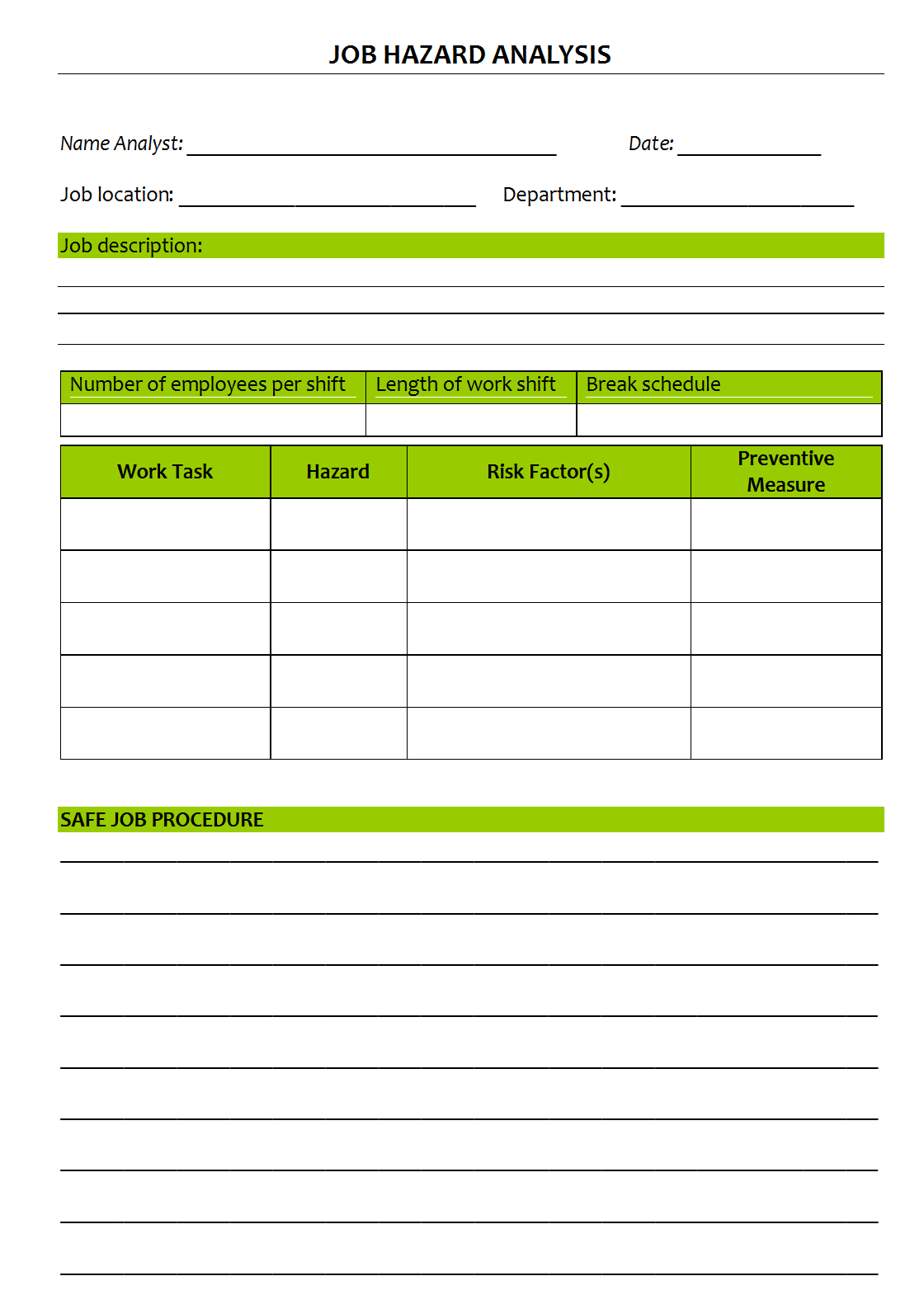
In the realm of industrial safety, the Safety Analysis Report is a critical document that outlines the potential hazards, risks, and safety measures associated with a particular process, equipment, or facility. This report is essential for ensuring that all stakeholders are aware of the safety protocols and procedures in place, thereby minimizing the risk of accidents and incidents. This blog post will delve into the importance of a Safety Analysis Report, its components, the process of creating one, and how it contributes to overall safety management.
Understanding the Importance of a Safety Analysis Report
A Safety Analysis Report serves as a comprehensive guide for identifying, evaluating, and mitigating risks in various industrial settings. It is a proactive approach to safety management that helps organizations comply with regulatory requirements and industry standards. By conducting a thorough safety analysis, companies can:
- Identify potential hazards and risks.
- Implement effective control measures.
- Ensure compliance with safety regulations.
- Enhance employee awareness and training.
- Reduce the likelihood of accidents and incidents.
In essence, a well-prepared Safety Analysis Report is a cornerstone of a robust safety management system, providing a structured framework for continuous improvement in safety practices.
Components of a Safety Analysis Report
A Safety Analysis Report typically includes several key components that provide a holistic view of the safety landscape within an organization. These components are:
- Executive Summary: A brief overview of the report, highlighting the main findings and recommendations.
- Introduction: Background information about the facility, process, or equipment being analyzed.
- Hazard Identification: A detailed list of potential hazards identified through various methods such as brainstorming, checklists, and historical data analysis.
- Risk Assessment: Evaluation of the likelihood and severity of each identified hazard, often using risk matrices or other assessment tools.
- Control Measures: Strategies and actions implemented to mitigate identified risks, including engineering controls, administrative controls, and personal protective equipment (PPE).
- Emergency Response Plan: Procedures for responding to emergencies, including evacuation plans, first aid, and communication protocols.
- Training and Awareness: Programs and initiatives to educate employees about safety protocols and procedures.
- Monitoring and Review: Mechanisms for ongoing monitoring and periodic review of the safety management system to ensure its effectiveness.
- Recommendations: Suggestions for improving safety practices and addressing any gaps identified in the analysis.
Creating a Safety Analysis Report
The process of creating a Safety Analysis Report involves several steps, each crucial for ensuring a comprehensive and accurate assessment of safety risks. Here is a step-by-step guide to developing a Safety Analysis Report:
Step 1: Define the Scope
The first step is to define the scope of the analysis. This includes identifying the specific process, equipment, or facility to be analyzed, as well as the objectives of the report. The scope should be clearly outlined to ensure that all relevant aspects are covered.
Step 2: Gather Information
Collecting relevant information is essential for a thorough safety analysis. This may include:
- Historical data on accidents and incidents.
- Operational procedures and guidelines.
- Equipment specifications and maintenance records.
- Regulatory requirements and industry standards.
- Employee feedback and observations.
Step 3: Identify Hazards
Identifying potential hazards is a critical step in the safety analysis process. This can be done through various methods, such as:
- Brainstorming sessions with employees and stakeholders.
- Checklists and questionnaires.
- Historical data analysis.
- Process flow diagrams and hazard and operability studies (HAZOP).
It is important to involve a diverse group of stakeholders in this process to ensure that all potential hazards are identified.
Step 4: Assess Risks
Once hazards are identified, the next step is to assess the risks associated with each hazard. This involves evaluating the likelihood and severity of each hazard, often using a risk matrix. The risk matrix helps to prioritize hazards based on their potential impact and the likelihood of occurrence.
📝 Note: The risk matrix should be customized to reflect the specific risks and priorities of the organization.
Step 5: Implement Control Measures
Based on the risk assessment, appropriate control measures should be implemented to mitigate identified risks. Control measures can be categorized into three types:
- Engineering Controls: Physical changes to the process or equipment to eliminate or reduce hazards (e.g., guards, barriers, ventilation systems).
- Administrative Controls: Procedures and policies to minimize risks (e.g., training programs, safety protocols, work schedules).
- Personal Protective Equipment (PPE): Equipment worn by employees to protect against hazards (e.g., hard hats, safety glasses, gloves).
Step 6: Develop an Emergency Response Plan
An effective emergency response plan is crucial for managing incidents and minimizing their impact. The plan should include:
- Evacuation procedures.
- First aid and medical response.
- Communication protocols.
- Roles and responsibilities of emergency response teams.
Step 7: Train and Educate Employees
Training and education are essential for ensuring that employees are aware of safety protocols and procedures. Training programs should be tailored to the specific needs of the organization and should cover:
- Hazard identification and risk assessment.
- Use of PPE and other control measures.
- Emergency response procedures.
- Reporting and documentation of incidents.
Step 8: Monitor and Review
Ongoing monitoring and periodic review of the safety management system are essential for ensuring its effectiveness. This involves:
- Regular inspections and audits.
- Incident reporting and analysis.
- Feedback from employees and stakeholders.
- Updates to safety protocols and procedures.
By continuously monitoring and reviewing the safety management system, organizations can identify and address any gaps or areas for improvement.
Benefits of a Comprehensive Safety Analysis Report
A well-prepared Safety Analysis Report offers numerous benefits to organizations, including:
- Improved Safety Culture: Enhances employee awareness and commitment to safety.
- Reduced Incidents: Minimizes the likelihood of accidents and incidents.
- Compliance with Regulations: Ensures adherence to regulatory requirements and industry standards.
- Cost Savings: Reduces costs associated with accidents, incidents, and downtime.
- Enhanced Reputation: Demonstrates a commitment to safety and responsibility.
Moreover, a comprehensive Safety Analysis Report provides a structured framework for continuous improvement in safety practices, helping organizations to stay ahead of potential risks and challenges.
Case Study: Implementing a Safety Analysis Report in a Manufacturing Plant
To illustrate the practical application of a Safety Analysis Report, let's consider a case study of a manufacturing plant that implemented a comprehensive safety analysis to improve its safety management system.
The manufacturing plant, which produces heavy machinery, recognized the need for a robust safety management system to protect its employees and minimize risks. The plant conducted a thorough safety analysis, identifying potential hazards such as:
- Machinery-related injuries.
- Chemical exposure.
- Falls from heights.
- Electrical hazards.
The plant then assessed the risks associated with each hazard and implemented appropriate control measures, including:
- Engineering controls such as guards and barriers.
- Administrative controls such as training programs and safety protocols.
- PPE such as hard hats, safety glasses, and gloves.
The plant also developed an emergency response plan and conducted regular training sessions to educate employees about safety protocols and procedures. The results of the safety analysis were documented in a comprehensive Safety Analysis Report, which was shared with all stakeholders.
Following the implementation of the safety analysis, the plant saw a significant reduction in accidents and incidents, improved employee awareness and commitment to safety, and enhanced compliance with regulatory requirements. The plant's safety management system was recognized as a best practice in the industry, demonstrating the value of a comprehensive Safety Analysis Report.
Here is a table summarizing the key findings and recommendations from the Safety Analysis Report for the manufacturing plant:
| Hazard | Risk Assessment | Control Measures | Recommendations |
|---|---|---|---|
| Machinery-related injuries | High likelihood, high severity | Guards, barriers, training | Conduct regular inspections and maintenance |
| Chemical exposure | Medium likelihood, high severity | Ventilation, PPE, training | Implement a chemical management program |
| Falls from heights | Low likelihood, high severity | Safety harnesses, training | Conduct regular safety audits |
| Electrical hazards | Medium likelihood, medium severity | Lockout/tagout procedures, training | Implement an electrical safety program |
This table provides a clear overview of the hazards identified, the risks assessed, the control measures implemented, and the recommendations for further improvement.
In conclusion, a Safety Analysis Report is an indispensable tool for ensuring the safety and well-being of employees in various industrial settings. By identifying potential hazards, assessing risks, and implementing effective control measures, organizations can create a safer work environment, comply with regulatory requirements, and enhance their overall safety management system. The case study of the manufacturing plant demonstrates the practical benefits of a comprehensive safety analysis, highlighting the importance of continuous monitoring and review to ensure the effectiveness of safety protocols and procedures. Through a structured and proactive approach to safety management, organizations can minimize risks, reduce incidents, and foster a culture of safety and responsibility.
Related Terms:
- safety assessment report example
- nuclear safety analysis report
- sample safety assessment report
- safety analysis report sar
- sample safety report examples
- nrc safety analysis report