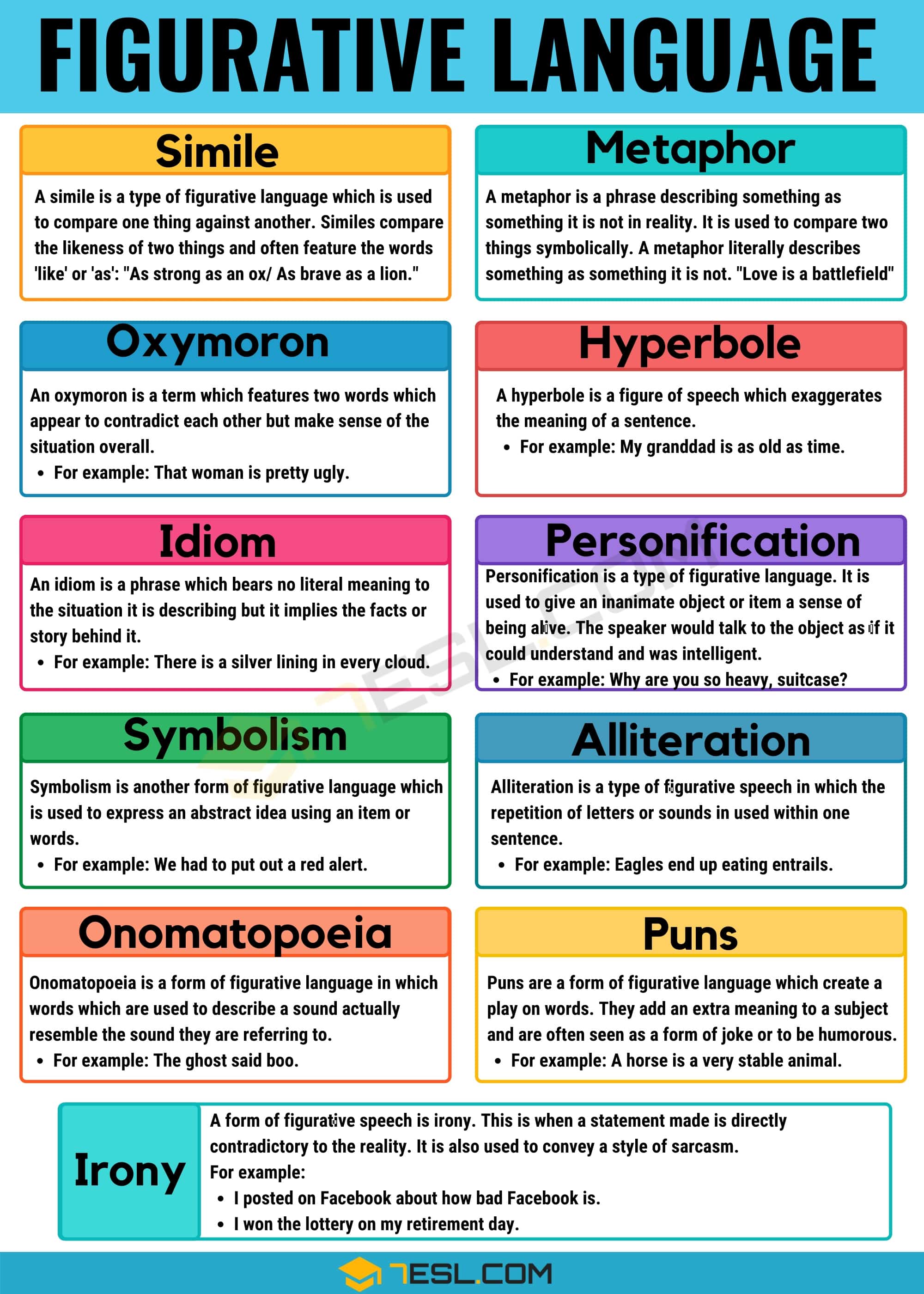
Language is a powerful tool that allows us to communicate our thoughts, feelings, and ideas effectively. One of the most intriguing aspects of language is the use of Literal And Figurative Language. Understanding the difference between these two types of language can greatly enhance our ability to express ourselves and interpret the messages of others. This blog post will delve into the nuances of literal and figurative language, providing examples and explanations to help you grasp these concepts more deeply.
Understanding Literal Language
Literal language refers to the use of words in their most basic, dictionary-defined meanings. When we speak or write literally, we convey exactly what we mean without any hidden or implied meanings. This type of language is straightforward and leaves little room for interpretation.
For example, consider the sentence: "The cat sat on the mat." In this case, the words "cat," "sat," and "mat" are used in their literal meanings. There is no room for metaphorical or symbolic interpretation; the sentence simply describes a cat sitting on a mat.
Literal language is essential in many contexts, such as:
- Technical writing, where precision is crucial.
- Legal documents, where clarity and unambiguity are paramount.
- Instructions and manuals, where clear directions are necessary.
However, literal language can sometimes come across as dull or uninteresting because it lacks the richness and depth that figurative language can provide.
Exploring Figurative Language
Figurative language, on the other hand, uses words in a way that is different from their literal meanings. It employs various rhetorical devices to create vivid imagery, evoke emotions, and convey complex ideas in a more engaging manner. Some common types of figurative language include metaphors, similes, idioms, and personification.
For example, consider the sentence: "Life is a journey." This statement is not meant to be taken literally; it is a metaphor that suggests life is like a journey with its ups and downs, twists and turns. Similarly, the phrase "It's raining cats and dogs" is an idiom that means it is raining very heavily, not that actual cats and dogs are falling from the sky.
Figurative language is often used in:
- Literature and poetry, where creativity and emotional depth are valued.
- Advertising and marketing, where capturing attention and evoking emotions is key.
- Everyday conversations, where adding color and interest to our speech can make interactions more enjoyable.
Figurative language can make our communication more engaging and memorable, but it can also be more challenging to understand because it requires the listener or reader to interpret the intended meaning beyond the literal words.
The Importance of Context in Literal And Figurative Language
Context plays a crucial role in determining whether language is being used literally or figuratively. The same words can have different meanings depending on the situation in which they are used. For example, the phrase "break a leg" is a common idiom used to wish someone good luck, particularly in the performing arts. However, in a medical context, "break a leg" would be taken literally to mean a physical injury.
Understanding the context can help us decipher the intended meaning of a statement. For instance, if someone says, "I'm feeling blue," we know they are not literally turning blue but are expressing feelings of sadness or depression. The context of the conversation and the relationship between the speakers can provide clues about whether the language is literal or figurative.
Examples of Literal And Figurative Language in Everyday Life
To further illustrate the difference between literal and figurative language, let's look at some examples from everyday life.
Consider the following sentences:
- Literal: "The book is on the table."
- Figurative: "The book is a treasure trove of knowledge."
In the first sentence, the book is literally on the table. In the second sentence, the book is metaphorically described as a treasure trove, suggesting it contains valuable information and insights.
Another example:
- Literal: "The sun is shining brightly."
- Figurative: "She is the sun of my life."
In the first sentence, the sun is literally shining. In the second sentence, the person is being compared to the sun, suggesting they bring warmth, light, and happiness into the speaker's life.
Teaching Literal And Figurative Language
Teaching the difference between literal and figurative language is an important part of language education. Here are some strategies that educators can use to help students understand these concepts:
- Provide Clear Examples: Use simple, relatable examples to illustrate the difference between literal and figurative language. For instance, compare "The cat is black" (literal) with "He has a heart of gold" (figurative).
- Encourage Discussion: Engage students in discussions about the meanings of various phrases and sentences. Ask them to explain why a particular phrase is literal or figurative and what it means.
- Use Visual Aids: Incorporate images, videos, and other visual aids to help students visualize the concepts. For example, show a picture of a cat sitting on a mat to illustrate literal language, and a picture of a person with a golden heart to illustrate figurative language.
- Practice Exercises: Provide exercises that require students to identify and interpret literal and figurative language. For example, give them a list of sentences and ask them to determine whether each one is literal or figurative and explain why.
📝 Note: It's important to make the learning process interactive and engaging to help students grasp these concepts more effectively.
Common Misconceptions About Literal And Figurative Language
There are several common misconceptions about literal and figurative language that can hinder effective communication. Understanding these misconceptions can help us use language more accurately and avoid misunderstandings.
One common misconception is that figurative language is always more complex and difficult to understand than literal language. While it's true that figurative language often requires more interpretation, it can also be more engaging and memorable. For example, the phrase "time flies" is a figurative expression that conveys the idea that time passes quickly, and it is easily understood by most people.
Another misconception is that literal language is always more precise and accurate than figurative language. While literal language can be precise, it can also be dull and uninteresting. Figurative language, on the other hand, can add depth and richness to our communication, making it more engaging and memorable.
It's also important to note that some people may struggle with understanding figurative language due to language barriers, learning disabilities, or cultural differences. In such cases, it may be helpful to provide additional context or explanations to ensure effective communication.
The Role of Literal And Figurative Language in Literature
Literature is a rich source of both literal and figurative language. Authors often use a mix of both to create vivid imagery, evoke emotions, and convey complex ideas. Understanding how authors use these types of language can enhance our appreciation and interpretation of literary works.
For example, consider the following passage from William Shakespeare's "Romeo and Juliet":
"But soft! What light through yonder window breaks? It is the east, and Juliet is the sun!"
In this passage, Shakespeare uses figurative language to describe Juliet as the sun, suggesting she brings light and warmth into Romeo's life. The use of figurative language adds depth and emotional resonance to the scene, making it more memorable and impactful.
Another example is from George Orwell's "1984":
"War is peace. Freedom is slavery. Ignorance is strength."
These statements are examples of figurative language, specifically paradoxes, that challenge our understanding of reality and highlight the oppressive nature of the totalitarian society depicted in the novel.
Understanding the use of literal and figurative language in literature can help us appreciate the nuances and complexities of the text, as well as the author's intentions and themes.
The Impact of Literal And Figurative Language on Communication
The use of literal and figurative language can significantly impact our communication in various ways. Understanding these impacts can help us choose the appropriate type of language for different situations and audiences.
One impact is on clarity and precision. Literal language is often more precise and easier to understand, making it suitable for technical writing, legal documents, and instructions. However, figurative language can add depth and richness to our communication, making it more engaging and memorable.
Another impact is on emotional resonance. Figurative language can evoke strong emotions and create vivid imagery, making it more effective in literature, poetry, and advertising. However, literal language can sometimes come across as dull or uninteresting, lacking the emotional depth that figurative language provides.
It's also important to consider the cultural and contextual factors that can influence the use and interpretation of literal and figurative language. For example, idioms and metaphors can vary widely across different cultures, and what is considered figurative language in one culture may be literal in another.
Understanding these impacts can help us choose the appropriate type of language for different situations and audiences, ensuring effective and meaningful communication.
Challenges in Understanding Literal And Figurative Language
While understanding literal and figurative language is essential for effective communication, it can also present several challenges. Recognizing and addressing these challenges can help us improve our language skills and avoid misunderstandings.
One challenge is the ambiguity of figurative language. Because figurative language often relies on interpretation, it can be difficult to determine the intended meaning. For example, the phrase "break a leg" can be confusing to someone who is not familiar with the idiom, as it does not convey its literal meaning.
Another challenge is the cultural and contextual differences in the use of figurative language. Idioms, metaphors, and other forms of figurative language can vary widely across different cultures, making it difficult for non-native speakers or those from different cultural backgrounds to understand them.
It's also important to note that some people may struggle with understanding figurative language due to language barriers, learning disabilities, or cognitive impairments. In such cases, it may be helpful to provide additional context or explanations to ensure effective communication.
Addressing these challenges requires patience, empathy, and a willingness to adapt our communication style to meet the needs of our audience. By recognizing and addressing these challenges, we can improve our language skills and ensure more effective and meaningful communication.
Here is a table summarizing the key differences between literal and figurative language:
| Aspect | Literal Language | Figurative Language |
|---|---|---|
| Meaning | Dictionary-defined | Beyond literal meaning |
| Clarity | Precise and clear | Requires interpretation |
| Emotional Resonance | Less emotional | More emotional |
| Context Dependency | Less dependent | More dependent |
| Examples | The cat sat on the mat. | Life is a journey. |
Understanding these differences can help us choose the appropriate type of language for different situations and audiences, ensuring effective and meaningful communication.
In conclusion, Literal And Figurative Language are both essential components of effective communication. Literal language provides clarity and precision, while figurative language adds depth, richness, and emotional resonance. Understanding the differences between these two types of language and recognizing the contexts in which they are used can greatly enhance our ability to express ourselves and interpret the messages of others. By appreciating the nuances and complexities of literal and figurative language, we can communicate more effectively and meaningfully in various situations and with diverse audiences.
Related Terms:
- literal and figurative language examples
- literal and figurative language activity
- literal and figurative language meaning
- literal and figurative language ppt
- literal and figurative language module
- literal and figurative language definitions