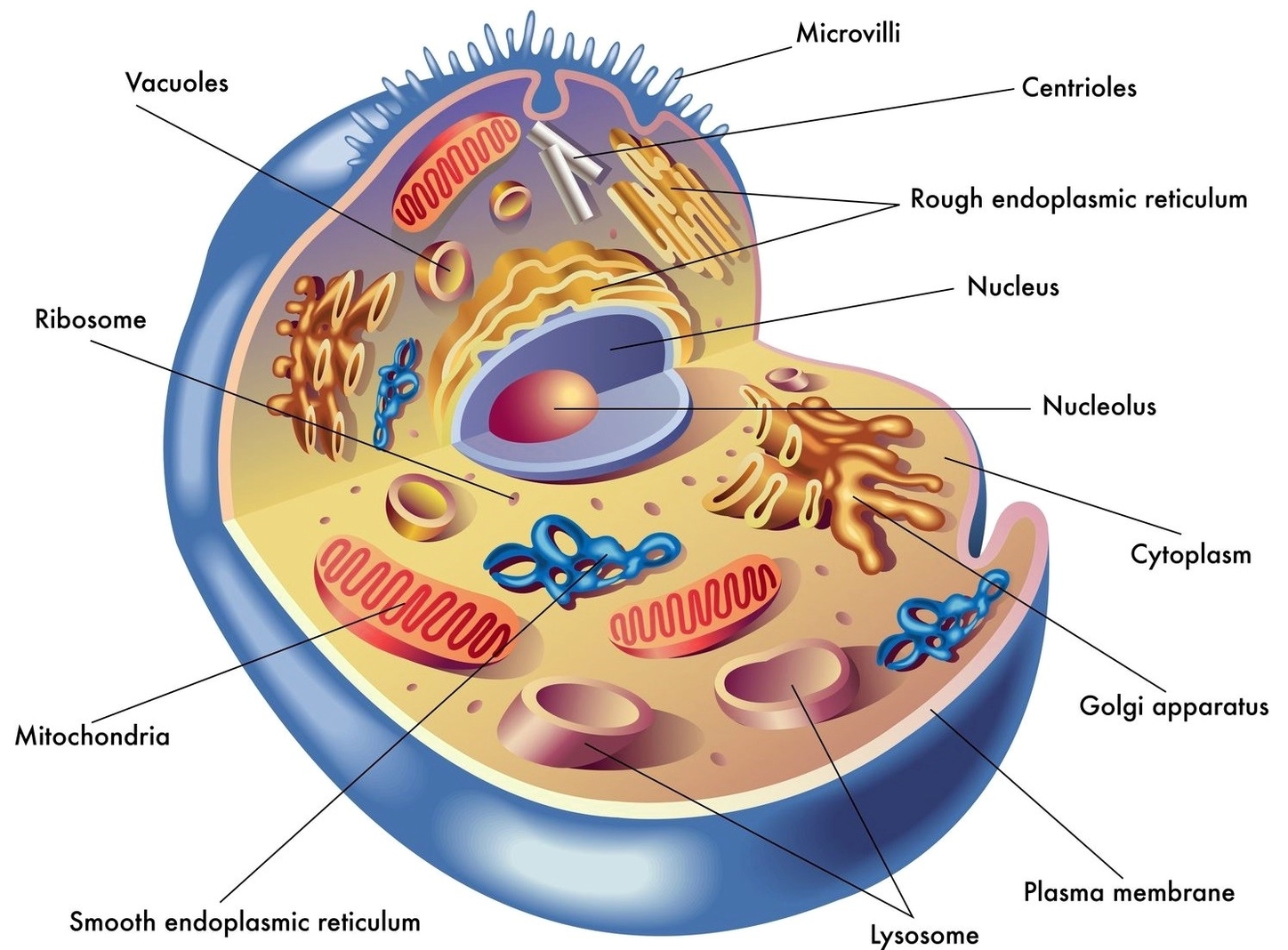
Understanding the intricacies of cellular biology often requires visual aids that can simplify complex structures and processes. One such tool that has proven invaluable in this regard is the Labeled Cell Diagram. These diagrams provide a clear and detailed representation of cellular components, making it easier for students and researchers alike to grasp the functions and interactions within a cell.
What is a Labeled Cell Diagram?
A Labeled Cell Diagram is a visual representation of a cell that includes labels for various cellular structures. These diagrams are essential for educational purposes, as they help in identifying and understanding the different parts of a cell, such as the nucleus, mitochondria, endoplasmic reticulum, and more. By providing a clear and labeled view, these diagrams facilitate a deeper understanding of cellular functions and processes.
Importance of Labeled Cell Diagrams in Education
In the field of biology, visual aids play a crucial role in enhancing learning outcomes. Labeled Cell Diagrams are particularly important for several reasons:
- Enhanced Comprehension: Visual representations help students understand complex concepts more easily than text alone.
- Memorization Aid: Labels on diagrams serve as memory cues, making it easier to recall the names and functions of cellular structures.
- Interactive Learning: Teachers can use these diagrams to create interactive learning experiences, such as labeling exercises or quizzes.
- Research Tool: For researchers, Labeled Cell Diagrams provide a quick reference for understanding cellular structures and their functions.
Components of a Typical Labeled Cell Diagram
A typical Labeled Cell Diagram includes various cellular components, each with a specific function. Here are some of the key components commonly found in these diagrams:
| Component | Function |
|---|---|
| Nucleus | Contains the cell's genetic material and controls cellular activities. |
| Mitochondria | Known as the powerhouse of the cell, it produces energy through cellular respiration. |
| Endoplasmic Reticulum (ER) | Involved in the synthesis and transport of lipids and proteins. |
| Golgi Apparatus | Modifies, sorts, packages, and distributes proteins and lipids. |
| Ribosomes | Site of protein synthesis. |
| Lysosomes | Contain digestive enzymes that break down waste materials and cellular debris. |
| Cytoskeleton | Provides structural support and facilitates cellular movement. |
| Cell Membrane | Controls the movement of substances in and out of the cell. |
Each of these components plays a vital role in the overall functioning of the cell, and understanding their interactions is crucial for a comprehensive grasp of cellular biology.
Creating a Labeled Cell Diagram
Creating a Labeled Cell Diagram can be a rewarding educational activity. Here are the steps to create an effective diagram:
- Choose the Type of Cell: Decide whether you want to create a diagram for a plant cell, animal cell, or a specific type of cell like a bacterial cell.
- Gather Reference Materials: Use textbooks, online resources, and scientific articles to gather accurate information about the cellular components.
- Sketch the Cell: Start with a rough sketch of the cell, including the basic shape and size. For an animal cell, it will be roughly circular, while a plant cell will have a rectangular shape due to the cell wall.
- Add Cellular Components: Begin adding the various organelles and structures, ensuring they are placed in their correct locations within the cell.
- Label the Components: Clearly label each component with its name. Use arrows or lines to connect the labels to the corresponding structures.
- Review and Refine: Check for accuracy and clarity. Make any necessary adjustments to ensure the diagram is easy to understand.
📝 Note: When creating a Labeled Cell Diagram, it is essential to use accurate and up-to-date information to ensure the diagram's reliability.
Using Labeled Cell Diagrams in Teaching
Labeled Cell Diagrams are versatile tools that can be used in various teaching methods. Here are some effective ways to incorporate them into the classroom:
- Interactive Labeling Exercises: Provide students with unlabeled diagrams and ask them to label the components. This activity helps reinforce their knowledge and memory.
- Group Discussions: Use the diagrams as a starting point for group discussions on cellular functions and processes. Encourage students to share their understanding and insights.
- Quizzes and Tests: Include labeled diagrams in quizzes and tests to assess students' understanding of cellular structures and their functions.
- Project Work: Assign projects where students create their own Labeled Cell Diagrams and present them to the class, explaining each component and its function.
By integrating these diagrams into various teaching methods, educators can create a more engaging and effective learning environment.
Advanced Applications of Labeled Cell Diagrams
Beyond basic education, Labeled Cell Diagrams have advanced applications in research and specialized fields. Here are some examples:
- Medical Research: In medical research, detailed Labeled Cell Diagrams help scientists understand the cellular mechanisms behind diseases and develop targeted treatments.
- Genetic Engineering: These diagrams are used to visualize genetic modifications and their effects on cellular structures and functions.
- Pharmacology: In pharmacology, Labeled Cell Diagrams aid in studying how drugs interact with cellular components, leading to the development of more effective medications.
In these advanced applications, the accuracy and detail of the diagrams are crucial for precise analysis and understanding.

Challenges and Limitations
While Labeled Cell Diagrams are invaluable tools, they also have some challenges and limitations:
- Simplification: Diagrams often simplify complex cellular structures, which may lead to an oversimplified understanding of cellular processes.
- Accuracy: Ensuring the accuracy of labels and positions can be challenging, especially for complex cells or specialized structures.
- Static Nature: Diagrams are static representations and may not fully capture the dynamic nature of cellular processes.
Despite these limitations, Labeled Cell Diagrams remain essential tools in education and research, providing a foundational understanding of cellular biology.
In summary, Labeled Cell Diagrams are indispensable tools in the study of cellular biology. They enhance comprehension, aid in memorization, and facilitate interactive learning. By understanding the components and functions of a cell through these diagrams, students and researchers can gain a deeper insight into the intricate world of cellular processes. Whether used in basic education or advanced research, these diagrams continue to play a crucial role in advancing our knowledge of cellular biology.
Related Terms:
- show me a cell diagram
- labeled animal cell diagram
- blank animal cell to label
- labeled plant cell diagram
- a typical cell diagram
- most detailed cell diagram