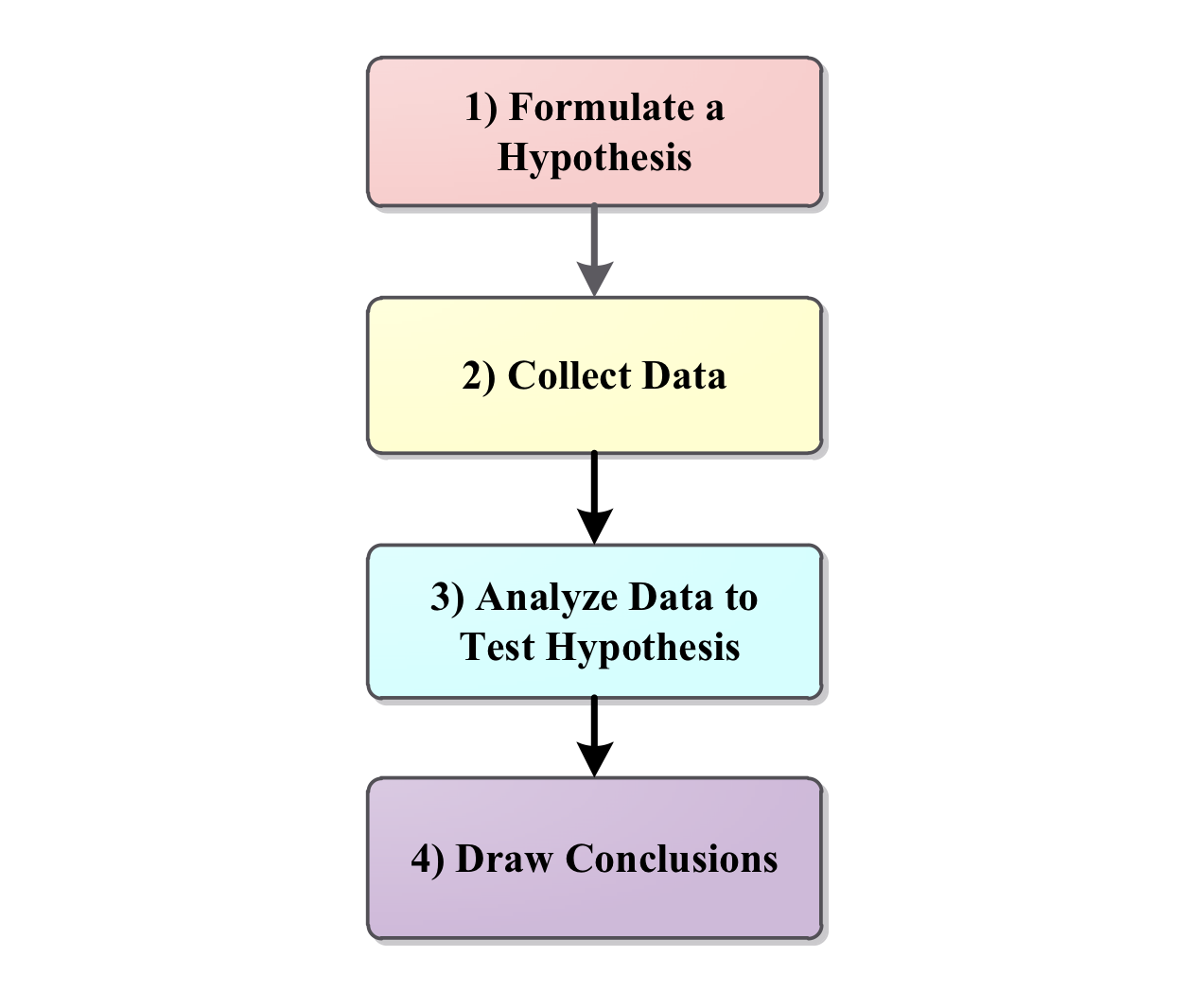
In the realm of data science and analytics, the process of Hypothesis and Testing is fundamental. It involves formulating a hypothesis, collecting data, and then testing that hypothesis to determine its validity. This method is widely used in various fields, including scientific research, market analysis, and quality control. Understanding the intricacies of hypothesis testing can provide valuable insights and drive informed decision-making.
Understanding Hypothesis and Testing
Hypothesis and Testing is a systematic approach to investigating phenomena and making data-driven conclusions. It begins with formulating a hypothesis, which is a statement or prediction about a population parameter. This hypothesis is then tested using statistical methods to determine if there is enough evidence to support or reject it.
There are two main types of hypotheses in statistical testing:
- Null Hypothesis (H0): This is the default position that there is no effect or no difference. It assumes that any observed differences are due to chance.
- Alternative Hypothesis (H1 or Ha): This is the position that there is an effect or a difference. It contradicts the null hypothesis.
Steps in Hypothesis and Testing
The process of Hypothesis and Testing involves several key steps:
Formulating the Hypothesis
The first step is to formulate a clear and testable hypothesis. This involves identifying the research question and translating it into a hypothesis that can be tested using statistical methods. For example, if you are testing the effectiveness of a new drug, your hypothesis might be that the new drug reduces symptoms more effectively than a placebo.
Collecting Data
Once the hypothesis is formulated, the next step is to collect data. This data should be relevant to the hypothesis and collected in a manner that minimizes bias. Data collection methods can vary widely depending on the context, but common methods include surveys, experiments, and observational studies.
Choosing the Appropriate Test
Selecting the right statistical test is crucial for accurate hypothesis testing. The choice of test depends on several factors, including the type of data, the number of samples, and the nature of the hypothesis. Common tests include:
- T-Test: Used to compare the means of two groups.
- Chi-Square Test: Used to test the independence of two categorical variables.
- ANOVA (Analysis of Variance): Used to compare the means of three or more groups.
Conducting the Test
After choosing the appropriate test, the next step is to conduct the test using the collected data. This involves calculating test statistics and determining the p-value, which indicates the probability of observing the data if the null hypothesis is true.
Interpreting the Results
The final step is to interpret the results of the test. If the p-value is less than the significance level (commonly 0.05), the null hypothesis is rejected in favor of the alternative hypothesis. If the p-value is greater than the significance level, the null hypothesis is not rejected.
Types of Errors in Hypothesis and Testing
In Hypothesis and Testing, there are two types of errors that can occur:
Type I Error
A Type I error occurs when the null hypothesis is rejected when it is actually true. This is also known as a false positive. The probability of a Type I error is denoted by the significance level (α). For example, if the significance level is 0.05, there is a 5% chance of making a Type I error.
Type II Error
A Type II error occurs when the null hypothesis is not rejected when it is actually false. This is also known as a false negative. The probability of a Type II error is denoted by β. Reducing the probability of a Type II error typically involves increasing the sample size or using a more powerful test.
📝 Note: It is important to balance the risks of Type I and Type II errors. Reducing one type of error often increases the risk of the other.
Applications of Hypothesis and Testing
Hypothesis and Testing is applied in various fields to make data-driven decisions. Some common applications include:
Scientific Research
In scientific research, hypothesis testing is used to validate theories and models. Researchers formulate hypotheses based on existing knowledge and test them using experimental data. This process helps to advance scientific understanding and develop new theories.
Market Analysis
In market analysis, hypothesis testing is used to understand consumer behavior and market trends. Companies formulate hypotheses about consumer preferences and test them using survey data or sales figures. This helps in making informed marketing decisions and improving product offerings.
Quality Control
In quality control, hypothesis testing is used to ensure that products meet specified standards. Manufacturers test hypotheses about product quality using statistical methods and make adjustments as needed to maintain high standards.
Example of Hypothesis and Testing
Let's consider an example to illustrate the process of Hypothesis and Testing. Suppose a company wants to determine if a new marketing campaign increases sales. The company formulates the following hypotheses:
- Null Hypothesis (H0): The new marketing campaign does not increase sales.
- Alternative Hypothesis (H1): The new marketing campaign increases sales.
The company collects sales data before and after the implementation of the new marketing campaign. They then conduct a t-test to compare the means of the two datasets. The results show a p-value of 0.03, which is less than the significance level of 0.05. Therefore, the company rejects the null hypothesis and concludes that the new marketing campaign increases sales.
Important Considerations in Hypothesis and Testing
While Hypothesis and Testing is a powerful tool, there are several important considerations to keep in mind:
Sample Size
The sample size plays a crucial role in the accuracy of hypothesis testing. A larger sample size generally provides more reliable results and reduces the risk of Type II errors. However, collecting a large sample can be time-consuming and costly.
Assumptions
Many statistical tests have underlying assumptions, such as normality or homogeneity of variance. It is important to check these assumptions before conducting the test. Violating these assumptions can lead to inaccurate results.
Multiple Testing
When conducting multiple hypothesis tests, there is an increased risk of Type I errors. Techniques such as the Bonferroni correction can be used to adjust for multiple testing and control the overall error rate.
📝 Note: Always ensure that the data meets the assumptions of the statistical test being used. Violating these assumptions can lead to misleading results.
Advanced Techniques in Hypothesis and Testing
In addition to basic hypothesis testing, there are several advanced techniques that can be used to handle more complex scenarios:
Bayesian Hypothesis Testing
Bayesian hypothesis testing incorporates prior knowledge and updates it with new data to make inferences. Unlike frequentist methods, Bayesian testing provides a probability distribution for the hypothesis, allowing for more nuanced interpretations.
Non-parametric Tests
Non-parametric tests do not assume a specific distribution for the data and are useful when the data does not meet the assumptions of parametric tests. Examples include the Mann-Whitney U test and the Kruskal-Wallis test.
Multivariate Analysis
Multivariate analysis involves testing hypotheses about multiple variables simultaneously. Techniques such as MANOVA (Multivariate Analysis of Variance) and discriminant analysis are used to analyze the relationships between multiple dependent and independent variables.
Conclusion
Hypothesis and Testing is a cornerstone of data analysis and decision-making. By formulating clear hypotheses, collecting relevant data, and applying appropriate statistical tests, researchers and analysts can draw meaningful conclusions and make informed decisions. Understanding the types of errors, considerations, and advanced techniques in hypothesis testing can further enhance the accuracy and reliability of the results. Whether in scientific research, market analysis, or quality control, hypothesis testing provides a robust framework for exploring and validating ideas.
Related Terms:
- what does hypothesis testing mean
- explain hypothesis testing in detail
- when to use hypothesis testing
- examples of hypothesis testing
- hypothesis testing steps
- types of hypothesis testing