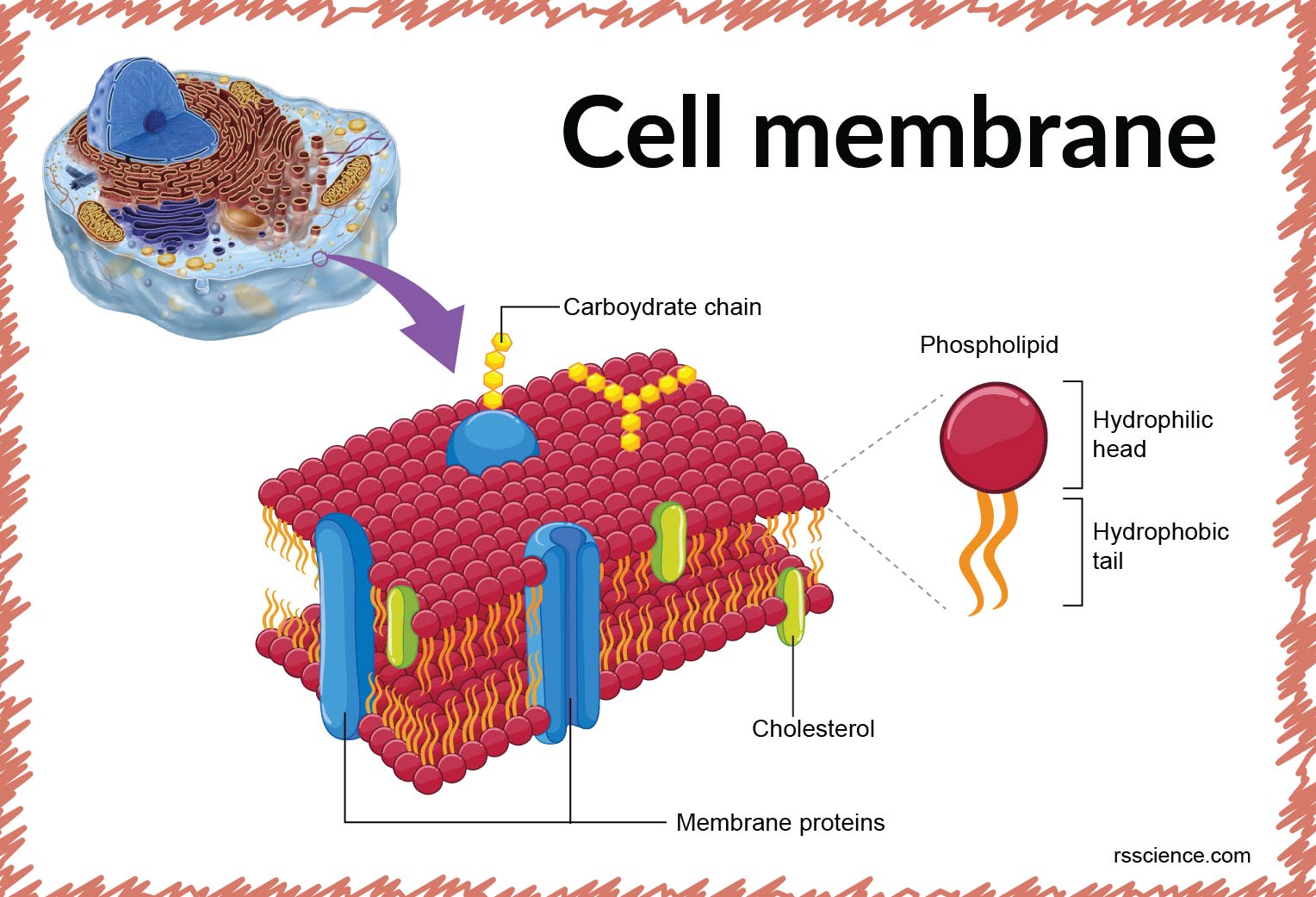
Understanding the intricate workings of a cell membrane labeled with various markers is crucial for comprehending cellular processes and functions. The cell membrane, also known as the plasma membrane, is a selective barrier that regulates the movement of substances in and out of the cell. It is composed of a phospholipid bilayer with embedded proteins, carbohydrates, and other molecules that play vital roles in cellular communication, transport, and structural integrity.
Structure of the Cell Membrane
The cell membrane is primarily composed of a phospholipid bilayer, which consists of two layers of phospholipid molecules. Each phospholipid molecule has a hydrophilic (water-loving) head and two hydrophobic (water-fearing) tails. The hydrophilic heads face outward, interacting with the aqueous environment, while the hydrophobic tails face inward, forming a hydrophobic core. This structure allows the membrane to be both flexible and stable, essential for its various functions.
Embedded within the phospholipid bilayer are proteins that serve diverse functions. These proteins can be categorized into two main types:
- Integral proteins: These proteins are embedded within the lipid bilayer and often span the entire membrane. They play crucial roles in transport, signaling, and cell recognition.
- Peripheral proteins: These proteins are attached to the surface of the membrane and are involved in structural support and enzymatic activities.
Additionally, carbohydrates are attached to the outer surface of the membrane, forming glycoproteins and glycolipids. These carbohydrate chains are essential for cell recognition and communication.
Functions of the Cell Membrane
The cell membrane performs several critical functions that are essential for the survival and proper functioning of the cell. Some of the key functions include:
- Selective Permeability: The membrane allows certain molecules to pass through while restricting others. This selective permeability is crucial for maintaining the cell's internal environment.
- Cellular Communication: The membrane contains receptors that bind to specific molecules, triggering cellular responses. This communication is vital for coordinating cellular activities and responses to external stimuli.
- Transport: The membrane facilitates the movement of substances across it through various mechanisms, including passive transport (diffusion and osmosis) and active transport (using energy to move molecules against a concentration gradient).
- Structural Support: The membrane provides structural integrity to the cell, maintaining its shape and protecting its internal components.
Cell Membrane Labeled with Markers
To study the structure and function of the cell membrane, researchers often use various labeling techniques. These techniques involve tagging specific components of the membrane with fluorescent or other detectable markers. Some common methods for labeling the cell membrane include:
- Fluorescent Dyes: These dyes bind to specific components of the membrane, such as lipids or proteins, and emit light when excited by a specific wavelength. Common fluorescent dyes include DiI, DiO, and FM dyes.
- Antibodies: Antibodies specific to membrane proteins can be labeled with fluorescent markers or enzymes that produce a detectable signal. This technique is often used in immunofluorescence assays.
- Lipophilic Dyes: These dyes, such as DiI and DiO, are hydrophobic and can insert into the lipid bilayer, labeling the membrane without disrupting its structure.
By using these labeling techniques, researchers can visualize and study the dynamics of the cell membrane, including the movement of proteins, lipid rafts, and other membrane components. This information is crucial for understanding cellular processes such as endocytosis, exocytosis, and signal transduction.
Applications of Cell Membrane Labeling
Cell membrane labeling has numerous applications in biological research and medical diagnostics. Some of the key applications include:
- Cellular Imaging: Fluorescently labeled membranes allow researchers to visualize cellular structures and processes using microscopy techniques such as confocal microscopy and super-resolution microscopy.
- Drug Discovery: Labeling techniques can be used to study the interaction of drugs with membrane proteins, aiding in the development of new therapeutic agents.
- Diagnostic Tools: Fluorescently labeled antibodies can be used to detect specific markers on the surface of cells, aiding in the diagnosis of diseases such as cancer.
- Cell Sorting: Flow cytometry, a technique that uses fluorescent labels to sort cells based on their properties, relies on membrane labeling to identify and isolate specific cell populations.
These applications highlight the importance of cell membrane labeling in advancing our understanding of cellular biology and developing new medical treatments.
Challenges and Limitations
While cell membrane labeling is a powerful tool, it also presents several challenges and limitations. Some of the key challenges include:
- Photobleaching: Fluorescent dyes can lose their fluorescence over time due to exposure to light, limiting the duration of imaging experiments.
- Toxicity: Some labeling agents can be toxic to cells, affecting their viability and function.
- Specificity: Ensuring that the labeling agent specifically binds to the target component without non-specific binding can be challenging.
- Resolution: The resolution of imaging techniques may limit the ability to visualize fine details of the membrane structure.
Despite these challenges, ongoing advancements in labeling techniques and imaging technologies continue to improve the accuracy and reliability of cell membrane labeling studies.
📝 Note: It is important to carefully select labeling agents and optimize experimental conditions to minimize these challenges and obtain reliable results.
Future Directions
The field of cell membrane labeling is continually evolving, driven by advancements in technology and our understanding of cellular biology. Some exciting future directions include:
- Super-Resolution Microscopy: Techniques such as STORM (Stochastic Optical Reconstruction Microscopy) and PALM (Photoactivated Localization Microscopy) allow for the visualization of cellular structures at nanoscale resolution, providing unprecedented detail of the cell membrane.
- Multicolor Labeling: The development of new fluorescent dyes and labeling agents enables the simultaneous visualization of multiple membrane components, providing a more comprehensive understanding of membrane dynamics.
- Live-Cell Imaging: Advances in live-cell imaging techniques allow researchers to study the dynamics of the cell membrane in real-time, providing insights into cellular processes as they occur.
These advancements hold great promise for furthering our understanding of the cell membrane and its role in health and disease.
In conclusion, the cell membrane labeled with various markers is a critical tool in cellular biology, enabling researchers to study its structure, function, and dynamics. By understanding the intricate workings of the cell membrane, we can gain valuable insights into cellular processes and develop new therapeutic strategies for various diseases. The continued advancement of labeling techniques and imaging technologies will undoubtedly lead to new discoveries and a deeper understanding of the cell membrane’s role in health and disease.
Related Terms:
- cell membrane function
- components of cell membrane labeled
- parts of cell membrane labeled
- plasma membrane labeled
- cell membrane drawings
- cell membrane labeled drawing